

Medical Equipment Moving Requires Careful Planning To Protect Sensitive Devices, Maintain Compliance, And Minimize Operational Downtime. Hospitals, Clinics, And Laboratories Must Coordinate Equipment Inventories, Manufacturer Requirements, Technical Specialists, Transport Conditions, Insurance, And Destination Readiness. This Guide Explains How To Plan A Medical Equipment Relocation, Evaluate Moving Providers, Manage Equipment-Specific Requirements, And Reduce Risks Before, During, And After The Move.
Moving a hospital department, private clinic, or diagnostic laboratory requires more planning than a standard commercial move. Sensitive equipment may need manufacturer-approved shutdown procedures, controlled handling, careful transport, and testing before it returns to service.
The physical move also has to account for patient schedules, building access, equipment downtime, technical support, and each device’s requirements. A mistake can delay reopening, damage expensive equipment, or disrupt clinical and laboratory operations.
Relocating critical care and laboratory spaces requires a clear strategy. This guide breaks down the essential pre-move planning, vendor vetting, equipment-specific handling, compliance obligations, and realistic timelines you need to protect your facility.
Why Medical Equipment Moving Is Different From Standard Commercial Moving
Standard office moves mainly involve furniture, boxes, and general workplace equipment. Medical equipment can require much more specific handling, preparation, and transport conditions. Sensitive diagnostic instruments, clinical monitors, and specialized analyzers may have manufacturer-specific requirements for vibration, temperature, positioning, and transport. Failing to follow those requirements can affect equipment performance or require additional testing before the device returns to service.
Unplugging and loading these devices isn’t enough. Many require strict, manufacturer-approved decommissioning and recommissioning protocols to preserve functional integrity and active warranties.
Depending on the equipment and facility, the relocation plan may also need to account for manufacturer instructions, applicable Health Canada requirements, provincial health-sector rules, and the facility’s own safety procedures. These requirements should be confirmed before the scope of work is finalized.
The destination also needs to be ready for the equipment. Before moving day, confirm doorway and corridor clearances, floor-loading limits, electrical requirements, installation space, elevator capacity, and any other site conditions identified by the equipment manufacturer or technical team.
Finally, extended downtime directly translates to lost billable procedures, delayed patient treatments, and disrupted clinical operations.
Which Facilities Need This Level of Specialization
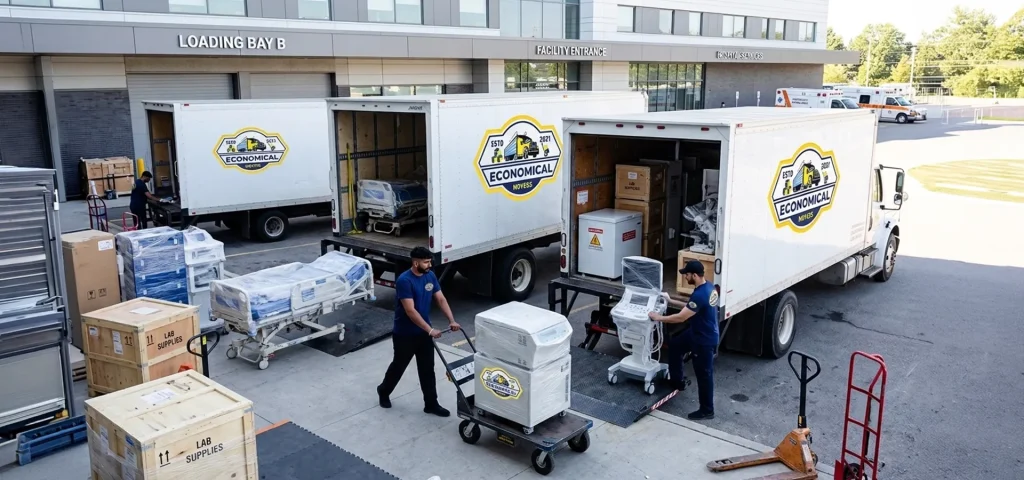
Different healthcare settings carry distinct operational risks during a move:
- Hospitals: Relocating operating suites, intensive care monitoring networks, radiology departments, and sterile processing units often happens while the broader facility remains operational. You cannot afford an unplanned outage.
- Clinics: Diagnostic imaging equipment, dental chairs, examination equipment, and autoclaves may require specific cleaning, handling, installation, or post-move testing before returning to service.
- Laboratories: Centrifuges, mass spectrometers, incubators, ultra-low-temperature freezers, and biological specimens can have very different handling requirements. When transporting temperature-sensitive specimens, confirm the required chain-of-custody and temperature-monitoring procedures in advance.
The risks differ by facility, but the planning principle is the same: understand what each piece of equipment requires before deciding how it should be prepared, handled, transported, and returned to service.
Pre-Move Planning: What Needs To Happen Before Moving Day
A successful relocation relies on thorough preparation long before equipment is loaded onto a truck.
- Itemized Inventory Audit: Log every asset with serial numbers, current operational status, existing cosmetic flaws, and physical locations.
- Pull OEM Directives: Review manufacturer-specific decommissioning and transportation guidelines for every major asset to protect warranty terms.
- Schedule Technical Support: Coordinate decommissioning directly with in-house biomedical engineering staff or original equipment manufacturer (OEM) field engineers rather than relying on transport crews.
- Confirm Insurance Coverage: Ask for written confirmation of cargo coverage, per-item limits, deductibles, exclusions, and how loss or damage to high-value medical equipment would be valued.
- Audit Destination Readiness: Confirm equipment clearances, floor-loading limits, electrical capacity, HVAC, plumbing, and other installation requirements where applicable.
- Align Clinical Schedules: Build the relocation timeline around active patient bookings and treatment schedules, rather than forcing clinical operations to adapt to freight windows.
What To Check Before Hiring A Medical Equipment Mover
General commercial moving experience alone may not be enough for a hospital relocation or complex laboratory move. When evaluating prospective transport partners, skip the marketing brochures and focus on practical qualifications.
| Evaluation Area | What to Ask / Look For | Red Flags |
|---|---|---|
| Healthcare Experience | Request specific references from hospital administrators, clinic managers, or lab directors. | References limited to corporate office moves or generic retail clients. |
| Labour Structure | Ask who will actually handle the equipment, what relevant training or experience they have, and whether specialist subcontractors will be involved. | The company cannot explain who will handle the equipment or how specialist contractors are selected. |
| Fleet & Equipment | Ask what vehicle, lifting, protection, crating, and stabilization equipment will be used based on the requirements of your devices. | The proposed transport setup does not match the manufacturer’s handling or environmental requirements. |
| Technical Coordination | Ask how their project manager coordinates directly with OEM field engineers for recommissioning. | Insistence that their drivers can disconnect complex diagnostic machinery. |
| Insurance Policies | Ask for written details of cargo coverage, per-item limits, deductibles, exclusions, and how high-value equipment would be valued after a loss. | The company cannot clearly explain coverage limits, exclusions, valuation terms, or what happens if high-value equipment is damaged. |
If a provider cannot clearly answer these questions, get clarification before adding them to the relocation plan.
How Moving Requirements Change by Equipment Type
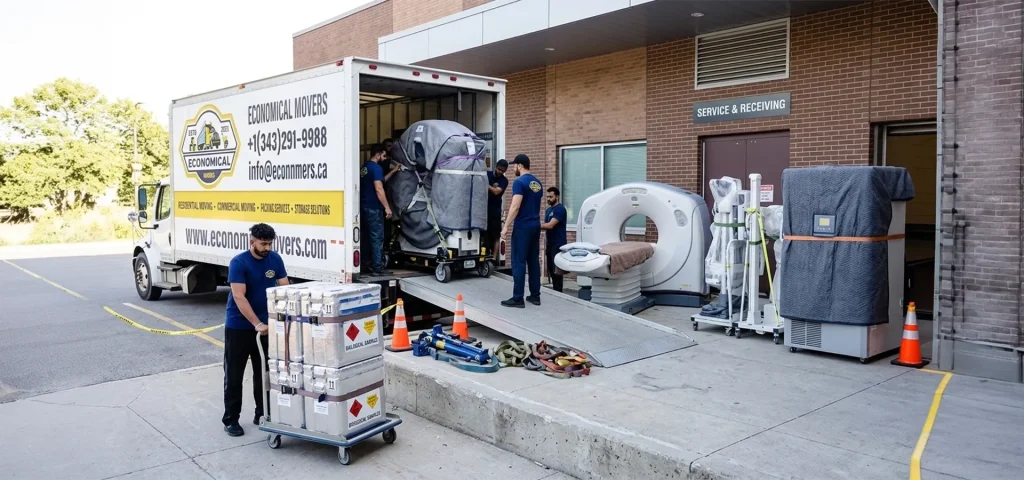
Using the same packing and handling approach for every device can increase the risk of damage or delays. Requirements vary by equipment type:
- Imaging Machinery (MRI, CT, X-Ray): MRI, CT, X-ray, and other imaging systems may require manufacturer-authorized or qualified technicians for shutdown, preparation, recommissioning, and calibration. Confirm those requirements with the manufacturer before the moving crew handles the equipment.
- Lab Analyzers and Centrifuges: Internal components, optical alignment, and rotor balances are sensitive to minor shifts. Confirm whether post-move validation, balancing, or calibration is required and who will perform it before the equipment returns to service.
- Biological Samples and Cold Storage Assets: Biological samples, vaccines, and temperature-sensitive reagents may require validated temperature-controlled packaging or transport with monitoring appropriate to their required temperature range. Confirm those requirements with the laboratory, manufacturer, or specialist cold-chain provider.
- Sterile Processing and Single-Use Items: Packaging should protect items from moisture, punctures, and contamination during loading and transit.
- Reagents and Hazardous Materials: Some laboratory chemicals, compressed gases, solvents, and other materials may be classified as dangerous goods under Canada’s Transportation of Dangerous Goods requirements. Confirm their classification and transportation requirements before including them in the move.
Compliance, Documentation, and Chain of Custody
Regulatory exposure increases during a physical move. Maintaining clear documentation protects your organization from liability and compliance failures:
- Pre- and Post-Move Audits: Record equipment condition, serial numbers, and calibration certificates immediately before loading and right after installation.
- Applicable Requirements: Identify the manufacturer instructions, facility procedures, provincial requirements, and federal requirements that apply to the equipment or materials being moved.
- Patient and Facility Data: Diagnostic equipment, computers, and workstations may contain personal health information. In Ontario, the facility should determine its obligations under PHIPA and any other privacy requirements that apply to the organization or information being moved. Coordinate data protection with the facility’s privacy or IT team before transport.
- Specimen Chain of Custody: For biological materials, maintain time-stamped custody-transfer logs, sign-off receipts, and verified temperature logs for each leg of the journey.
- Clear Role Separation: Document who decommissioned, loaded, transported, and recommissioned each asset so the facility can identify who was responsible at every stage.
Minimizing Downtime and Protecting Patient Care Continuity
Maintaining patient care requires balancing speed with risk management during the physical transition.
Decide early whether to use a phased departmental rollout or a single-block transition. Phased moves spread risk and allow continuous emergency care, though they extend the overall project schedule. A single-block cutover condenses the timeline but requires temporary service diversions.
Arrange backup or loaner units for critical, life-sustaining equipment to maintain redundancy while primary devices are down. Clear communication with clinical staff ensures teams know precisely which diagnostic suites are offline and when each unit is scheduled to return to active service.
Where possible, schedule transit windows during off-peak hours, weekends, or scheduled facility maintenance periods. For 24/7 hospital departments without off-peak windows, establish clear contingency protocols for unexpected clinical emergencies during moves.
Common Mistakes That Cause Delays, Damage, or Compliance Problems
- Selecting a Provider on Price Alone: A lower quote can become expensive if it excludes the equipment protection, technical coordination, rigging, or specialist support the move requires.
- Conflating Transport with Recalibration: Assuming a mover’s quote includes instrument recalibration, system validation, or OEM re-certification can lead to budget surprises. Transport and technical commissioning are separate line items.
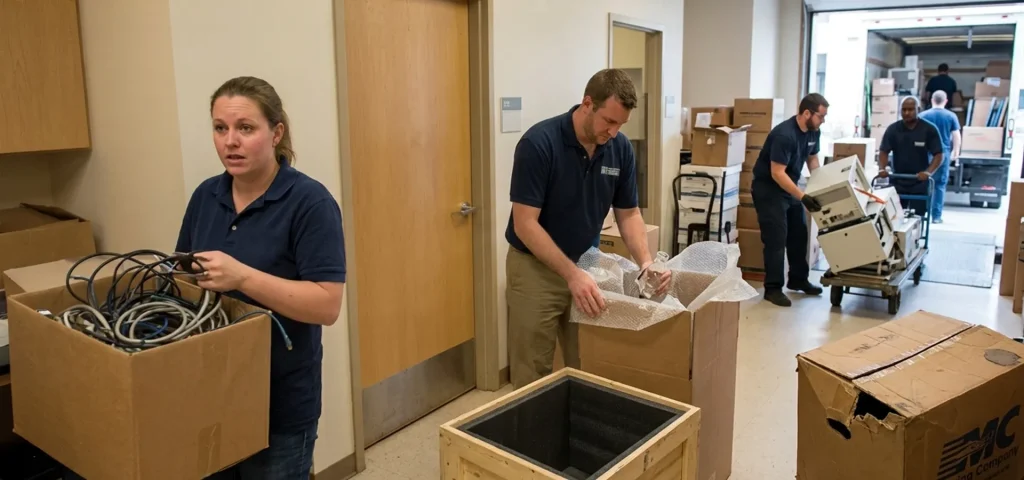
- Using Standard Packing Materials: Standard moving blankets or bubble wrap may not provide enough protection for sensitive instruments. Packaging should match the manufacturer’s transport requirements and may include custom crates, foam inserts, anti-static materials, or specialized transport bases.
- Neglecting Cable and Port Mapping: Failing to label cables, ports, and network connections before disconnection can slow down setup and recommissioning at the destination.
- Relying on Generic Mover Liability: Do not assume standard mover liability provides adequate protection for high-value diagnostic equipment. Review coverage limits, exclusions, deductibles, and valuation terms before the move.
What Affects The Cost and Lead Time of A Medical Equipment Move
Budgeting a medical relocation requires accounting for direct transport costs and specialized technical support fees. Total investment varies based on equipment sensitivity, structural access constraints, travel distance, and OEM tech involvement.
Large laboratory or hospital moves may require weeks or months of planning, particularly when OEM technicians, specialized rigging, site modifications, permits, or tightly controlled clinical schedules are involved.
Ask for an itemized quote that shows what is included in the physical move and which services, such as specialized rigging, technical support, or regulated-material handling, are billed separately. For complex medical moves, an on-site assessment or detailed equipment review usually provides a more useful estimate than a basic phone quote.
What The Moving Crew Handles and What Requires A Specialist
Medical equipment relocation often involves more than one team. The mover may handle protective wrapping, equipment movement, loading, transportation, and final placement where appropriate. Equipment shutdown, calibration, electrical or plumbing disconnection, software configuration, patient data handling, and manufacturer-required recommissioning may need to be performed by the facility’s biomedical team, OEM technicians, IT staff, or another qualified specialist.
Confirm these responsibilities before moving day so that each piece of equipment has a clear handoff from shutdown through transport and back into service.
Practical Next Steps
Before setting a move date, confirm your equipment requirements, site access, and which tasks need OEM or technical support.
For a medical equipment move in Ottawa or Eastern Ontario, call Economical Movers at +1 (343) 292-5550 to schedule an on-site assessment and discuss your relocation requirements.