

Moving Furniture Within The Same Building May Seem Simple, But Heavy Items, Stairs, Tight Hallways, Elevator Access And Building Rules Can Quickly Increase The Difficulty. This Guide Explains When Diy Moving Makes Sense, When Hiring Professional Movers Is Worth The Cost, What Affects Pricing, And What Information Movers Need To Provide An Accurate Quote.
Moving from one apartment or unit to another in the same building can look like a simple DIY job. There is no long-distance drive, the route may be familiar, and the new unit could be only a few floors away.
Short distance does not always mean easy handling. A bulky piece may still need to clear narrow doors, tight corners or an elevator, while shared hallways and floors may need protection during the move.
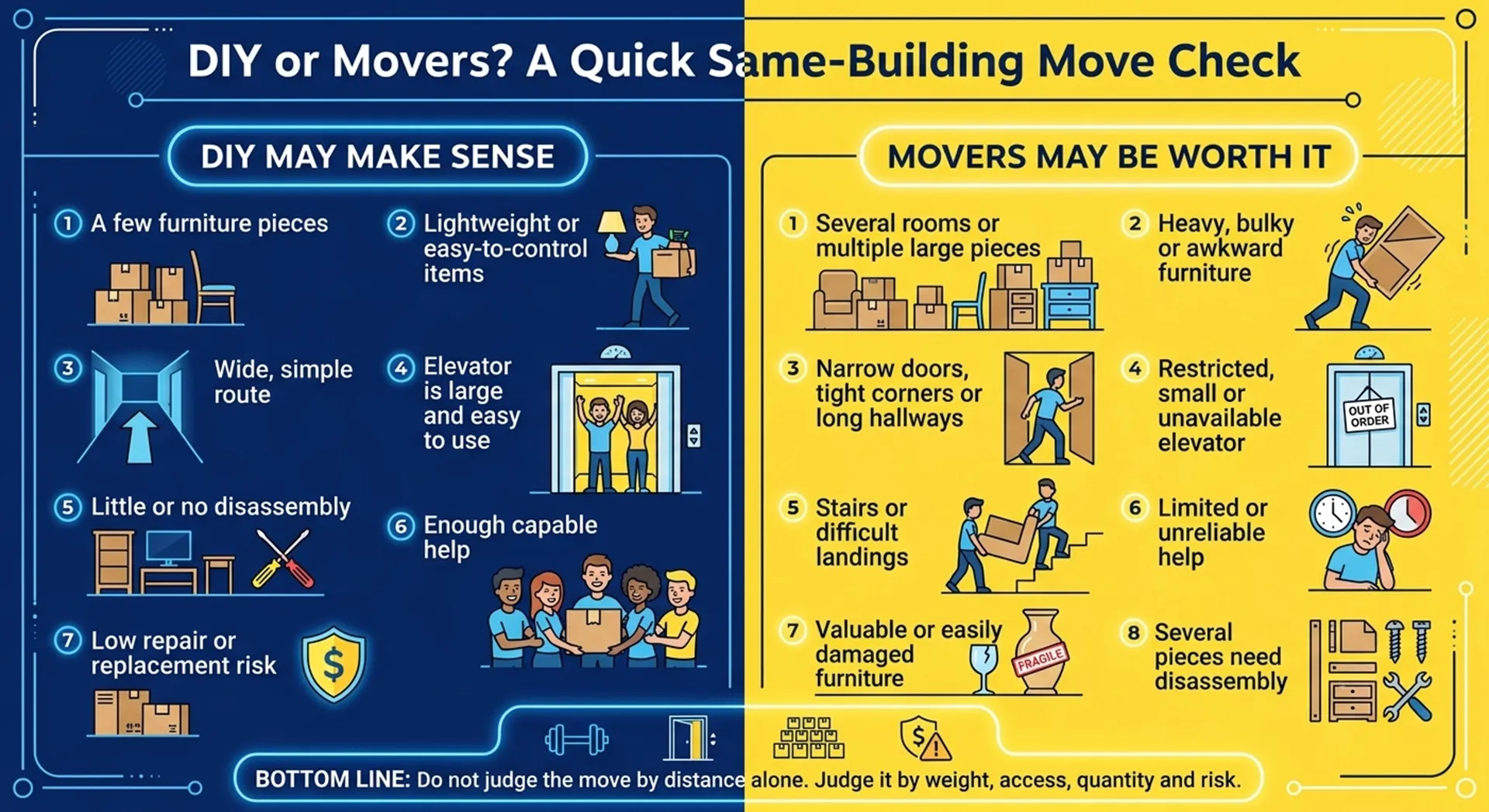
The real decision comes down to weight, access, quantity and risk. When all four are low, DIY may be practical. As any of them increases, hiring movers becomes easier to justify.
Do You Really Need Movers For A Same-Building Move?
Not always. The better question is whether the furniture and the route are realistically manageable with the help you already have.
Use four factors to judge the job:
- Weight: How heavy or difficult to control is the furniture?
- Access: Can the furniture clear the doors, hallways, elevator or stairs along the route?
- Quantity: Are you moving two pieces or most of an apartment?
- Risk: What could be damaged if a piece slips, tips or cannot be controlled properly?
One major obstacle can change the decision. A single heavy cabinet on a tight staircase, for example, may be harder to manage than several lightweight pieces moved by elevator.
When all four factors are low, DIY may be practical. Even one major issue can make professional help more worthwhile.
When DIY Furniture Moving Makes Sense
DIY is most realistic when several favourable conditions line up, not when only one part of the move looks easy.
You Have Only A Few Manageable Pieces
A couple of chairs, small tables or lightweight shelving units can be reasonable to move yourself when each piece is easy to control, and the route between the units is clear.
Quantity still matters. Several individually manageable pieces can turn a small job into a much longer one.
The Route Is Simple
DIY becomes more practical when furniture can travel between units without tight turns, stairs, restricted elevator access, or other clearance problems.
Detailed measurements matter more once a bulky piece or tight route enters the picture.
You Have Capable Help
Having enough people matters, but usable space and coordination matter too.
Help is most useful when everyone can lift, turn and move through the route without crowding one another or losing control of the furniture.
Little or No Disassembly Is Required
Furniture that already fits through the route and can be carried safely may not need to be taken apart.
Once multiple pieces need disassembly before they can move, the job becomes more time-consuming and professional help may offer more value.
When Hiring Movers Is Worth It
Professional help becomes easier to justify when one part of the job creates a handling problem that distance alone does not solve.
You’re Moving Large or Heavy Furniture
Large furniture can be difficult because of size, weight or both. A heavy dresser may be hard to control, while a bulky sofa can become difficult once it has to clear a doorway or turn through a hallway.
Professional help is especially worthwhile when controlling the furniture along the route is the main challenge. Moving equipment can reduce effort, but it cannot create clearance where none exists.
One Part of the Route Is Difficult
The entire route does not need to be complicated.
A narrow doorway, sharp hallway turn or restricted access point can determine whether a large piece can be moved easily between the units.
Think about the route as a series of clearances rather than a distance between two doors. One difficult transition can matter more than moving three or four floors.
Stairs Are Part of the Move
Stairs increase the difficulty because you must control the furniture while its position and weight distribution change.
Tight landings, turns, and limited space can leave little room to reposition a large piece once the carry has started.
Heavy, oversized or awkward furniture on stairs is therefore one of the stronger reasons to consider professional help, even when the destination unit is nearby.
The Cost of a Mistake Is High
An expensive item does not automatically require movers.
The decision changes when a scratch, broken component or dropped piece would be costly to repair or replace.
A single valuable cabinet, table or other difficult piece can justify more care than several inexpensive, lightweight items. Quantity alone should not determine whether professional help is worthwhile.
Protecting Common Areas Can Change The DIY Decision
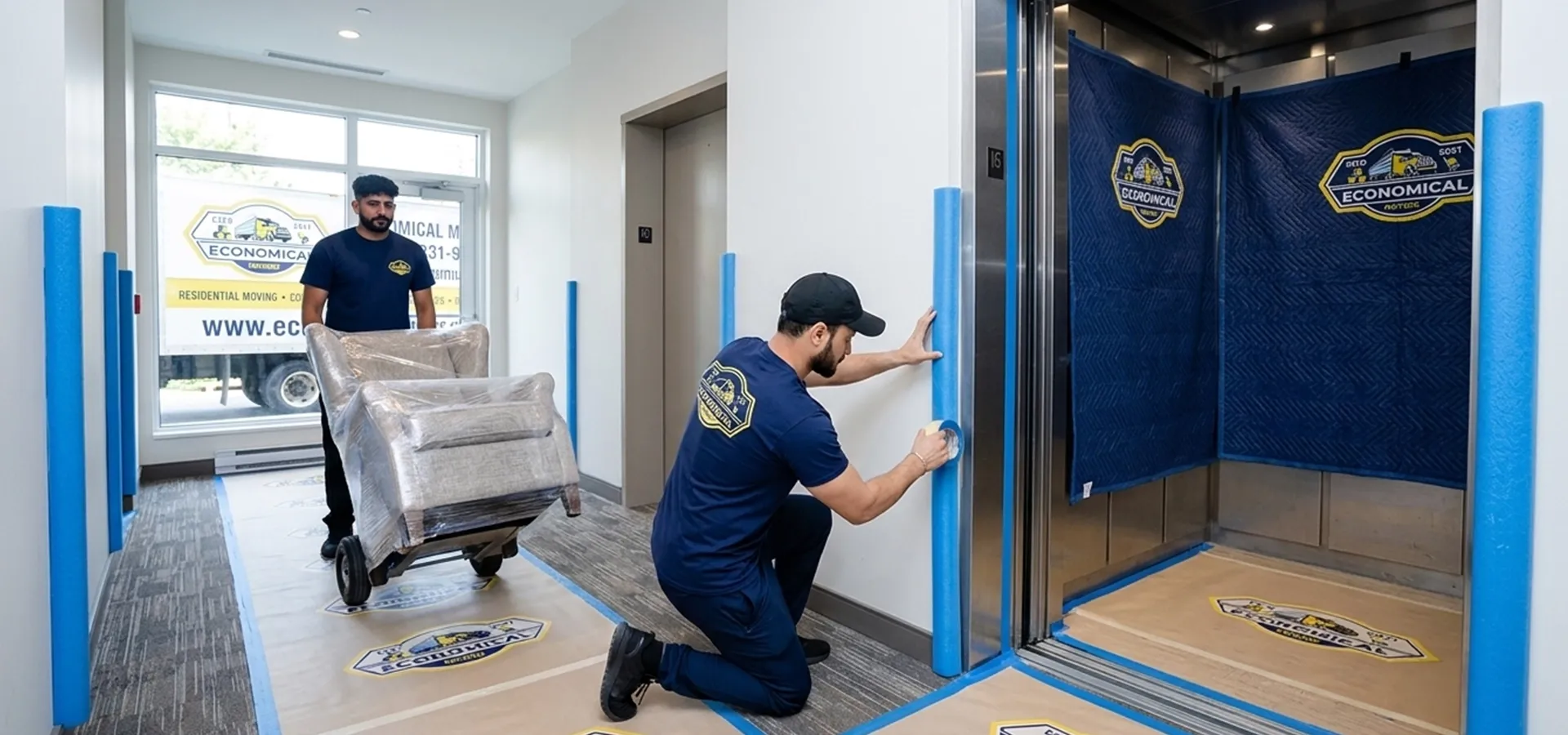
A same-building move often uses shared hallways, elevators, door frames and flooring.
Protection matters more when furniture is heavy, access is tight or the building has specific moving requirements. Floor runners, sliders or other suitable coverings may be needed depending on the route and surfaces.
For a DIY move, the question is not only whether you can carry the furniture, but whether you can move it through shared areas without unnecessary risk to the building.
Check the Building’s Moving Requirements First
Apartment and condo rules can affect how you have to handle the move.
Before choosing DIY or hiring movers, confirm whether building management requires:
- an elevator reservation
- specific moving hours
- protection for common-area flooring or elevators
- use of a particular entrance or service route
- advance notice before furniture is moved
For an Ottawa apartment or condo move, requirements can vary by property, so confirm them directly with building management rather than assuming the rules are the same as in another building.
A simple DIY job can become less practical when the building requires a reserved elevator, controlled access, or protection measures you aren’t prepared to provide.
Elevator Fit Is More Than Measuring The Door
A large piece of furniture doesn’t just need to fit inside the elevator.
You also need enough space to get the piece through the entrance, change its orientation if necessary, and remove it at the destination floor.
Before moving an oversized item, measure its:
- height
- width
- depth
Then compare those measurements with the elevator door opening, interior dimensions and the available turning space immediately outside the elevator.
Also consider the path the furniture will actually travel.
A sofa may fit comfortably once inside but still lack enough room to rotate through the elevator entrance. A tall cabinet may have enough interior clearance when upright but need extra space when tilted into position.
Furniture that cannot clear the route intact may need partial disassembly, but the first step is identifying exactly where the clearance problem occurs.
Instead of asking only:
“Will the furniture fit in the elevator?”
ask:
“Can the furniture enter, turn, travel and exit without running out of clearance?”
What Affects The Cost Of A Same-Building Furniture Move?
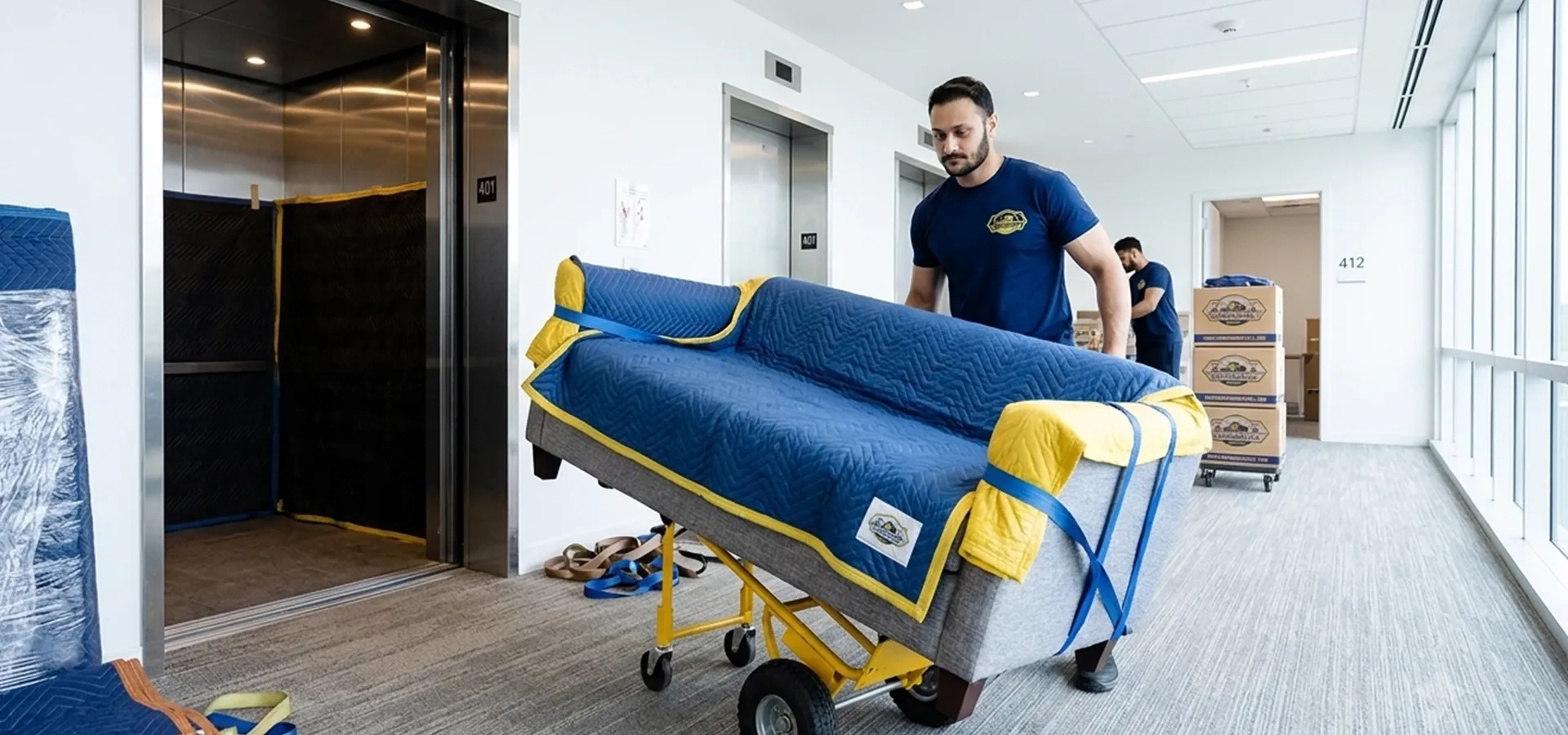
A short distance reduces transportation between addresses, but it doesn’t reduce the labour involved in handling the furniture.
For a same-building move, the quote is more likely to be shaped by:
- Crew size and labour time: how many movers the job requires and how long the furniture takes to relocate
- Access: elevator availability, stairs, long hallways or waiting for shared access
- Furniture preparation: any disassembly, reassembly or additional handling required
- Protection: furniture and common-area protection needed for the route
- Minimum booking requirements: whether a minimum number of labour hours applies to the job
A small same-building move can therefore cost more than the distance alone might suggest. Two units may be only a few floors apart, but the crew still has to prepare, handle, protect and place the furniture.
Before comparing DIY with professional help, ask what the quote actually includes. Check the crew size, minimum hours if applicable, furniture protection, disassembly or reassembly, and how additional time is charged.
Comparing the scope of the quote is more useful than looking at the hourly rate alone.
What Movers Need To Know Before Quoting A Same-Building Furniture Move
A useful quote needs more than the two unit numbers. Movers need enough information to understand the furniture, the route and any building restrictions that could affect labour time.
Before requesting a quote, be ready to provide:
- Furniture inventory: List the pieces being moved and flag anything unusually heavy, bulky, fragile or difficult to handle.
- Current and destination floors: Include whether both units use the same elevator or whether the route changes between floors, wings or building areas.
- Access conditions: Mention stairs, long hallways, tight turns, elevator restrictions or any other part of the route that could slow the move.
- Building requirements: Share reserved elevator times, permitted moving hours, service-entry rules or common-area protection requirements.
- Potential disassembly: Identify furniture that may need to be taken apart to clear a doorway, hallway or elevator.
- Final placement: Mention any heavy pieces that need to be positioned in a specific room or location rather than simply delivered into the new unit.
If the moving company accepts photos for estimating, images of oversized furniture and tight access points can help clarify the scope before moving day.
Accurate information at the quoting stage reduces the chance of discovering a major access or handling issue after the crew arrives.
So, Is Hiring Movers Worth It?
Hiring movers is worth it when heavy furniture, difficult access or a high risk of damage makes the job hard to manage safely with the help available.
DIY can still make sense for a few lightweight pieces when the route is simple and capable help is available.
Distance should not decide the job. Use weight, access, quantity and risk as the final test: when those factors are low, DIY may be practical; when one or more is significant, professional help is more likely to be worth the cost.
Common Questions About Moving Furniture Within the Same Building
Q. Can Movers Move Furniture From One Apartment To Another In The Same Building?
A. Yes, depending on the moving company’s services and the building’s requirements. A same-building job may be handled as a small furniture move rather than a traditional move between two addresses.
Q. Do Movers Need A Moving Truck For A Same-Building Move?
A. A truck may not be necessary when furniture moves between units in the same building. The setup depends on the building layout, the furniture involved and the moving company’s service requirements. Ask the mover how they would handle the job before assuming a traditional truck-based move is required.
Q. Do I Need To Reserve An Elevator For A Same-Building Move?
A. Some apartment and condo buildings require moving or service-elevator reservations. Check directly with building management because policies and permitted moving times vary by property.
Q. Is Hiring Movers Worth It For Only One Or Two Pieces Of Furniture?
A. The answer depends on the pieces and the route. Two lightweight chairs may be simple to move yourself, while one oversized sofa or heavy cabinet may justify professional help if access is difficult.
Q. What Information Should I Give Movers When Requesting A Quote?
A. Provide the furniture list, both floors, elevator or stair access, large-item measurements where relevant, pieces requiring disassembly and any building rules or reserved moving times.
Final Words On Moving Furniture Within The Same Building In Ottawa?
Moving only a few floors does not always require the same setup as a traditional move between two addresses. A few lightweight pieces may be manageable on your own, while heavy furniture, stairs, restricted elevator access or difficult turns can make professional help worthwhile.
For a same-building furniture move in Ottawa, Economical Movers can provide a quote based on the furniture being moved and the building’s actual access conditions.