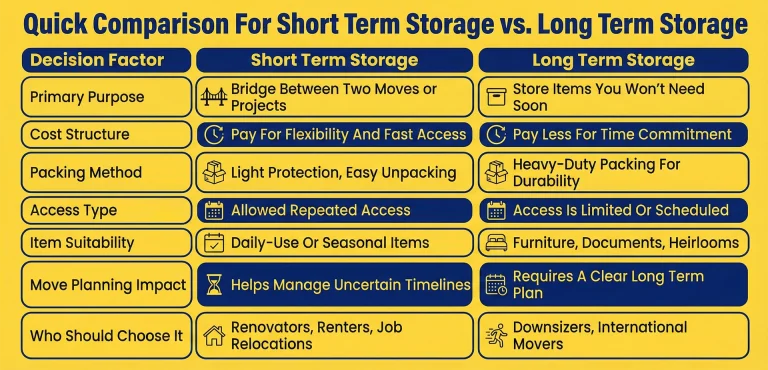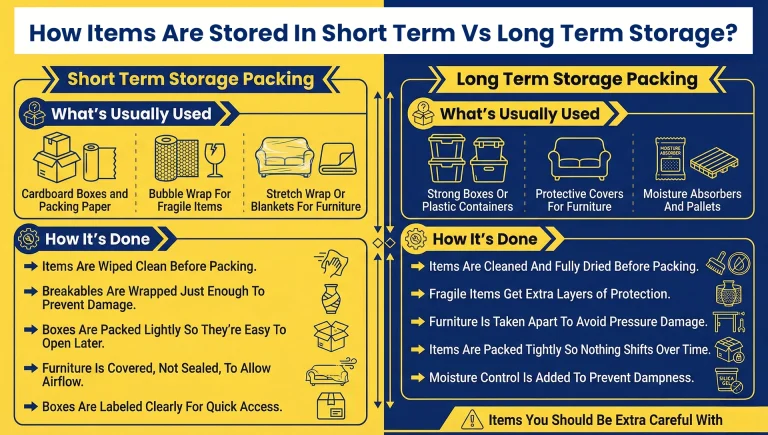
Moving to Eastern Ontario means choosing between city energy and small-town quiet, and the region gives you both within a short drive of each other. Before you sign a lease or make an offer, it helps to look past the listing photos and dig into the details that shape everyday life: commute times, heating bills, school zones, and how a driveway handles a heavy snowfall.
Here’s what actually matters once the boxes are packed and the decision becomes real.
Is Moving To Eastern Ontario A Good Option?
For many people, yes, but the answer depends on where you choose to live. Ottawa and Kingston suit those who need stronger job markets, hospitals, schools, and public transit, although housing generally costs more. Belleville, Brockville, and Cornwall may offer more affordable homes and a quieter lifestyle, but employment options, specialist healthcare, and transit are more limited.
Rural communities provide more space and privacy, but lower purchase prices do not always mean lower monthly costs. Heating, property taxes, well and septic maintenance, internet service, snow removal, and regular driving can add up. Eastern Ontario is a strong option for remote workers, families wanting more space, retirees, and people comfortable driving. It may be less suitable for anyone who depends on frequent public transit, specialized healthcare, or a large local job market. Compare these practical needs before choosing a community.
Key Things To Consider Before Moving To Eastern Ontario
1. Choose The Right Part of Eastern Ontario
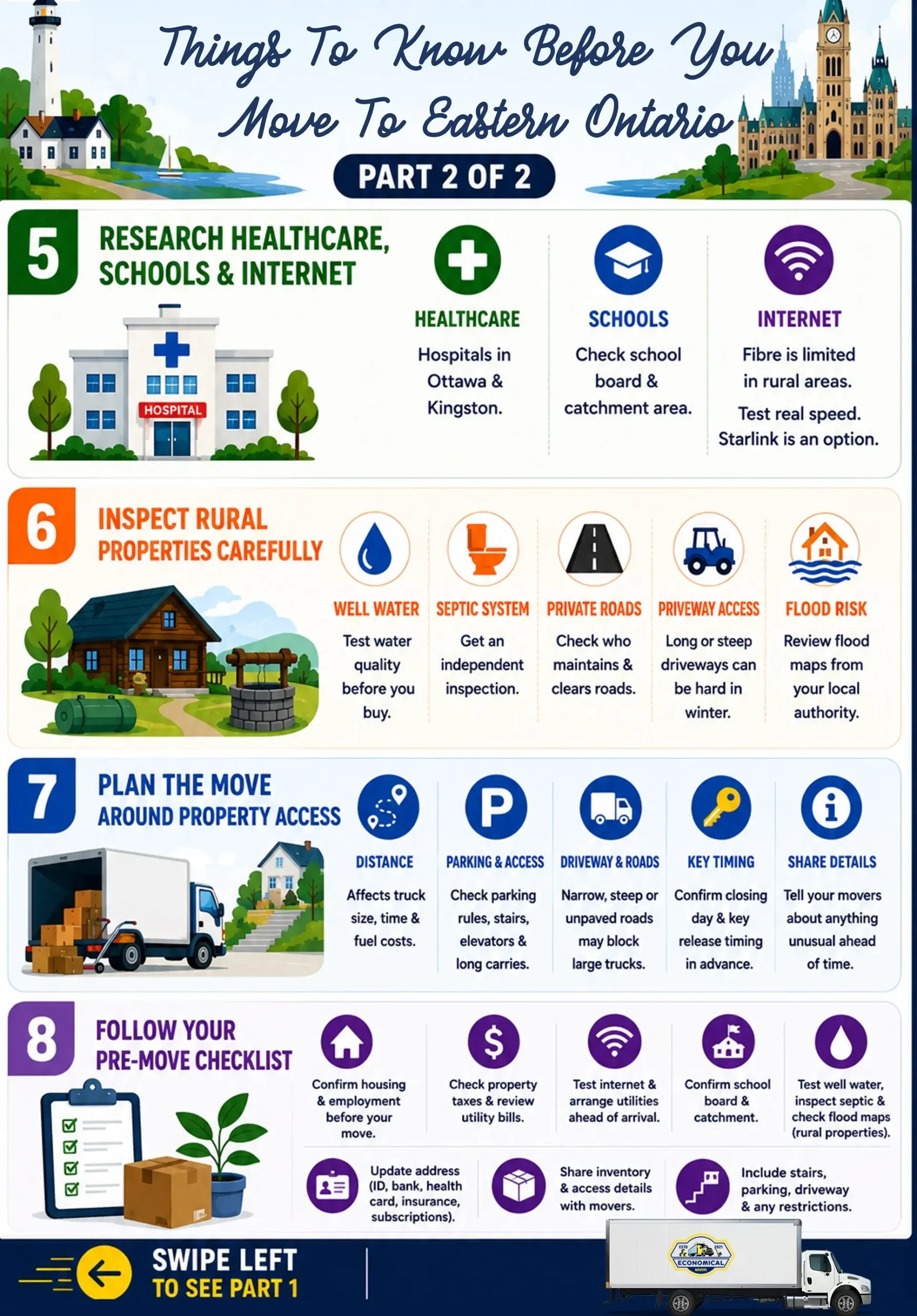
Ottawa, Kingston, Belleville, Brockville and Cornwall each offer a different pace of life, and picking the wrong fit is the most common regret new residents mention.
- Ottawa gives you a full-size city, government and tech jobs, transit, and the highest price tags in the region.
- Kingston blends university energy with waterfront charm and a smaller job market.
- Belleville, Brockville and Cornwall offer lower costs and a slower rhythm, but fewer specialized services close to home.
If you work remotely, rural quiet might suit you fine. If your job requires an office five days a week, weigh employment options and commuting distance before you commit to a postal code.
2. Compare Housing and Living Costs
The gap between markets is real but narrower than most people assume. In mid-2026, the average home in Ottawa was selling around $733,000, while Brockville and Cornwall were both trading in the low $550,000s, roughly 25% cheaper, not half the price. Kingston and Belleville sit somewhere between the two, depending on the month and the mix of condos versus detached homes selling.
Property tax is the part people get backwards. It’s tempting to assume small towns tax less. Still, Ottawa’s residential rate (about 1.23%) is actually one of the lowest in Ontario, because its large assessment base spreads the tax burden further. Smaller municipalities with fewer taxpayers per kilometre of road often carry noticeably higher rates on paper, even though the dollar amount on a cheaper home can still land lower. Check the municipality’s website and compare the estimated annual property tax bill, not just the home price or published tax rate.
One cost that doesn’t change across the region: Ontario’s land transfer tax applies everywhere. However, the additional municipal land transfer tax that catches some Toronto buyers off guard does not apply in Ottawa or elsewhere in Eastern Ontario. Only Toronto charges it. That’s a real, non-trivial saving worth knowing about if you’re coming from the GTA.
Beyond taxes, factor in:
- Insurance: Rural properties may carry higher premiums, especially near flood zones or when they have older wiring.
- Utilities: Hydro Ottawa serves Ottawa, while most surrounding communities use Hydro One or a local municipal utility. Rates may differ between providers.
- Heating and Maintenance: Heating and maintenance can cost more in older or rural homes due to drafty windows and aging furnaces.
3. Check Transportation and Daily Commutes
Public transit is available in communities such as Belleville, Brockville, and Cornwall, but routes, service hours, and coverage are more limited than in Ottawa. If you’re used to walking or taking a bus everywhere, budget for a second car.
Highway access shapes daily life more than most people realize. Look at your proximity to Highways 401, 416 and 417, since these connect the region’s towns and cities to Ottawa, Toronto, and Montreal. A ten-minute highway drive versus a forty-minute backroad detour makes a real difference once winter conditions hit. A 30-minute summer drive can stretch to over an hour during a snowstorm, and backroads get plowed later than highways.
4. Prepare For The Climate
Eastern Ontario winters are real winters: snow, freezing rain, and rapidly changing road conditions are common from November through March. Two things are worth sorting out before the season starts rather than during it:
Heating. Propane, oil, and electric heating have different cost structures, which vary by home rather than by town. Ask the seller or landlord which system is installed and get their most recent bills. Buyers considering a rural property with propane heating should also ask whether the tank is rented or owned and review the delivery contract.
Winter readiness. Winter tires are strongly recommended and may qualify for an insurance discount. Check your policy, plan for snow removal, and keep basic supplies ready for possible winter outages.
5. Research Healthcare, Schools and Internet
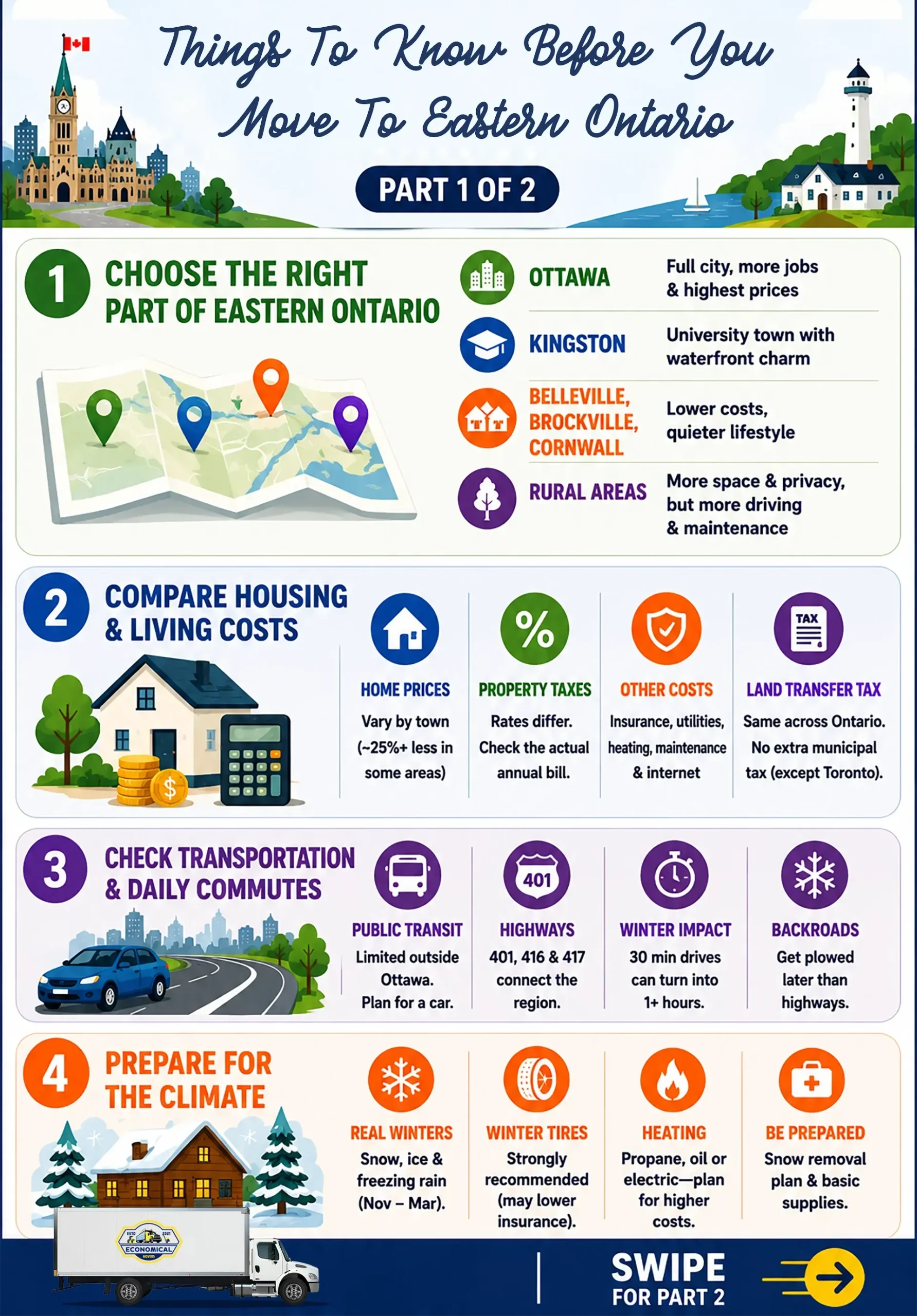
Healthcare access varies by town. Ottawa and Kingston have full hospital networks; smaller communities may mean a longer drive for specialist care, and some towns have long waitlists for new family doctors. Check Health Care Connect, Ontario’s program for connecting eligible residents with a family doctor or nurse practitioner.
Schools. The board names differ by area, and it’s worth knowing them before you start house-hunting so you can check catchment boundaries directly:
- Ottawa: Ottawa-Carleton District School Board (English public) and Ottawa Catholic School Board (English Catholic).
- Cornwall, Brockville and surrounding counties: Upper Canada District School Board (English public) and Catholic District School Board of Eastern Ontario (English Catholic).
- Kingston: Limestone District School Board.
- Belleville: Hastings and Prince Edward District School Board.
- French-language options are strongest in Prescott-Russell and Stormont-Dundas-Glengarry, served by the Conseil des écoles publiques de l’Est de l’Ontario and the Conseil scolaire de district catholique de l’Est ontarien, plus the Conseil des écoles catholiques du Centre-Est, which operates French Catholic schools in Ottawa, Kingston and Brockville. Francophone population density is notably higher near the Quebec border than in Ottawa itself, which matters if bilingual schooling is a priority.
Internet. Fibre and cable coverage thins out fast once you’re off the main roads. Some rural properties still rely on fixed wireless or satellite internet. Starlink has become a practical alternative where cable or fibre is unavailable. Test the actual service at the address, not just the provider’s coverage map, before you commit to working from home there.
6. Inspect Rural Properties Carefully
Rural homes come with systems city buyers rarely think about:
- Have the well water and septic system inspected independently, as repairs can be expensive. Some Ontario public health units offer free well-water testing. Test the water before closing and regularly after purchasing the property.
- Private roads: Find out who is responsible for snow clearing and road maintenance, as this may not be the municipality.
- Driveway access: Long or steep driveways may become difficult to use during heavy snowfall without proper maintenance.
- Flood risk: The local conservation authority Rideau Valley, Raisin Region, South Nation, or Cataraqui, depending on the location, maintains floodplain maps. Ask for that mapping directly rather than relying on a general “flood risk” line in a listing.
7. Plan the Move Around Property Access
Physical access to both properties shapes how smoothly moving day goes:
- Distance between locations determines truck size, fuel costs, and whether one trip covers everything.
- Parking restrictions, stairs, elevators, and long carries can increase the time and cost. Confirm access at both properties in advance.
- Narrow or steep driveways may block larger trucks entirely, requiring a smaller vehicle or a shuttle load.
- Rural properties require extra attention. Unpaved roads, low-hanging branches, and soft ground after rain can prevent a moving truck from reaching the home.
- Confirm closing-day and key-release timing with your lawyer or landlord ahead of time to avoid waiting outside a locked door.
Tell your movers about anything unusual, such as a tight stairwell, gravel driveway, shared elevator, or limited parking.
8. Moving To Eastern Ontario Checklist
- Confirm housing and employment before finalizing a move date
- Pull the municipality’s actual property tax rate, not just the sticker price of the home
- Get a full year of utility bills before buying, and check the heating system in use
- Test real internet speed at the address, and look into Starlink if fibre or cable doesn’t reach
- Arrange utilities and internet setup ahead of your arrival
- Confirm the school board and catchment for your address if you have kids
- Arrange independent well-water testing and a septic-system inspection, and obtain conservation authority floodplain mapping for rural properties
- Update your address for your driver’s licence, health card, bank accounts, insurance, and subscriptions
- Give movers a complete inventory and access details, including stairs, driveways, and parking restrictions
Get Your Eastern Ontario Move Done Right
Moving across Eastern Ontario can mean busy Ottawa streets, highway travel, winter weather, condo booking rules, or narrow rural driveways. These details affect the time, equipment, and truck needed. Economical Movers serves families and professionals in Ottawa, Nepean, Orleans, Barrhaven, Kanata, and nearby communities. Tell us what needs moving and whether there are stairs, elevators, parking restrictions, or difficult property access. We will review the details and provide a clear quote for your move. Call Economical Movers at +1 (343) 292-5550 to check availability for your moving date.