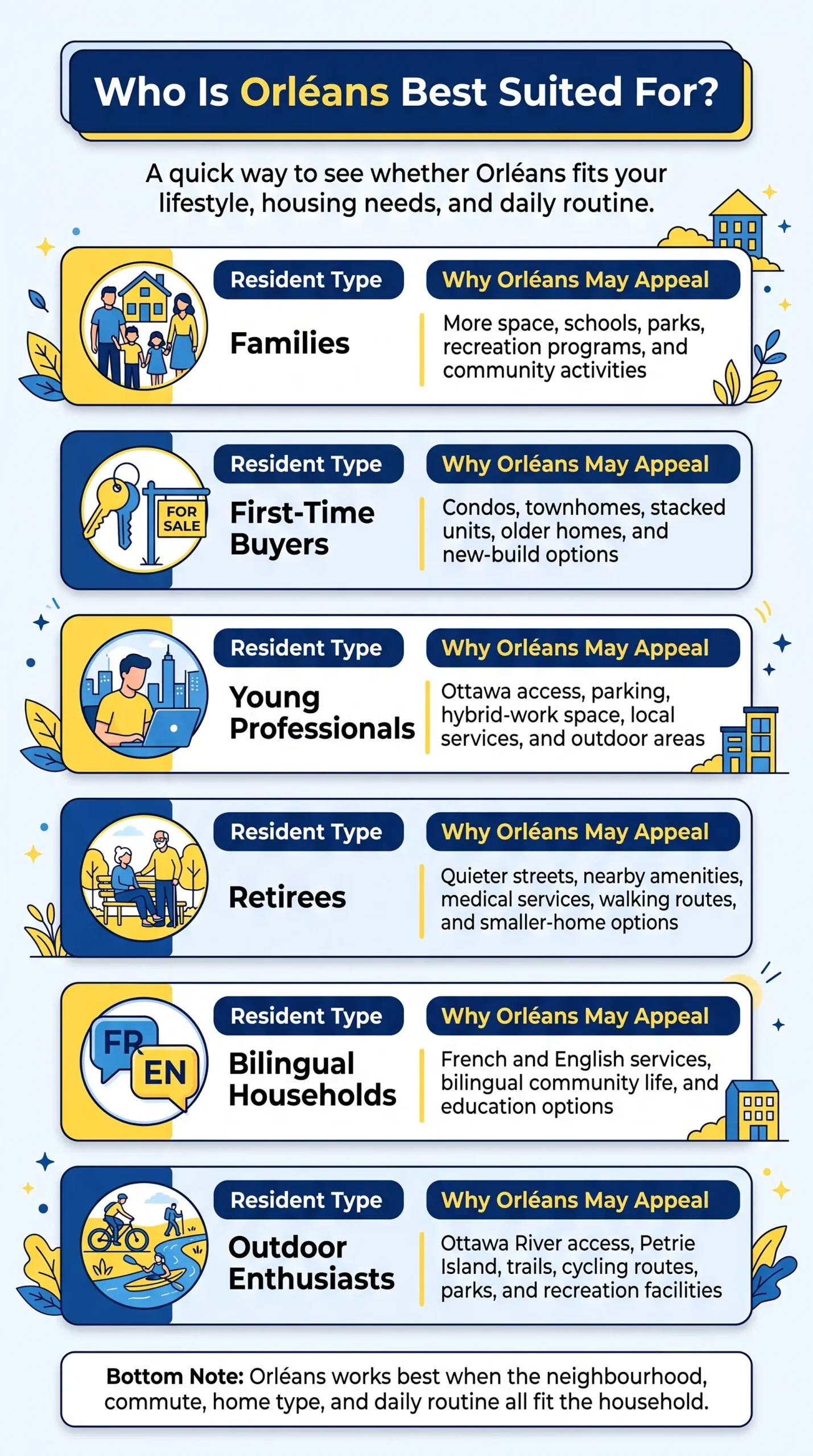
A move to Orléans is becoming a practical choice for people who want more room, quieter streets, family-friendly amenities, and suburban convenience without leaving Ottawa.
For many buyers and renters, the question is simple: is Orléans actually worth considering for the next move?
The answer depends on what you need. Orléans offers established neighbourhoods, newer communities, schools, parks, bilingual culture, daily services, and access to the rest of Ottawa.
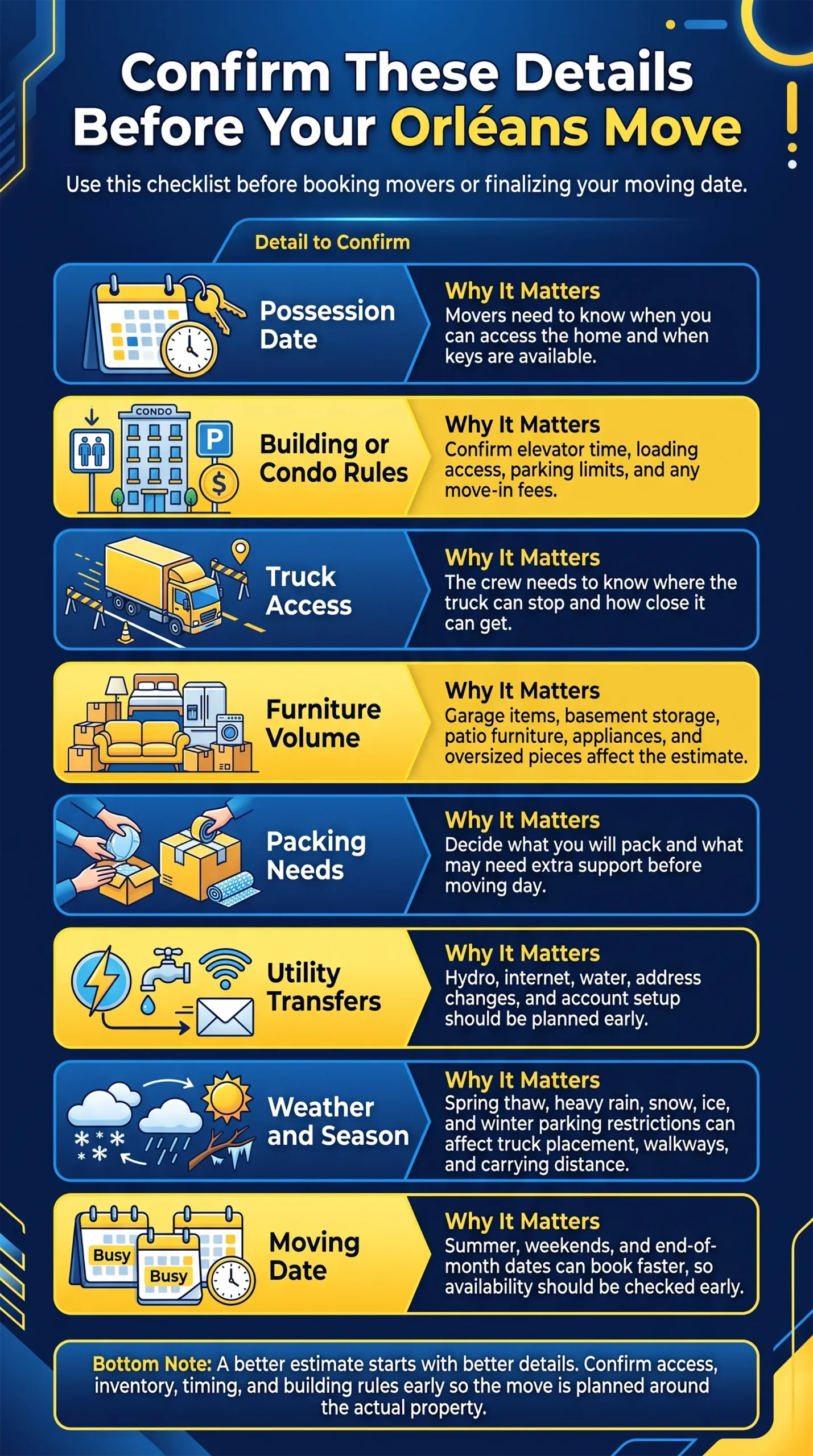
But the move itself still needs planning. Property type, possession date, parking, truck access, elevators, inventory, and building rules can all affect moving day.
Orléans can be a smart move, but the address is only one part of the decision.
The home, street, timing, and moving plan all play a role in how easy the relocation feels once the move becomes real.
Orléans Has Grown From A Rural Community Into A Major Ottawa Suburb
Orléans was not always the large east-end community people know today.
It grew from a more rural area into one of Ottawa’s major suburban communities as residential development, roads, schools, shopping, and local services expanded.
Growth around St. Joseph Boulevard helped shape the area’s commercial base.
Over time, more residential communities were added, and newer areas such as Avalon and Portobello continue to bring more housing inventory. That growth matters.
Orléans is not only an established suburb. It is still evolving, with older neighbourhoods, new-build areas, expanding services, and different property types within the same community.
Why Orléans Appeals To Buyers Looking For More Space
One reason buyers and renters look east is the chance to find more usable space than they may see in some central Ottawa neighbourhoods.
For most households, value is not only about price. It is about how the home works every day: bedrooms, parking, a garage, a finished basement, outdoor space, storage, or room for a home office.
Orléans includes condos, apartments, stacked townhomes, townhouses, semi-detached homes, detached homes, older properties, and new builds.
Avalon and Portobello are examples of areas where newer construction continues to shape the housing mix.
For most buyers and renters, the cost of living in Orléans is not only about the home price or monthly payment. It also includes condo fees, utilities, insurance, property taxes, commute costs, maintenance needs, and future development around the property.
Quote Tip: Before comparing moving quotes, build the estimate around inventory, not just bedrooms. Include living room furniture, appliances, garage items, basement storage, patio pieces, oversized items, and an estimated packed-box count. A quote based only on three bedrooms may look cleaner, but it can miss the items that decide truck size, crew size, and moving time.
A Family-Friendly Community With Schools, Parks, and Programs
Families often look at Orléans because daily routines can feel easier to manage there.
Parents are not only choosing a house. They are thinking about school access, childcare, parks, recreation programs, groceries, sports, commute patterns, and after-school activities.
Orléans offers residential streets, community-oriented neighbourhoods, playgrounds, splash pads, parks, sports facilities, libraries, recreation centres, and family activities across the area.
Schools are also a major part of the decision. Families may be looking for English education, French-language education, French immersion, or a bilingual community environment.
School boundaries, transportation, registration, and program availability should always be confirmed directly with the relevant school board because details can change by address and program.
For movers, family homes often include more than bedroom furniture. Bikes, sports equipment, basement toys, patio items, garage storage, and children’s furniture should all be included when requesting a written estimate.
The Francophone Influence Gives Orléans A Distinct Identity
Orléans is not just another east-end suburb. Its Francophone and bilingual character is another reason the area feels different from many Ottawa suburbs.
French and English are both part of daily life, from local services and businesses to community spaces, schools, restaurants, bakeries, and cultural events.
For bilingual households, French-speaking families, or people interested in French-language education, this can matter as much as the house itself.
For some households, relocating to Orléans is about more than finding the right house.
The bilingual character of the community can be part of what makes the move feel right.
Ottawa River Access and Green Spaces Add To The Lifestyle
At first glance, outdoor space may not seem like a moving factor.
But for people comparing Orléans neighbourhoods with denser parts of Ottawa, it can change how daily life feels.
Petrie Island, Ottawa River access, waterfront paths, parks, trails, cycling routes, sports fields, multi-use pathways, and recreation spaces make it easier to build outdoor time into a normal week.
Summer can mean swimming, waterfront visits, cycling, and outdoor recreation.
Autumn supports trail walks and parks. Winter shifts toward skating, cross-country skiing, snow activities, and indoor recreation. Spring brings parks, trails, and sports fields back into regular use.
The value is not tourism. It is day-to-day livability. Orléans gives many households more outdoor space close to home.
Everyday Amenities Are Close To Home
A key reason people choose Orléans is that daily errands do not always require a drive across Ottawa.
Grocery stores, pharmacies, restaurants, cafés, fitness facilities, medical and dental services, libraries, community centres, shopping plazas, and local businesses are spread throughout the area.
Before choosing a neighbourhood, check how close the home is to the places you use in a normal week.
A house may offer more space, but the location still has to work when someone needs groceries, childcare, an appointment, school drop-off, and a commute on the same day.
Convenience matters because it affects daily routine after the move, not just the home search.
Orléans Offers A Suburban Lifestyle With Access To Downtown Ottawa
Orléans sits in Ottawa’s east end, which gives it a quieter suburban feel while still keeping residents connected to the city.
Highway 174 is one of the main routes connecting Orléans with central Ottawa. Public transit may also work for some residents, depending on the neighbourhood, schedule, and destination.
The Stage 2 O-Train east extension is also part of the east-end picture, with planned service extending toward Place d’Orléans and Trim Road.
For movers, the transit project matters because construction updates, lane changes, staging areas, and station-area work can affect traffic pockets, truck routes, and property access near some corridors. Check current road notices before locking in a moving window.
The commute question depends on the person. Someone working from home most of the week may experience Orléans very differently from someone driving downtown every weekday during peak traffic.
Before buying or renting, consider where you work, how often you commute, whether you drive or use transit, and how often you need to reach central or west-end Ottawa.
A neighbourhood may look practical on a map, but the real test is how it fits work, school, errands, appointments, and weekend travel.
New Construction Is Still Shaping The Orléans Housing Market
New construction is still part of the Orléans story, especially around Avalon, Portobello, and nearby growth areas.
Newer homes can offer modern layouts, attached garages, and growing community services.
But new-build communities can also come with trade-offs: construction activity, changing traffic patterns, developing amenities, future neighbourhood expansion, and streets that are still filling in.
For buyers and renters, the main point is simple: new-build areas can offer more modern housing, but they may also need extra patience while the neighbourhood fills in.
Established Streets Vs. New Development Access
Not every Orléans move has the same access problem. Established areas such as Fallingbrook or Convent Glen may have mature trees, tighter driveways, lower branches, and less room to position a truck close to the entrance.
Newer areas around Avalon West, Orléans Village, and other developing blocks can bring a different set of issues: active construction, temporary parking limits, mud near curbs, unfinished lanes, trades on-site, and longer carries from the truck to the door.
Before booking, the useful question is not only “What neighbourhood are you moving to?” It is “Where can the truck safely stop, and how far is the front door from that spot?”
Mover’s Note: Site conditions can change the estimate even when the address is confirmed. If access is still unfinished, the mover may need to plan truck placement, carry distance, and equipment differently than a standard house move.
Before Choosing Orléans, Look At The Trade-Offs
Orléans is not the right fit for every household. More space, newer homes, parks, and everyday services can be appealing. The location still has to match your commute, transportation habits, budget, and daily routine.
Some areas may require more driving than expected. Public transit may not fit every schedule. Trips to central or west-end Ottawa can take longer during busy periods.
Lifestyle matters too. Orléans is quieter than downtown, which many people like.
Someone who wants nightlife, dense walkable streets, older architecture, or quick access to central neighbourhoods may prefer another part of Ottawa.
Newer neighbourhoods can also feel less established at first. Active construction, changing traffic patterns, limited parking, and future development may affect the feel of the area.
A good decision is not only about choosing one of the Ottawa suburbs with more space. It is about choosing a place that fits how your household actually lives.
Diy Or Movers? What To Consider For An Orléans Move
At first glance, moving yourself can look cheaper. The real question is whether the savings still make sense after truck rental time, fuel, loading time, heavy lifting, and possible extra trips.
A small apartment or lightly furnished move may be manageable with help from family or friends.
Hiring movers makes more sense when the move has a larger inventory, tighter timing, heavier furniture, limited access, or a move-in window that cannot stretch all day.
A moving crew helps most when the job needs proper loading order, bulky-item handling, floor protection, and timing control.
Cost Factor: Carry Distance
Carry distance can change the estimate even when the home size stays the same.
A truck parked 50 feet from the door is very different from one parked 150 feet away in a townhouse block, condo loading area, or new-build street.
Longer carries can mean more walking time, more handling, and more labour pressure on heavy items.
Before comparing quotes, ask where the truck can stop and how far movers will carry furniture and boxes from that point.
Mover’s Note: Before choosing DIY, do a real trip count. If the move may take two or three truckloads, the cheaper option can become a longer day with more rental time, more lifting, and more schedule risk.
Moving Into A New Orléans Development?
New-build moves need one extra check before booking: site access.
Ask the builder, site supervisor, or property manager where the truck can stop, whether the driveway or lane is usable, and whether any trades or deliveries are scheduled for the same day.
If access is still uncertain, send photos or a short video of the street, driveway, entrance, and loading area before the estimate is finalized.
Final Thoughts: Is Orléans The Smart Move For You?
Orléans can be a smart move if you want more space, a quieter residential setting, bilingual community life, parks, daily services, and access to Ottawa without living closer to the core.
But space alone should not decide the move. Look at how Orléans fits your real routine: commute, schools, services, parking, budget, home type, and long-term plans. The area may look right on paper, but it still has to work on normal weekdays.
If Orléans feels like the right fit, the next step is turning that decision into a clear moving plan.
Planning an Orléans move? Share your pickup address, delivery address, moving date, inventory, and access details with Economical Movers for a written estimate based on the actual move.