

You’re booking movers for a parent, and you need to know which company you can trust inside their home. Plenty of Ottawa senior movers say they specialize in older clients. Far fewer can show you how they deal with a retirement residence, a smaller suite, and a family member who lives two provinces away.
This guide gives you the questions to ask senior movers in Ottawa on the first call, what a good answer sounds like, the warning signs to walk away from, and a table to compare three quotes side by side. If you’re still at the planning stage, start with our guide on how to plan a senior move.
Start With Their Experience Moving Seniors
A senior move runs at a different pace from a regular move. Good movers for seniors have learned that pace on real jobs, not from a sales script.
“How Many Senior Or Retirement-Home Moves Did You Do Last Year?”
Why it matters: a real number, or the names of residences they’ve worked in, tells you this is regular work for them. “We do all kinds of moves” tells you it isn’t.
“Can I Speak To A Family You Moved?”
Why it matters: an online review covers the move. A reference from another adult child tells you how the company dealt with the family, the residence and the parent on the day.
Look what our customers says about her Senior Move:

(Review Source: https://maps.app.goo.gl/SKWCk7nZzGZ2C64T9 )
From the crew “In April we moved a lady from her home in Ottawa into a seniors’ home north of Gatineau. The drive was about an hour and 20 minutes, so we couldn’t just load the truck and go. Every piece was wrapped in blankets before it left the house, the bigger furniture was shrink-wrapped, and the mattresses went into bags. We used 27 blankets on that move alone. We also laid floor runners at both places, so nothing got marked on the way in or out. Her family got a text that morning when we were on our way, so they knew exactly when we’d arrive. [One line from Jaspreet: what he tells families now.]” — Jaspreet Singh, Senior Mover, 5 years with Economical Movers
Who Deals With The Retirement Home’s Move-In Rules?
Most Ottawa retirement residences, including those run by groups such as Chartwell and Amica, as well as independent homes, set their own move-day rules. Rules differ from one building to the next, so get them in writing from the residence. Then ask the mover these questions.
“Will You Book The Move-In Window And The Elevator With The Residence?”
Why it matters: many residences limit moves to set hours and one elevator. If the crew arrives outside that window, you can pay for movers who are standing in the lobby.
“Can You Send A Certificate Of Insurance To The Building Before Move Day?”
Why it matters: many buildings ask for a certificate of insurance (COI) naming them before they let a moving crew in. Ask how many days’ notice the mover needs to issue one.
“How Will You Protect The Floors, Walls And Elevator?”
Why it matters: residences can charge for damage to common areas. Look for floor runners, door-frame guards and elevator pads.
“Do Retirement Homes Have Their Own Movers?”
Usually not. Some keep a list of movers they’ve worked with before. It’s worth asking the residence for that list, then putting those movers through the same questions as any other.
Still Deciding Where Your Parent Should Live?
Some Ottawa neighbourhoods are easier for seniors than others: walkable streets, nearby healthcare, transit and quiet surroundings. See our guide to the best Ottawa neighbourhoods for seniors before you book your move.
Packing, Downsizing And Set-Up: What Will The Crew Actually Do?

“Full service” means different things to different movers. One crew stops at the front door of the suite. Another leaves the bed made and the pictures hung. Find out exactly which jobs the crew will do.
“Do You Help With Downsizing, Disposal And Donation Drop-Offs?”
Why it matters: a parent moving from a house to a suite usually has more than will fit. If the mover can’t remove the extra items, you’ll need to book a second company.
“Will You Unpack At The New Suite, Or Just Pack And Load?”
Why it matters: unpacking at the new suite is often where families need the most help, and some movers don’t offer it at all.
“Will You Work From The New Suite’s Floor Plan?”
Why it matters: furniture that doesn’t fit gets left in a hallway or carried back to the truck. Send the floor plan and measurements before move day, so the crew knows what goes where and what isn’t coming.
“What Does Set-Up Include?”
Why it matters: a good senior move ends with the bed made, the chair by the window and the pictures on the wall. Check which of these the crew will actually do before you book.
Can You Trust The Crew In Your Parent’s Home?
This is the question most families are really asking. These are the answers that address it.
“Are Your Movers Employees Or Subcontractors?”
Why it matters: subcontracted crews can change from job to job, and the company may know less about who’s coming.
“Are Your Movers Background-Checked?”
Why it matters: the crew will be alone with your parent’s belongings, and maybe your parent, for hours.
“Will The Same Crew Stay From Loading To Set-Up?”
Why it matters: when the crew changes partway through, the people setting up the suite don’t know which boxes matter or where things belong.
“Will The Crew Work At Your Parent’s Pace?”
Why it matters: some seniors want to watch and make decisions as items are loaded. A crew that’s racing the clock will rush them.
“Can You Handle A Move When The Person Has Dementia?”
Why it matters: changes in routine can be very upsetting for a person with dementia. Ask whether the crew can keep a quiet pace, keep the same faces on the job all day, and set up the bedroom first so it looks familiar.
Hourly Rates For Senior Movers In Ottawa
Ottawa movers charge by the hour, and the rate covers the movers and the truck. For a senior move, the bill depends on how many movers you need, whether your date is a regular or peak day, and how easy the residence is to get into. Here’s what Economical Movers charges, so you have a benchmark when other quotes come in.
Economical Movers hourly rates: movers + truck (CAD, before 13% HST)
| Crew Size | Regular Days (Per Hour) | Peak Days (Per Hour) |
|---|---|---|
| 2 movers | $130 – $145 | $149 – $169 |
| 3 movers | $189 – $195 | $199 – $209 |
| 4 movers | $240 – $250 | $250 – $269 |
The Rules That Change The Price:
- Peak Days Cost More.
Peak days are the 27th to the last day of the month, plus the 1st and 2nd of the next month. If the residence lets your parents pick a date, a mid-month date is cheaper. - There’s A 2-Hour Minimum.
Every job is billed for at least 2 hours. After that, time is billed in 15-minute steps, so you only pay for the time used. - Travel Time Isn’t Charged.
Instead, there’s one flat transportation fee, so traffic on the drive doesn’t add to the bill. - Hst Is Added At The End.
13% HST goes on the total of the hourly charges and the transportation fee. - Stairs, Elevators And Long Carries Add Time.
A third-floor walk-up, a wait for the residence elevator, or a long walk from the truck to the door all add to the hours. Tell the mover about them when you ask for a quote.
The smallest possible job: 2 movers for the 2-hour minimum on a regular day comes to $260 to $290, plus the transportation fee and 13% HST.
How The Quote Is Worked Out, and What Can Add To It

Surprise costs on move day nearly always come from something the quote didn’t mention. Ask:
- “Is My Date A Peak Day?”
Ask whether moving the date a few days would put it on the regular rate. - “How Many Movers Do We Need, And Why?”
More movers cost more per hour but can finish sooner. A good mover can explain why they picked that crew size. - “Can You Quote By Video If I’m Not In Ottawa?”
A video walkthrough works well for family members out of town. An in-home visit is better for a large house with a basement or a garage full of items. - “Will You Put The Estimate In Writing?”
A verbal quote can’t be checked later.
How Far Ahead Should You Book? For May to September, and for any end-of-month date, aim for four to six weeks. Also allow for the residence’s own notice period for elevator bookings.
If Something Breaks: Coverage and Claims
Ontario has no provincial licence for household movers, so the documents a mover can show you carry more weight.
- Basic Coverage Pays By Weight, Not By Value. Basic coverage is often $0.60 per pound per item. That’s a cap on what you get back: a 30-pound lamp worth $400 would pay about $18 (30 × $0.60). Most movers include released-value protection at $0.60 per pound per item, and offers an upgrade to full replacement-value coverage for the items that matter.
- Liability Insurance and WSIB. Ask for proof of liability insurance and a WSIB clearance certificate. WSIB covers the mover’s workers if someone is hurt in your parent’s home.
- CVOR. Larger moving trucks in Ontario need a CVOR certificate. Ask for it.
- Check for Certification. Membership in a reputable certification body that accredits moving companies in your area indicates that the company follows industry standards.
Take Photos. Photograph valuable furniture before move day. Photos make a damage claim much easier to settle. - Know The Claim Deadline. Find out how long you have to report damage, and report it in writing.
Coverage pays for damage. Good handling prevents it. See 7 ways our crew makes senior relocations easier, from wrapping and padded trucks to setting up the new suite.
Staying In The Loop When You Can’t Be There
Many adult children organise a parent’s move from another city. Settle these before the day:
“Who Is My Contact On Move Day?”
Why it matters: you need one name and one phone number, not a general office line.
“Can You Text Me Photos When The Truck Is Loaded And When The Suite Is Set Up?” Why it matters: photos let you check the work without being there.
“Should My Parents Be There On Moving Day?” Some seniors want to see it through. Others find a full day of moving tiring. Decide this ahead of time, and tell the crew who has the final say on the day: your parents, you by phone, or someone you name.
When The Move-In Date Changes
Residence dates slip. Suites aren’t ready, paperwork runs late, and health changes things. Ask:
- “Can The Move Be Split Over Two Days?” For example, pack and load one day, then deliver and set up the next.
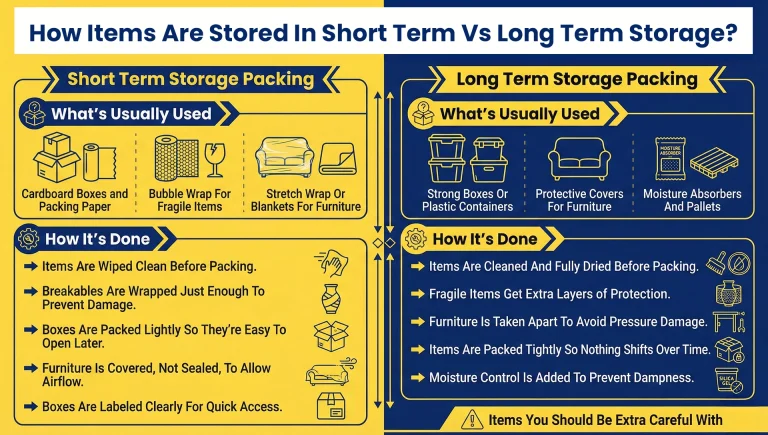
- “Is Short-Term Storage Available If The Suite Isn’t Ready?” Many movers offer temperature-controlled storage for short- and long-term needs.
Warning Signs That Should Make You Walk Away
- A firm quote given over the phone, without anyone seeing the home or a video
- A large cash deposit up front
- No physical business address
- Vague answers about what coverage pays
- Pressure to book the same day
Comparing More Than One Mover? Download our free Ottawa Senior Movers Quote Comparison Sheet (PDF). It lists every question from this guide in one printable table, with space for three movers, so you can see at a glance whose quote is clear and whose isn’t.
Before You Call: Have These Details Ready
Movers can only quote accurately on what they know. Before the first call, gather:
- The new suite’s floor plan and measurements
- The residence’s move-in rules (hours, elevator, COI)
- Any mobility or health needs on the day
- What’s being kept, donated, or stored
- The move-out and move-in dates
With these ready, every quote covers the same job, and the numbers can be compared fairly.
Not sure what your parent’s move will involve? Talk through the details with our senior moving team. They can help you work out what’s needed, with no pressure to book.