Moving is hard at any age. But when it’s a parent or grandparent leaving the home they raised a family in, it’s about more than boxes and trucks. That house holds decades of birthdays, holidays, and everyday life, and letting go of it is a different kind of heavy.
Families want to help, but downsizing conversations can turn emotional fast. Timelines run into health concerns, and a simple question like “what should we keep?” can quietly become something bigger.
So we asked REALTORS®, senior move managers, and professional organizers who do this work every day. What trips families up? What makes the process easier? And what’s the one piece of advice they’d give an adult child helping a parent move?
Here’s what they told us.
Meet Our Experts

Keisha Telfer
Broker of Record | Transitions Seniors Downsizing & Estate Services
Keisha Telfer is the Co-Founder of Transitions Seniors Downsizing & Estate Services, a division of Transitions Realty Inc., Brokerage, serving the Greater Toronto Area and parts of Southern Ontario. She specializes in helping adults aged 55+ and their families navigate home downsizing, real estate, estate transitions, and senior relocations. As a Seniors REALTOR®, Keisha and her team coordinate every stage of the downsizing journey—from decluttering and preparing a home for sale to organizing the move and helping clients settle into a home that supports aging in place.
Visit Website
Victoria Kneebone
REALTOR® | Royal LePage Integrity Realty
Victoria Kneebone is a REALTOR® with Royal LePage Integrity Realty, helping buyers and sellers navigate Ottawa real estate market with confidence. Before transitioning into real estate, she worked with a local mental health organization, supporting children and families through challenging situations. Her background in psychology and client advocacy enables her to communicate effectively, understand clients unique needs, and guide them through major life transitions—including moves—with empathy and practical advice.
Visit Website
Claudia Armstrong
Claudia Armstrong Professional Organizer
Claudia Armstrong is the owner of Claudia Armstrong Professional Organizer, where she helps individuals and families create organized, functional living spaces through decluttering, downsizing, packing, and move management. She specializes in lifestyle-based home organizing, storage solutions, home staging, and sustainable donation and recycling practices. With experience supporting seniors and clients with ADHD, Claudia provides practical, personalized guidance that makes home transitions less overwhelming and more manageable.
Visit Website
Penny Stackhouse
Broker of Record | Engel & Völkers Barrie
Penny Stackhouse is the Broker of Record at Engel & Völkers Barrie, helping buyers and sellers make confident real estate decisions across Simcoe County. Known for her integrity, compassion, and client-first approach, she is dedicated to guiding people through important life transitions with personalized support. Having lived in Barrie and Oro-Medonte for more than two decades, Penny combines strong local market knowledge with a genuine commitment to helping families achieve their goals with confidence and care.
Visit Website
Shaunna McIntosh
Ottawa Residential Real Estate Specialist
Shaunna is an award-winning Ottawa REALTOR® recognized as one of the top real estate professionals in her market since 2021. She has earned national recognition within Royal LePage, including ranking in the Top 5% of Realtors nationwide and receiving the Red Diamond Award in 2025. Known for her professional, knowledgeable, and approachable style, Shaunna quickly puts buyers and sellers at ease throughout the real estate process. She is highly regarded for her deep understanding of the Ottawa real estate market and her ability to clearly guide clients through important decisions. Her honesty, attention to detail, and strong negotiation skills have made her a trusted real estate professional in Ottawa’s competitive housing market.
Visit WebsiteWhat Are The Biggest Challenges Seniors Face During A Move?
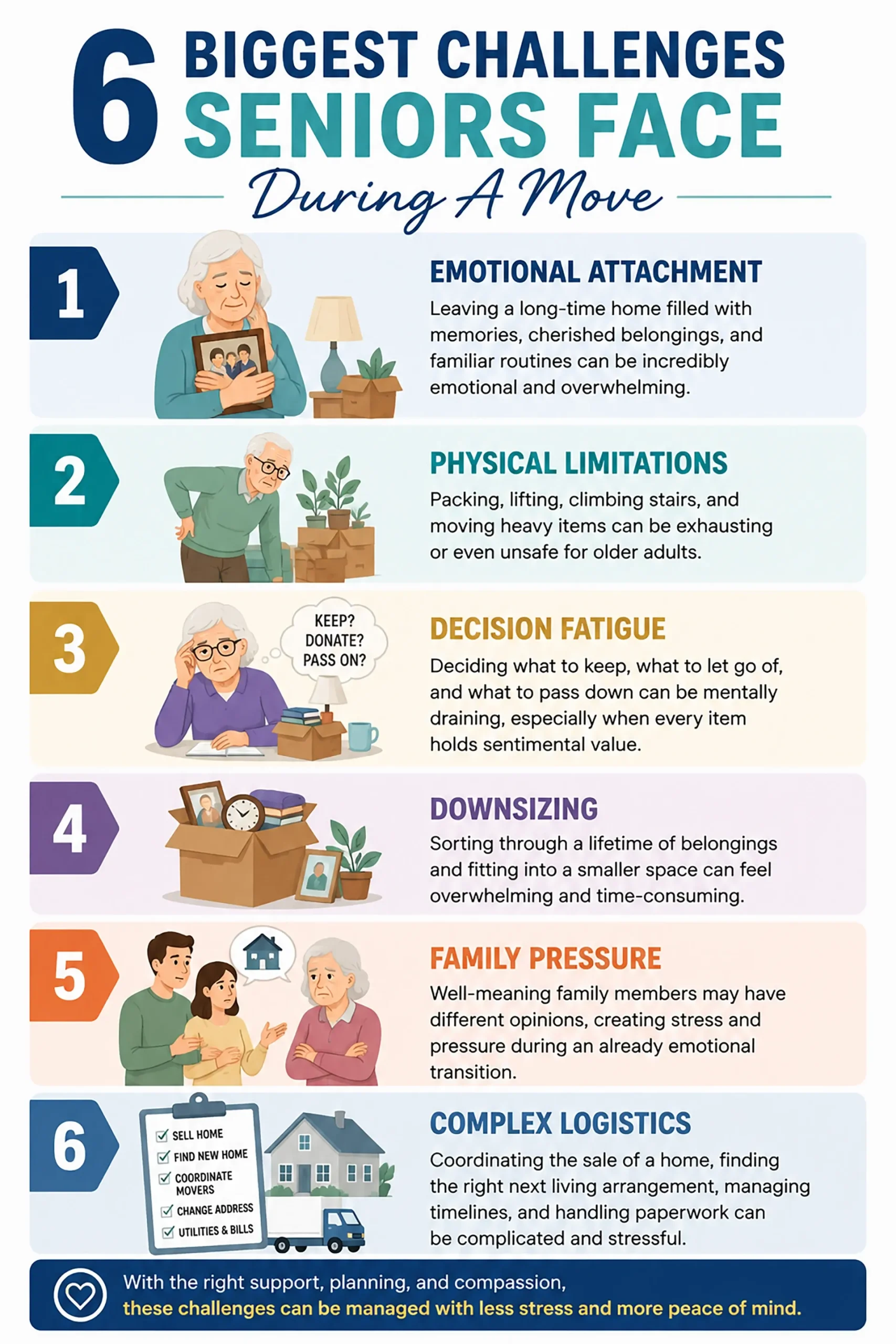
On paper, moving is a logistics problem. Sort, pack, sell, transport, unpack. But for a senior leaving a home they’ve lived in for twenty, thirty, forty years, the hard part rarely shows up on a checklist.
It’s a closet full of a spouse’s clothes nobody’s touched in years. It’s a body that doesn’t move boxes the way it used to, and the quiet fear of getting hurt trying. It’s deciding, in a matter of weeks, what from an entire lifetime is worth keeping.
Families feel it too, from the other side. You want to protect your parent from overexertion and rushed decisions, but you don’t want to steamroll them in a home and a life that are still theirs.
Here’s where our experts say families run into trouble most.
Expert #1 : Keisha Telfer
Moving is so much more than just packing boxes. For many seniors, moving means leaving behind a family home filled with decades of memories, as well as cherished belongings. That can feel incredibly emotional and overwhelming.
Many seniors also find the physical side of downsizing and moving exhausting, especially when they’re trying to decide what to keep, what to let go of, and what to do with the stuff they can’t take with them. On top of that, seniors and their families aren’t always aware of all the living options and support available to them, which can create a lot of uncertainty and stress during an already emotional time.
It’s also challenging for families helping seniors move. They’re often balancing busy schedules, difficult conversations, and complex logistics while making sure their older loved ones will be safe, supported, and well cared for.
Expert #2 : Victoria Kneebone
The biggest hurdle isn’t the move, it’s the emotional weight of letting go of a home filled with decades of memories. Decision fatigue is real, especially when every item feels meaningful. Add in physical limitations and tight timelines, and it can quickly become overwhelming, this is where hiring the right realtor matters, someone who works at your pace without pressure.
Expert #3 : Penny Stackhouse
For most seniors, the physical move is only part of the challenge. The emotional side can be even harder. Many have lived in their home for decades, raised families there, and accumulated a lifetime of belongings and memories. Deciding what to keep, donate, or pass along to family members can feel overwhelming. On top of that, navigating the logistics of selling a home, finding the right next living arrangement, and coordinating timelines can create significant stress. Finding the right professional to help you navigate that journey is crucial.
Expert #4 : Shaunna McIntosh
The biggest challenge is that a move is rarely just about the house – it’s about leaving behind years, and sometimes decades, of memories. Many seniors are also moving because of a major life change, whether it’s health, losing a spouse, or simply needing a home that’s easier to manage, so there is often a significant emotional component alongside the physical logistics. As a Realtor, I’ve found that taking the time to slow the process down and make decisions in manageable steps makes a tremendous difference.
Expert #5 : Claudia Armstrong
Their Children pressure. They normally have lots of memories that are valuable for them and their families want to get rid off lots or all of them.
Key Takeaways
Although each expert brings a different professional perspective, they all agree that the emotional aspect of a senior move is often more difficult than the physical move itself. Leaving a long-time home, sorting through decades of cherished belongings, and adjusting to a major life transition can quickly become overwhelming without the right support.
Some of the most common challenges highlighted by the experts include:
- Emotional attachment to a home and personal belongings built over many years.
- Difficulty deciding what to keep, donate, pass down, or let go.
- Physical limitations that make packing, downsizing, and moving more demanding.
- Family pressure or conflicting opinions during the decision-making process.
- Complex logistics, including selling a home, finding suitable housing, and coordinating the move.
- The importance of working with experienced professionals who understand senior transitions and can reduce stress throughout the process.
The overall message is clear: a successful senior move isn’t measured by how quickly it happens—it’s measured by how respectfully, thoughtfully, and compassionately the transition is handled.
What Steps Can Make A Senior Move Safer And Less Stressful?
Preparation makes the biggest difference in how a senior move actually feels. Careful planning, realistic timelines, and the right support can ease both the physical strain and the emotional weight that so often come with a later in life move. Instead of trying to handle everything at once, breaking the process into smaller steps gives seniors and their families room to make thoughtful decisions instead of rushed ones.
We asked our experts what actually makes a senior move safer and less stressful, and here’s what they had to say about the steps that make the biggest difference.
Expert #1 : Keisha Telfer
The safest and least stressful senior moves are usually the ones planned early and tackled step by step. Start with a clear plan and allow enough time for good decision-making. It’s also important to get help with physically demanding tasks like decluttering, packing, and moving furniture, since these activities can become exhausting or even unsafe for older adults. Family members, community supports, and trusted professionals can make the process much more manageable
Expert #2 : Victoria Kneebone
Start earlier than you think and break the process into micro-decisions, room by room, category by category. Bring in third-party professionals (organizers, downsizing specialists) to remove emotional pressure from family dynamics. Recreate the new space in advance to reduce disorientation, and don’t assume these services are out of reach, many are more affordable than expected and a good realtor can connect you.
Expert #3 : Claudia Armstrong
First will be to downsize. Clothing and articles that they don’t use/ need / want anymore, like that, they just bring to their new home ONLY what they need. Is important to inform them that all of that will be donated and no through to the garbage.
They can choose to give away things that the families want to keep as memories, that makes them feel good.
Then to pack by category according to their new place, because normally they are downsizing and they don’t have enough space for everything.
Ornaments, seasonal decorations, pictures, frames, etc.
Same for the kitchen. Just to bring what they are able to use ( if they still cooking or entertain)
Expert #4 : Penny Stackhouse
Planning early is one of the best ways to reduce stress. Start the conversation months before the move whenever possible. Break the process into smaller, manageable steps, such as decluttering one room at a time and creating a clear moving timeline. It’s also important to build a team of trusted professionals, including a Realtor experienced with senior transitions, movers, organizers, legal professionals, and family members who can help. The goal is to minimize last-minute decisions and ensure the senior feels supported throughout the process.
Expert #5 : Shaunna McIntosh
Planning ahead is one of the best ways to reduce stress. Whenever possible, I encourage families to start downsizing early, create a realistic timeline, and lean on professionals who regularly work with seniors, such as movers, organizers, and Realtors who understand the unique challenges involved. Having the right team in place allows seniors to focus less on the logistics and more on the excitement of the next chapter.
Key Takeaways
Across all five expert responses, a few practical themes kept coming up.
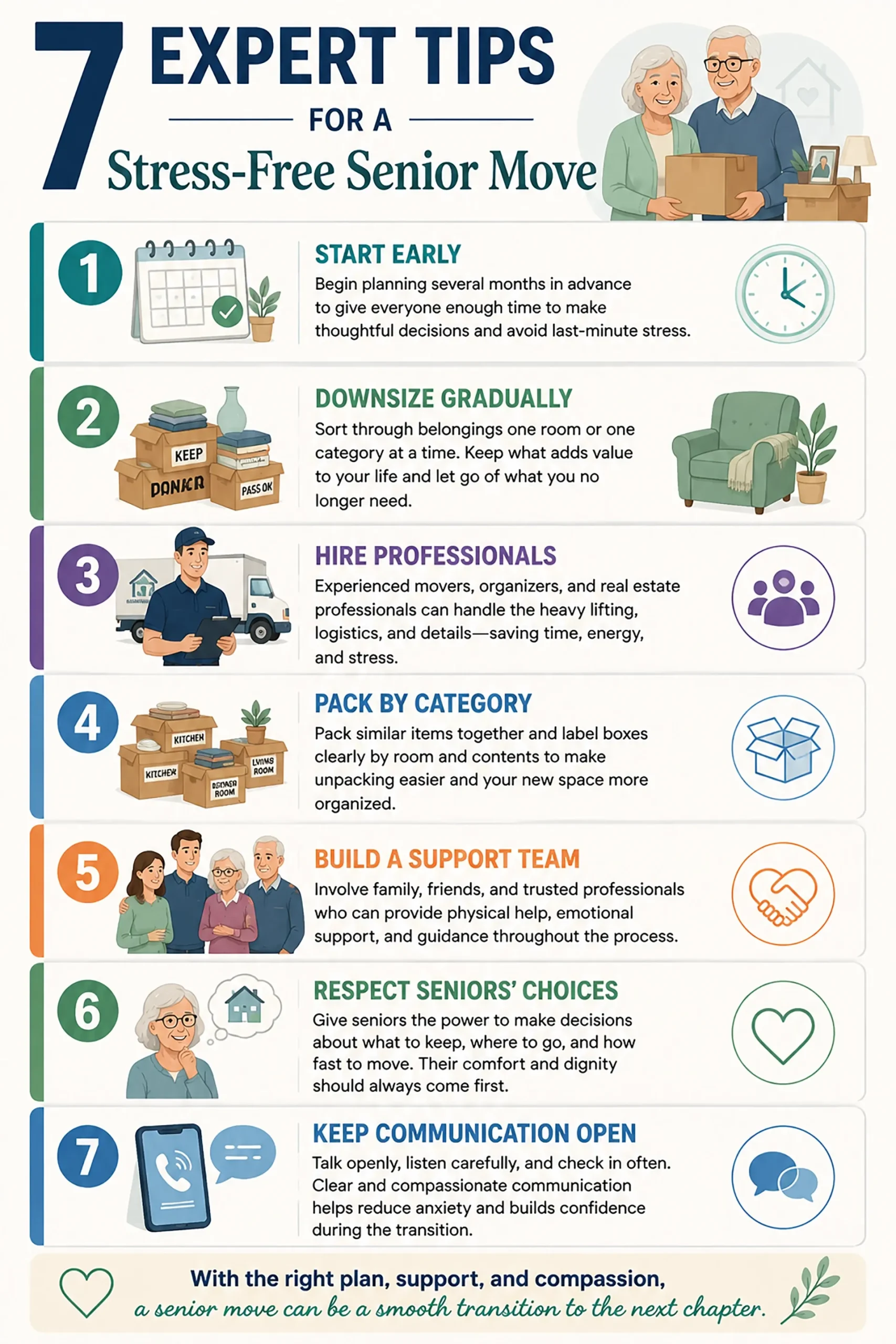
- Start early. Early planning means fewer rushed decisions and less stress later.
- Take it one room at a time instead of trying to tackle the whole house at once.
- Downsize with care. Keep what fits the new home, and pass along the rest thoughtfully.
- Build a support team. Family, professional organizers, experienced Realtors, downsizing specialists, and movers can all play a part.
- Let professionals handle the heavy lifting, literally, to keep seniors safe from strain or injury.
- Set a realistic timeline that leaves room for decisions to be made without pressure.
- Label everything by category or destination room so unpacking is simple.
- Set up the new space ahead of time so it already feels a little like home on arrival.
What Is The Best Advice For Families Helping A Senior Move?
Helping an older loved one move is about much more than organizing boxes or booking movers. It often involves navigating emotional conversations, respecting lifelong memories, and balancing practical decisions with compassion. While family members naturally want to make the process easier, moving too quickly or taking over important decisions can unintentionally add stress.
To understand what truly helps, we asked experienced professionals who regularly work with seniors and their families to share the one piece of advice they believe every family should follow. Although their backgrounds vary, their recommendations consistently emphasize patience, empathy, and allowing seniors to remain active participants throughout the moving process.
Expert #1 : Victoria Kneebone
Don’t lead with logistics—lead with empathy and control. Give the senior decision-making power wherever possible, even in small choices, to preserve dignity. A smooth move isn’t just about efficiency, it’s about making them feel secure, respected, and genuinely heard throughout the process.
Expert #2 : Penny Stackhouse
Include the senior in every decision. Family members often focus on what they believe is best, but the move will be far more successful when the senior feels heard, respected, and in control of the process. Taking the time to understand their concerns, preferences, and goals helps preserve dignity and reduces anxiety. A move isn’t just about changing addresses—it’s a major life transition, and compassion goes a long way.
Expert #3 : Shaunna McIntosh
Remember that this is their move, not yours. It’s natural to want to help by making decisions quickly, but involving your loved one in the process and respecting the pace they’re comfortable with helps preserve their independence and dignity. In my experience, those conversations are often just as important as the move itself.
Expert #4 : Claudia Armstrong
To hire a Professional Organizer!! Believe me, is worth it!
Family members pressure to much for them to give away lots of memories and if is well organized and label they can keep it! That is like a “safety blanket” for them.
Expert #5 : Keisha Telfer
Don’t wait until a crisis forces rushed decisions. Many families begin planning only after a fall, hospitalization, or sudden health change, which can make the process far more stressful and emotional. Starting conversations early gives seniors more choice, more control, and more time to make thoughtful decisions about their future, possessions, and living arrangements.
Key Takeaways
Although each expert approached the question from a different professional perspective, they all emphasized one important principle: put the senior at the center of every decision. A successful senior move isn’t about completing the process as quickly as possible—it’s about helping older adults feel respected, involved, and supported every step of the way. By planning ahead, communicating openly, and allowing seniors to make meaningful choices, families can turn what may feel like an overwhelming transition into a more positive and empowering experience.
Some of the most valuable lessons shared by our experts include:
- Let seniors remain involved in every decision, regardless of how small it may seem.
- Respect the memories attached to their home and belongings instead of focusing only on decluttering.
- Avoid rushing the process and allow enough time for thoughtful conversations and decision-making.
- Support rather than pressure your loved one when discussing downsizing or letting go of possessions.
- Start planning before an emergency occurs, giving seniors more control over their future.
- Preserve independence, dignity, and choice throughout the entire moving journey.
- Consider hiring experienced professionals, such as organizers, Realtors, and senior moving specialists, to reduce family stress and provide objective guidance.
The experts agree that while boxes and furniture can be moved in a day, building trust, preserving dignity, and respecting a senior’s wishes are what truly make a move successful.
Common Themes Every Expert Agreed On
Although each expert comes from a different professional background—including real estate, senior downsizing, and professional organizing—their advice shared several common themes. Regardless of the circumstances surrounding a move, they agreed that successful senior relocations are built on thoughtful planning, empathy, and giving older adults the support they need throughout the transition.
Here are the six biggest lessons that appeared consistently across every expert’s advice.
1. Start Planning Earlier Than You Think
One of the strongest messages from every expert was the importance of planning well in advance. Waiting until a health emergency or unexpected life event forces a move often leads to rushed decisions and unnecessary stress. Starting early gives seniors and their families more time to explore housing options, organize belongings, create a realistic timeline, and make thoughtful decisions without feeling pressured.
2. Senior Moves Are Emotional, Not Just Physical
Every expert emphasized that moving later in life involves much more than transporting furniture. Seniors are often leaving behind decades of memories, familiar routines, and a place they’ve called home for many years. Recognizing the emotional side of the move and approaching it with patience and understanding can make the entire experience less overwhelming.
3. Downsizing Should Be Done Gradually
Sorting through a lifetime of possessions takes time, and experts agreed that it should never be rushed. Working through one room, one category, or one decision at a time helps reduce decision fatigue and makes downsizing more manageable. Families should also respect sentimental items and allow seniors to decide what they want to keep, donate, or pass on to loved ones.
4. Build a Team of Experienced Professionals
No family should feel they have to manage a senior move alone. The experts recommended working with professionals who understand senior transitions, such as experienced movers, REALTORS®, professional organizers, and downsizing specialists. The right team can reduce physical strain, simplify logistics, and provide valuable guidance throughout the process.
5. Give Seniors Control Throughout the Process
A recurring theme throughout every response was the importance of preserving a senior’s independence. Even when family members are trying to help, involving seniors in decisions about their belongings, living arrangements, and moving timeline helps them feel respected and in control. Small choices can have a significant impact on maintaining dignity and reducing anxiety during a major life transition.
6. Families Should Support—Not Pressure
Helping a loved one move requires empathy as much as organization. Rather than pushing quick decisions or focusing solely on efficiency, families should listen carefully, respect their loved one’s concerns, and offer encouragement throughout the journey. Creating a supportive environment allows seniors to embrace the next chapter of their lives with greater confidence and peace of mind.
Taken together, these expert insights point to one simple idea. A successful senior move isn’t about how fast it gets done. It’s about how thoughtfully it’s planned and how respectfully the senior is treated along the way. By starting early, bringing in professional support, and keeping seniors involved in every decision, families can make the whole experience smoother, safer, and far less stressful.
Senior Moving Checklist
Planning a senior move can feel overwhelming, but breaking the process into smaller tasks makes it much more manageable. Use this checklist to stay organized and ensure nothing important is overlooked before moving day.
Before The Move
☐ Start planning the move several months in advance whenever possible.
☐ Discuss the move openly with your loved one and involve them in every major decision.
☐ Create a realistic moving timeline with achievable milestones.
☐ Research the new home or community and measure rooms to ensure furniture will fit.
☐ Begin downsizing one room at a time instead of trying to do everything at once.
☐ Decide which belongings to keep, donate, sell, recycle, or pass on to family members.
☐ Hire experienced professionals such as movers, a REALTOR®, or a professional organizer if additional support is needed.
Packing & Preparation
☐ Label every box clearly by room and contents.
☐ Pack sentimental and valuable items separately so they remain easily accessible.
☐ Keep medications, medical equipment, and important daily essentials together.
☐ Gather important documents, including identification, insurance papers, legal documents, prescriptions, and emergency contact information.
☐ Notify utility providers, financial institutions, healthcare providers, and subscription services of your address change.
☐ Arrange utility connections at the new home before moving day.
Moving Day
☐ Confirm the moving schedule with your movers and ensure everyone understands the plan.
☐ Keep an overnight essentials bag with clothing, toiletries, medications, chargers, snacks, and important paperwork.
☐ Walk through the old home to ensure nothing has been left behind.
☐ Make sure frequently used furniture and personal items are placed in easily accessible locations at the new home.
☐ Take your time settling in—there’s no need to unpack everything in a single day.
Final Tip
If there’s one lesson that came through in every conversation we had, it’s this. Start early, involve your loved one in every decision, and don’t be afraid to ask for professional help. A well planned move isn’t just about getting belongings from one home to another. It’s about helping seniors step into the next chapter of their lives with confidence, comfort, and dignity.
Final Thoughts
No two senior moves are exactly alike. Every individual has different needs, health considerations, family dynamics, and emotional attachments that shape how the experience unfolds. Every expert we spoke with brought a different perspective, but they all agreed on one thing. A successful senior move is built on planning, patience, empathy, and respect.
Rather than rushing to get it done, families are better served by helping seniors feel heard, supported, and involved in every decision. Starting early, downsizing at a comfortable pace, and working with experienced professionals can ease the stress and make the transition smoother for everyone.
With the right approach and the right people by your side, a senior move can become the start of an exciting new chapter instead of just a stressful event.
Planning A Senior Move In Ottawa?
We want to thank all the professionals who shared their knowledge for this guide. Their insight will help seniors and families move through one of life’s biggest transitions with greater confidence.
Having an experienced local team makes a real difference, whether you’re helping a parent downsize, move into a retirement community, or settle into a smaller home. At Economical Movers, we know senior moves in Ottawa take more than transportation. They call for patience, careful planning, and respect for every person and belonging involved.
Our team coordinates every stage of your move, from careful loading to safe delivery at your new home, building a plan around your family’s needs.
Contact us today to discuss your upcoming senior move in Ottawa.