Ask any shop owner who has changed locations, and they’ll tell you the boxes were the easy part. The hard part is everything that can’t stop while you move: sales, appointments, deliveries, payroll.
A dentist worries about chairs and X-ray units. A café owner worries about the espresso machine and losing a Saturday. This guide covers what to expect, what you need to arrange, and when to move, based on the offices, stores, restaurants, clinics, warehouses and gyms our crews have moved across Ottawa since 2021.
Why Does Every Business Need Its Own Moving Plan?
A dental clinic and a furniture store might move on the same weekend, but they’re not worried about the same things. The store owner is thinking about the Saturday sales she’ll lose. The clinic manager is stuck rebooking Monday’s patients and wondering if the X-ray machine will work once it’s plugged in at the new place. A warehouse has a third problem: orders still have to go out the door while the shelving is being taken apart.
So we don’t hand anyone a generic checklist. The first question we ask a business owner isn’t “how much stuff do you have?” It’s “what does a normal Tuesday look like for you?” That answer tells us almost everything. It decides how many movers we send, what the job will cost and which day makes sense to move. A restaurant that does most of its business on weekends needs a very different plan from an accounting firm that’s slammed every March.
Your type of business also decides what goes on the truck first, who from your team should be there, and how long you can realistically stay closed. For some clients that’s a few hours. For others it’s a full weekend. Below, we go through the move step by step, then look at what changes from one industry to the next.
What Happens From The First Call To The Final Walkthrough?
After enough commercial moves, you notice they almost always go the same way. We look at your space, you get a written quote, someone sorts out the building paperwork, we do the move (usually after you’ve closed for the day), and then we walk through the new place together to check everything.
The businesses that have the easiest moves usually know these steps before we ever show up. One of the most common mistakes we see is booking the move first and then trying to fit customers around it. It works much better the other way around. Pick the dates that hurt your business least, and let us build the truck schedule around those.
1. The Site Visit
A good mover won’t quote you blind. They’ll come by, or do a video call if that’s easier, and look at the things that actually affect the job: how heavy everything is, what has to be taken apart, and how the crew will get in and out. That means stairs, elevator size, whether there’s a loading dock, and where a 26-foot truck can park without getting a ticket.
One tip: open every door during the walkthrough, including the back storage room and that closet full of old files nobody’s touched since 2019. Moves almost never run late because of the stuff everyone knew about. They run late because of the stuff nobody mentioned.
2. The Written Quote
Your quote should say exactly how many movers are coming, how many trucks, what time they’ll arrive and how long the job should take. It should also spell out whether taking furniture apart and putting it back together is included, and what packing supplies you’re getting (boxes, crates, wrap). If something you were promised on the phone isn’t in writing, ask about it before you sign. “We’ll figure it out on the day” usually costs extra.
3. The Building Paperwork
Most commercial buildings won’t let movers in without two things: a certificate of insurance (COI) from the moving company and a booked elevator and loading dock time. Downtown towers and Kanata North office parks can ask for these a week or more ahead, so check with your property manager as soon as you’ve picked a date.
4. Moving Day (or Night)
The first thing the moving crew does when they arrive isn’t picking up a box. It’s covering floors, wrapping door frames and padding the elevator. A few minutes of prep saves you the hassle of handling damage claims, repair bills or an unhappy building manager later.
Next, they take apart whatever won’t fit through the doors in one piece, load the truck, and set everything back up at the new place. Most businesses move after closing or on a weekend, so staff can leave on Friday and walk into a working office on Monday. For bigger jobs, movers often split the move over two or three nights, or do it floor by floor, so you’re never fully shut down.
5. The Final Walkthrough
Don’t let the crew drive off until you’ve walked the new space with the lead mover. Check that desks, shelves and equipment ended up where you wanted them, and look closely for scratches or dents. Then open a few drawers and test a couple of chairs.
If you spot a problem, take a photo and write it down right there, while everyone’s still in the room. It’s much easier to sort out on the spot than with an email three days later. And because one company handled the whole move, you know exactly who to call. Nobody can say it was damaged before it got to them.
What Does Your Mover Handle, and What Do You Arrange?
This is where most last-minute panic, so it’s worth getting clear early. A moving team pack, move, take apart and put back together your furniture and equipment. What they don’t do is connect anything to gas, water, electrical or your network. That’s work for licensed trades, your IT team or whoever supplied the equipment.
Say a dental chair needs a plumber, or a server rack needs your IT person on site. Both should be booked when you book commercial movers, not during the move. The moves that finish on time are almost always the ones where everyone knows their job weeks ahead.Given below are the details of what movers do and what business should arrange by themselves:
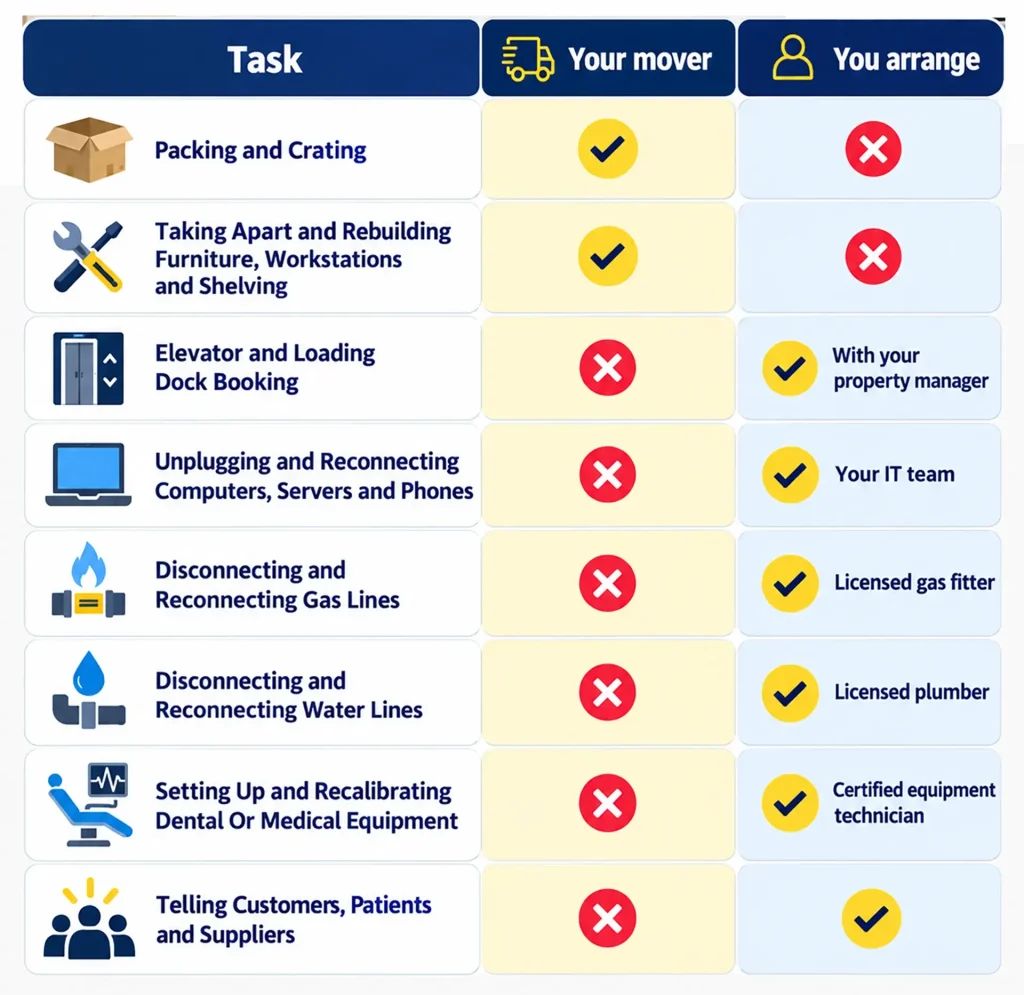
Book your trades the same week you book your movers. Gas fitters, plumbers and technicians get busy too, and the move can’t finish until they’ve done their part. If you’d rather not juggle the bookings, ask your mover to coordinate the plumber or technician for you.
What Should Each Type of Business Plan For?
A few challenges hit almost every Ottawa business. Winter parking bans can leave a truck with nowhere to park. The weeks around July 1 are busy because Quebec’s moving day ties up crews on both sides of the river. And most commercial buildings set their own rules on move times. Beyond that, each industry has its own pressure points.
Offices
The big worry is Monday morning. Computers and servers have to be running, every desk back where it belongs, and confidential files kept in locked tubs or carried by a trusted staff member. Downtown towers often allow office moves only after hours.
Retail Stores
A store move is mostly done before the truck shows up. Stock should be counted and packed aisle by aisle so restocking is quick. Shelving, display racks and the checkout counter go up first, then stock. Your POS, cameras, and alarm must work before you open. Mall stores usually move only after closing. Plan how customers will find your new location, too.
Restaurants and Cafés
The kitchen is the hard part. Coolers have to be moved, and food has to be used up or kept cold. Parking around the ByWard Market or the Glebe makes loading slow, so build in extra time.
Dental and Medical Clinics
Dental chairs, compressors, sterilizers and imaging units are delicate and expensive. Patient files must stay secure under Ontario’s privacy law (PHIPA), and appointments need to be rescheduled well in advance.
Warehouses
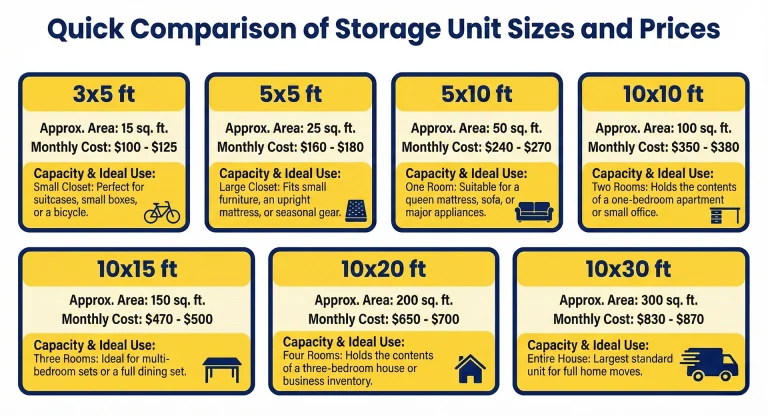
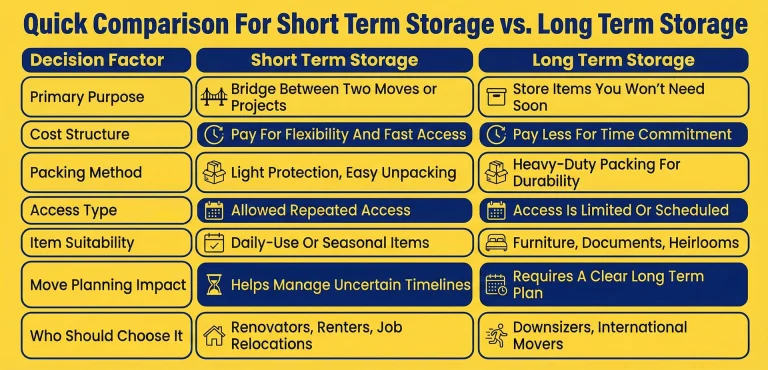
Orders can’t stop for a week, so most warehouses move in phases while still shipping from the old building. Racking goes up first at the new site, before any pallets arrive. Forklifts and pallet jacks need their own transport. Every bin location changes, so update your inventory system before pickers start. Overflow pallets can go into short-term storage.
Gyms and Fitness Studios
Gym equipment is heavy, awkward, and expensive to fix. Racks and cable machines come apart, and treadmill screens need protection. Rubber flooring goes down first at the new place. Large mirrors are fragile, and upper-floor studios should check the freight elevator’s weight limit. Tell members early, or some won’t follow you.
When Is The Best Time To Move Your Business?
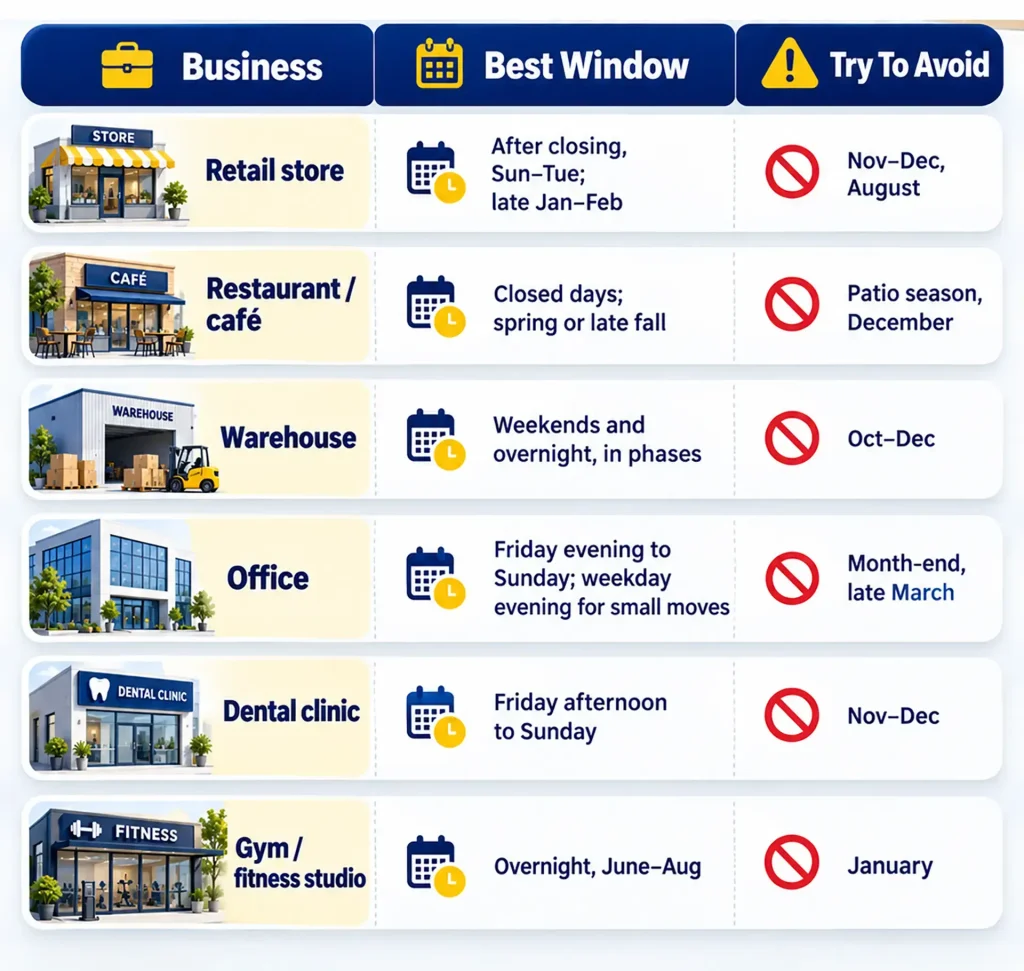
Move when you’re quietest. For most Ottawa businesses, that means an evening, a weekend or a day you’d be closed anyway, in a month outside your busy season. The table below shows the best windows and the periods to avoid for six common business types.
What Should Every Business Do Before Moving Day?
Most moving-day problems start weeks earlier. Booking ahead, measuring the new space, and clearing out what you don’t need prevent the delays that keep a business closed longer than planned. Work through this checklist in the month before your move.
- Book Your Movers 4 To 6 Weeks Out. Summer weekends and the last few days of the month go first, because that’s when leases end. If you’re moving a multi-floor office or the whole company, give yourself closer to 12 weeks.
- Measure The New Space. Grab a tape measure and check the doorways, the hallways, and the inside of the elevator. That big boardroom table might fit through the old door and not the new one. You’d rather find that out on a Tuesday afternoon than at 11 p.m. on moving night.
- Decide What’s Staying Behind. You pay to move every desk, filing cabinet and broken chair, so don’t haul things you’re going to throw out anyway. Sell them, donate them or recycle them before the movers show up.
- Back Up Your Data And Take Photos Of The Cables. Before anyone unplugs a computer, server, or printer, back up your files and snap a quick photo of the back of each machine. When you’re setting up at the new place, that photo will save you an hour of guessing which cord goes where. Next-day setup goes much faster.
- Pack A “First Day” Box. Keys, chargers, the router, POS cables, cleaning supplies.
- Tell People Where You’re Going. Customers, patients, suppliers and your bank. Update your Google Business Profile and website on moving day.
Moving a full office? Our 12-week corporate relocation checklist covers floor-plan numbering, IT cutover and staff communication in detail.
What Should You Ask Before Hiring A Commercial Mover?
The right questions protect your business, not just your furniture. Before you sign, ask each mover the questions below. Clear, specific answers are a good sign, vague ones usually mean surprises on moving night. Remember that a commercial quote depends on equipment, building access and timing, not just hours. Here’s how commercial moving costs in Ottawa are worked out.
- “Is This Your Own Trained Crew?” You want the same trained people, not day labourers hired that morning.
- “Have You Moved A Business Like Mine?” A crew that has moved a clinic or warehouse already knows what goes first.
- “How Will You Protect The Building?” Floors, walls and elevators should be covered, so you stay on good terms with your landlord.
- “What Equipment Do You Bring?” Panel carts, rolling crates and padded carts move office furniture and computers faster and safer than cardboard and dollies.
- “Who’s My Contact On The Day?” One lead mover who knows the plan and can answer on the spot.
- “What Does Your Basic Coverage Actually Pay?” Basic coverage is often paid by weight, not value. Ask what extra protection is available for expensive equipment.
Ready To Plan Your Commercial Move In Ottawa?
There’s no perfect moving day for every business, only the quietest day for yours. Work out your window, book your trades early, and give your mover a full picture of your space. Whether it’s a few desks or a full warehouse, the earlier you plan, the less your customers notice.
Planning a commercial move in Ottawa? Book your free site visit or call our team at 343-292-5550 for a customised estimate built around your business hours.