Planning A Suburban City Move In 2026 Means Higher Costs Due To Fuel, Inflation, And Global Events- But Early Planning, Timing And Smart Strategies Can Help You Stay On Budget.
Planning a suburban city move in Canada in 2026 comes with new considerations that go beyond choosing from the best suburbs in Canada.
Many families and professionals continue to move to Canadian suburbs for space, affordability, and lifestyle.
However, external factors like rising fuel costs and global economic uncertainty are starting to influence moving budgets in real ways.If you’re comparing suburbs vs city living or exploring suburbs in Toronto, Ottawa, and Vancouver, understanding how these cost pressures work will help you plan smarter, avoid surprises, and protect your budget.
Why Suburban Demand Is Still Rising Despite Higher Moving Costs In 2026
Even with rising fuel costs and economic uncertainty, demand for suburban areas in Canada continues to grow. In many cases, it’s becoming more deliberate rather than trend-driven.
Canadians moving to suburban areas aren’t just chasing space; they’re making calculated lifestyle and financial decisions.
Instead of reacting to short-term market shifts, many Canadians are weighing:
- Long-term housing value vs ongoing urban rental costs
- The ability to work remotely vs daily commuting expenses
- Total cost of living, not just property prices
This shift reflects a deeper evolution in the suburbs vs city conversation, where suburban living is no longer a compromise, but a strategic upgrade.
Across major Canadian cities, this intent is visible in high-demand suburban zones such as:
- Suburbs in Toronto like Mississauga, Brampton, and Vaughan, where buyers balance space, affordability, and connectivity.
- Suburbs in Ottawa, such as Kanata and Barrhaven, are driven by stable employment, family-focused communities, and long-term planning.
- Suburbs in Vancouver, like Surrey and Coquitlam, where affordability pressures continue to push growth beyond the city core.
What’s changing in 2026 is not whether people are moving, but how they are planning those moves.
With rising costs influencing decisions, suburban relocation is becoming more:
- Budget-conscious
- Time-sensitive
- Strategy-driven
Key Insight to consider in 2026: While the shift toward suburban living in Canada is becoming clearer, broader cost pressures and economic uncertainty indicate that planning a suburban move now requires a more strategic, well-timed approach.
What’s Driving Rising Moving Costs In Canada
1. Fuel Prices and Transportation Costs
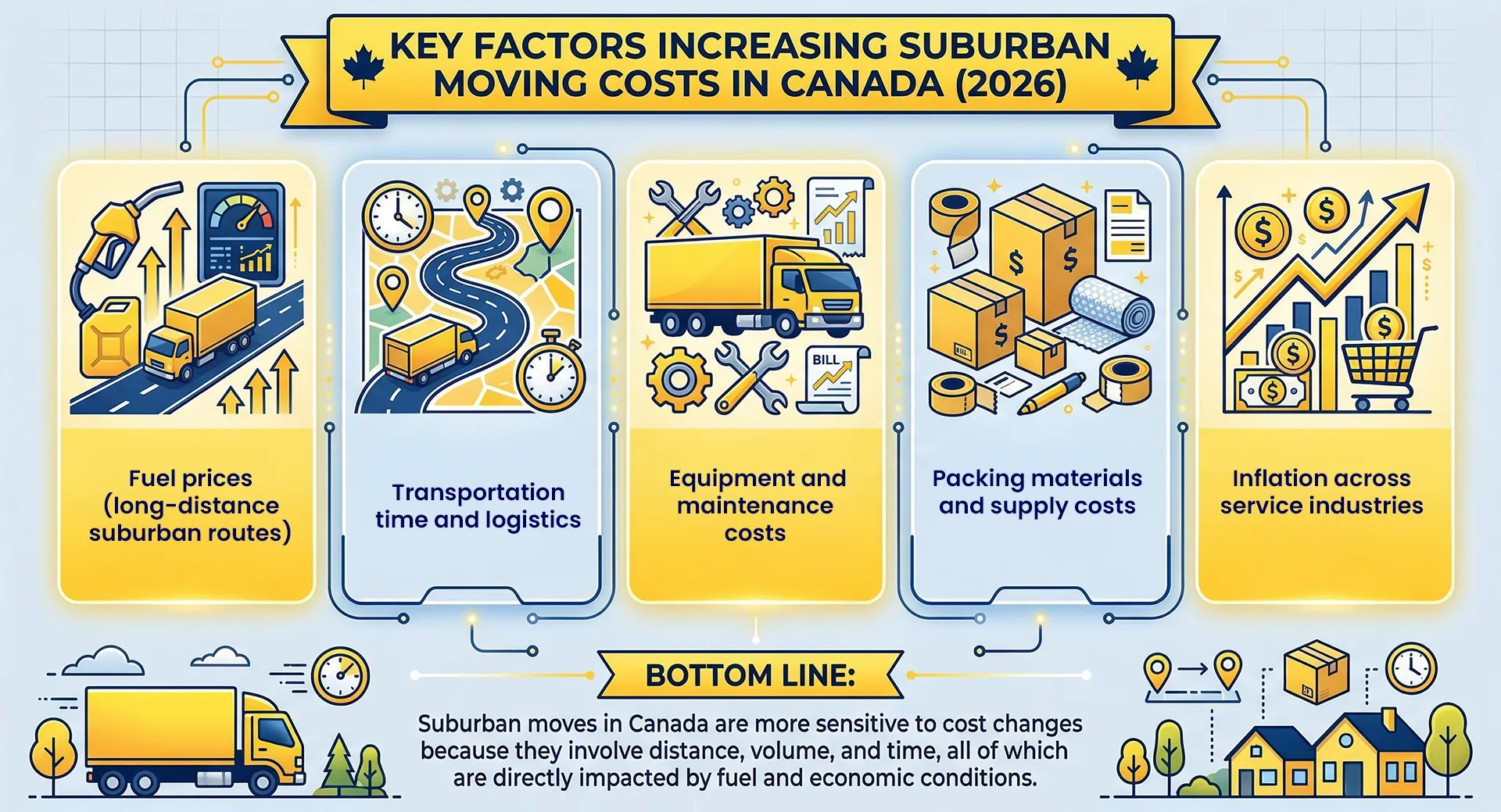
Fuel is one of the biggest cost components in any move, especially for suburban relocations, which often involve longer distances and larger shipments.
Recent trends show:
- Fluctuating but generally elevated fuel prices compared to previous years
- Increased transportation costs for moving companies
- Higher fuel surcharges on long-distance or suburban moves
For moves from city centers to suburban areas, this becomes even more relevant because:
- Travel distances are longer
- Truck usage time increases
- Fuel consumption is higher
2. Broader Cost Pressures Across The Moving Industry
Rising costs are not limited to fuel. Across Canada, professional moving companies, logistics providers, and relocation services are facing increasing pressure from:
- Higher operational costs, including labour, insurance, and vehicle upkeep
- Increased repair and maintenance expenses for moving fleets
- Longer service timelines driven by higher demand and scheduling constraints
In many cases, current pricing has not fully adjusted to these rising costs, meaning moving expenses may continue to increase through 2026.
3. Global Events and Their Impact On Suburban Moving Costs
Global tensions, particularly in energy-producing regions, continue to influence oil supply and fuel pricing, which directly affects the cost of moving across Canada.
For suburban moves, where distances are typically longer, these impacts are even more noticeable.
Key effects include:
- Short-term fuel price spikes that increase transportation costs for moving trucks
- Supply chain disruptions affecting equipment, materials, and scheduling
- Increased uncertainty in pricing, making it harder to predict moving expenses
Even when temporary stability occurs, ongoing global uncertainty keeps fuel prices volatile. This volatility can steadily increase suburban moving costs.
Suburban Moves In Canada Vs City Moves: Understanding The Cost Impact
When comparing suburban vs. city relocation costs, suburban moves tend to be more sensitive to rising expenses due to the scale and distance involved.
Suburban relocations typically include:
- Larger homes result in higher volume and more items to transport
- Longer travel distances lead to increased fuel consumption
- Extended moving time, which raises labour and scheduling costs
For example, a move within a downtown core may involve shorter distances and quicker turnaround times.
In contrast, moving to suburban areas in Canada often requires longer routes, more coordination, and additional planning.
As a result, even small increases in fuel or operational costs can have a significantly greater impact on suburban moving budgets compared to city moves.
Why Suburban Moves In Canada Remain Strong Despite Rising Costs
Even with cost pressures, demand for relocation across Canada remains strong.
Economic activity continues in many regions, including suburban and surrounding areas. Business growth, hiring activity, and regional development are still driving relocation decisions.
This means:
- People are still moving for work, lifestyle, and housing
- Suburban demand remains high
- Moving services continue to be in demand
In other words, uncertainty driven by rising fuel costs and global tensions hasn’t stopped suburban movement in Canada.
It has only shifted the focus toward more strategic planning, budgeting, and timing in 2026.
Smart Ways To Protect Your Budget When Moving To Suburban Areas In Canada
Planning a move to suburban areas in Canada in 2026 requires a more strategic approach, especially as rising costs and demand continue to impact pricing. Here’s how you can stay in control of your budget:
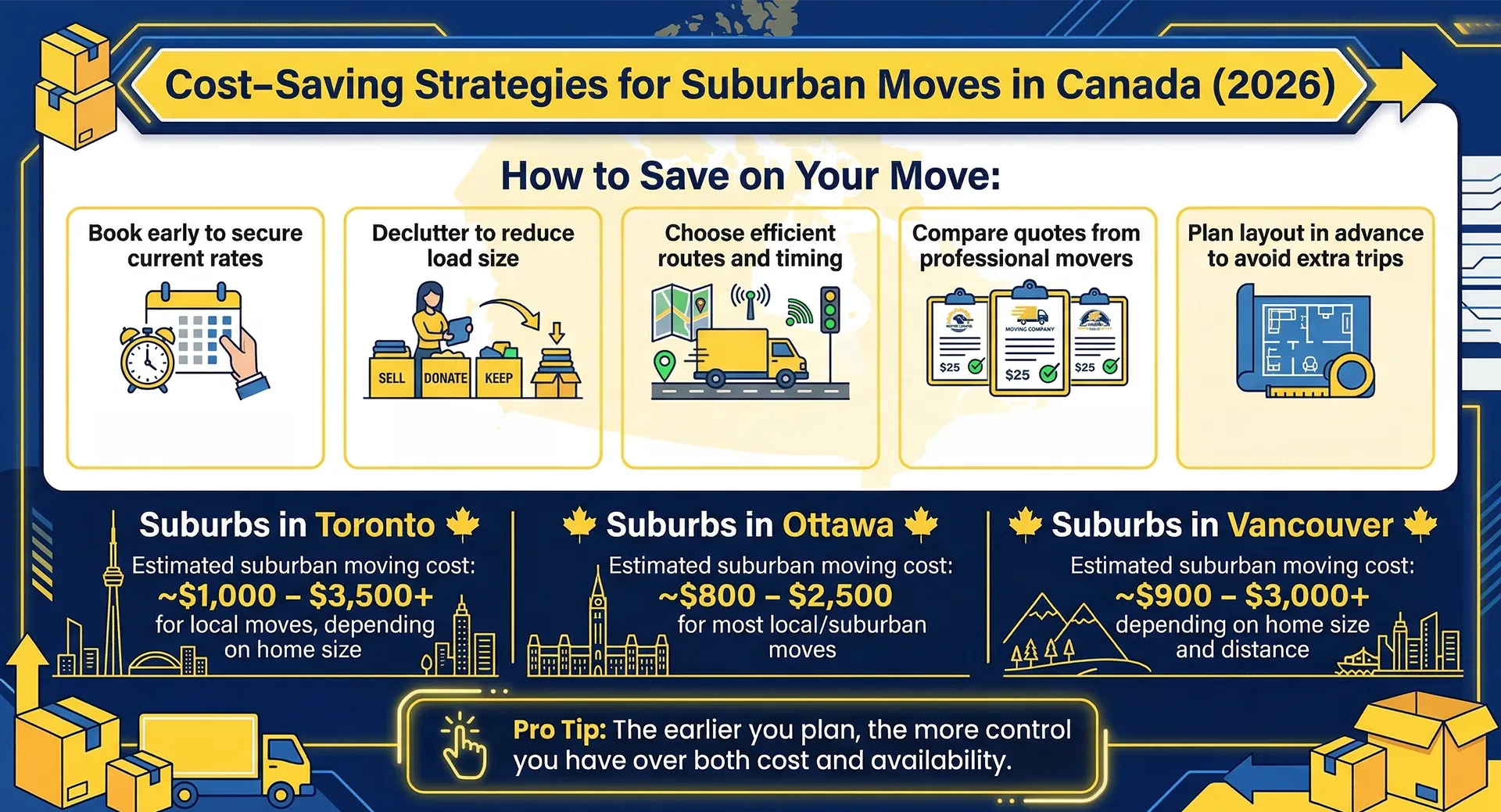
1. Book Your Move Early
With rising fuel costs and ongoing pricing uncertainty, booking early can make a significant difference.
- Lock in current rates before further price adjustments
- Avoid last-minute availability issues in high-demand Canadian suburbs
- Secure preferred dates, especially when moving to the best suburbs in Canada
This is particularly important for moves to popular areas such as the suburbs of Toronto, Ottawa, and Vancouver, where demand remains consistently high.
2. Choose The Right Timing
Timing plays a critical role in managing moving costs, especially when comparing suburbs vs city relocation patterns.
Avoid peak periods when:
- Demand for moving services is highest
- Prices tend to increase due to limited availability
Instead, consider:
- Mid-month or mid-week moves
- Off-season scheduling for better pricing flexibility
3. Plan Your Inventory Strategically
While moving to suburban areas in Canada often means more space, it doesn’t always mean moving more items.
- Declutter before your move to reduce volume
- Prioritize essential items to lower transportation costs
- Optimize packing to improve efficiency and reduce labour time
A well-planned inventory can significantly reduce overall moving expenses, especially for larger suburban homes.
4. Understand Distance-Based Pricing
Distance is one of the most important cost factors when moving from city centres to Canadian suburbs.
- Longer distances increase fuel consumption and travel time
- Even small increases in kilometres can impact total moving costs
- Suburban routes often require more coordination and logistics
Always request detailed estimates that clearly outline:
- Fuel charges and surcharges
- Travel time and labour costs
- Any additional service or access fees
Suburban Moving Costs In Toronto, Ottawa, and Vancouver: What To Expect In 2026
Demand across Canadian suburbs is rising, but costs and logistics vary by region. Here’s what to expect:
Suburbs In Toronto
- High demand in areas like Mississauga, Brampton, and Vaughan
- Competitive pricing due to increased moving activity
- Estimated suburban moving cost: ~$1,000 – $3,500+ for local moves, depending on home size
- Longer distances are adding to fuel-related costs
Suburbs In Ottawa
- More balanced affordability, but growing demand
- Expansion in areas like Kanata and Barrhaven
- Estimated suburban moving cost: ~$800 – $2,500 for most local/suburban moves
- Increasing relocation activity driven by families and long-term planning
Suburbs In Vancouver
- Higher fuel costs and regional pricing pressure
- Strong demand in areas like Surrey and Coquitlam
- Estimated suburban moving cost: ~$900 – $3,000+ depending on home size and distance
- Continued outward growth due to affordability challenges
What This Means
Across suburban areas in Canada, demand is rising, and so are moving costs.
Even moderate suburban moves now fall within the $1,000–$3,500+ range, making early planning essential to control your 2026 budget.
Suburban Moving In Canada 2026: Key Takeaways To Plan Smart and Stay On Budget
A suburban move in Canada in 2026 is still one of the best lifestyle decisions for many households, offering space, value, and long-term comfort.
However, rising fuel costs and global economic factors are adding a new layer of complexity.
The key takeaway is simple:
- Costs are increasing gradually
- Demand for suburban living remains strong
- Early planning gives you a clear advantage
By understanding these trends and preparing ahead, you can confidently move to the best suburbs in Canada while keeping your budget under control.
Frequently Asked Questions About Moving To Canadian Suburbs In 2026
Q 1. What Should You Consider When Planning A Suburban Move In Canada In 2026?
A. When planning a move to suburban areas in Canada in 2026, consider factors like distance, timing, demand in popular regions, and overall moving logistics. Early planning, route efficiency, and understanding service availability in areas like suburbs in Toronto, Ottawa, and Vancouver can help ensure a smoother move.
Q 2. Why Are Suburban Moving Costs Increasing In Canada?
A. Suburban moving costs in Canada are rising due to higher fuel prices, increased operational costs for moving companies, and global supply chain disruptions. Longer distances to suburban areas in Canada also make these moves more sensitive to cost changes.
Q 3. When Is The Best Time To Move To Canadian Suburbs To Save Money?
A. The best time to move to Canadian suburbs is during off-peak periods, such as mid-month or outside summer. Booking early and avoiding high-demand seasons can help reduce costs, especially in popular areas like suburbs in Toronto, Ottawa, and Vancouver.