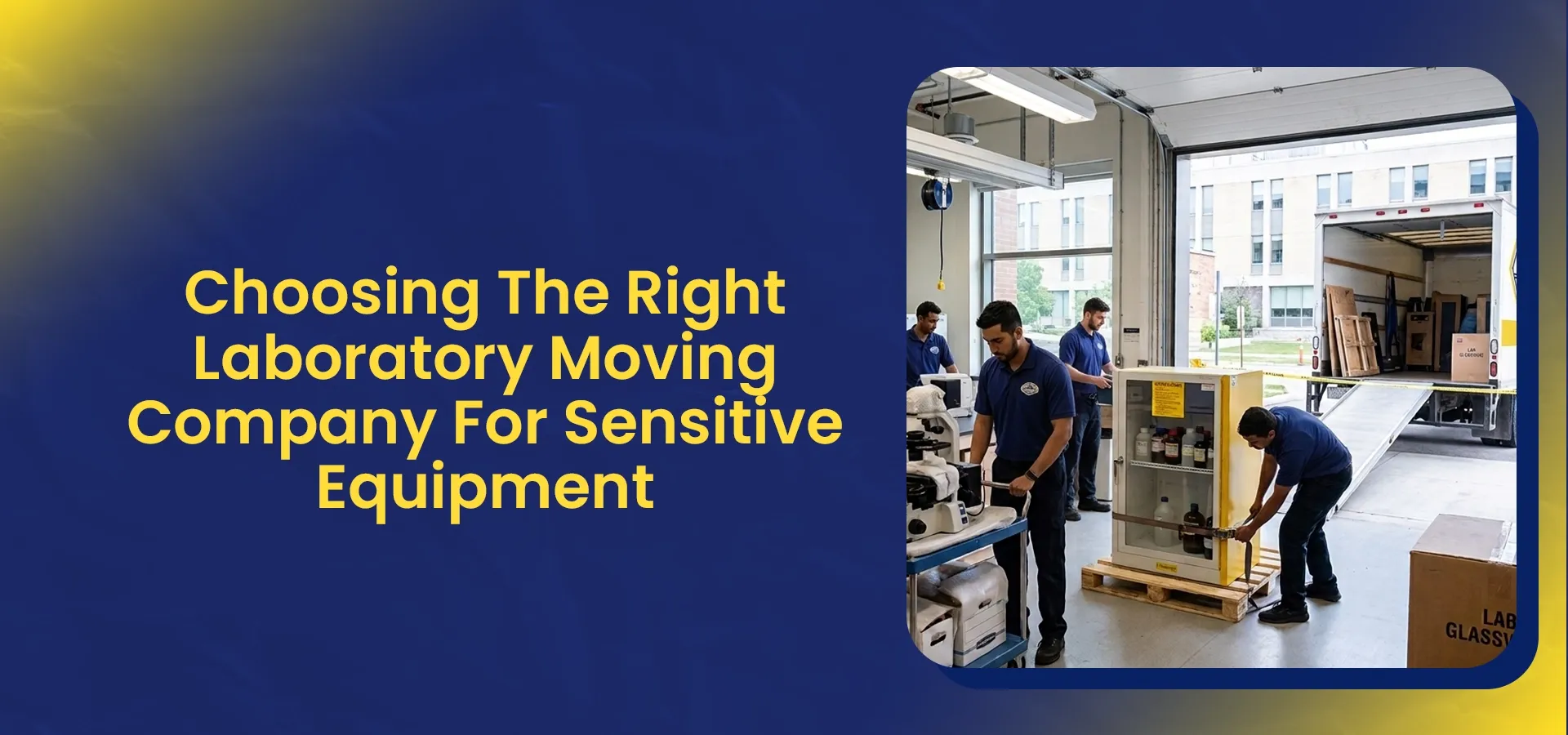
Choosing The Right Company For Laboratory Moving Requires More Than Comparing Prices. A Qualified Mover Should Understand Sensitive Equipment, Handling Requirements, Access Limitations, Transport And Responsibility Boundaries. Review Your Equipment Inventory, Confirm Responsibilities For Shutdown And Calibration, Assess The Moving Route, And Check What The Quote Includes Before Hiring.
A laboratory manager, research team, clinic, university department, or facility manager isn’t simply choosing someone to transport expensive equipment. They need to determine whether a moving company can work around equipment-specific handling requirements, manufacturer instructions, contamination controls, calibration concerns, building access, and the laboratory’s shutdown and restart schedule.
The more useful question is whether the mover understands the requirements of the specific instruments being relocated. How can you tell whether a moving company is actually prepared for your particular laboratory move before you hire them? The sections below explain what to check, what to ask, and what should make you reconsider a company.
Start With Your Equipment, Not The Moving Company’s Sales Pitch
The right mover depends on what is actually being relocated. Before comparing companies, create an equipment profile for any item that is unusually heavy, sensitive to vibration or orientation, connected to utilities, difficult to replace, or subject to manufacturer handling instructions.
- Equipment/instrument name
- Manufacturer and model
- Dimensions and weight
- Current room/location
- Destination room
- Orientation restrictions
- Vibration or shock sensitivity
- Temperature requirements
- Utility connections
- Whether manufacturer involvement is required
- Current calibration/qualification status
Send the same equipment profile to each company you are considering. That gives you a more consistent basis for comparing their proposed handling methods and estimates.
A mover cannot propose an appropriate handling plan if they don’t know what the equipment requires.
Ask How Your Most Sensitive Equipment Will Be Handled
Don’t just ask, “Have you moved laboratory equipment before?” That’s too easy to answer with a confident “yes.” Push further:
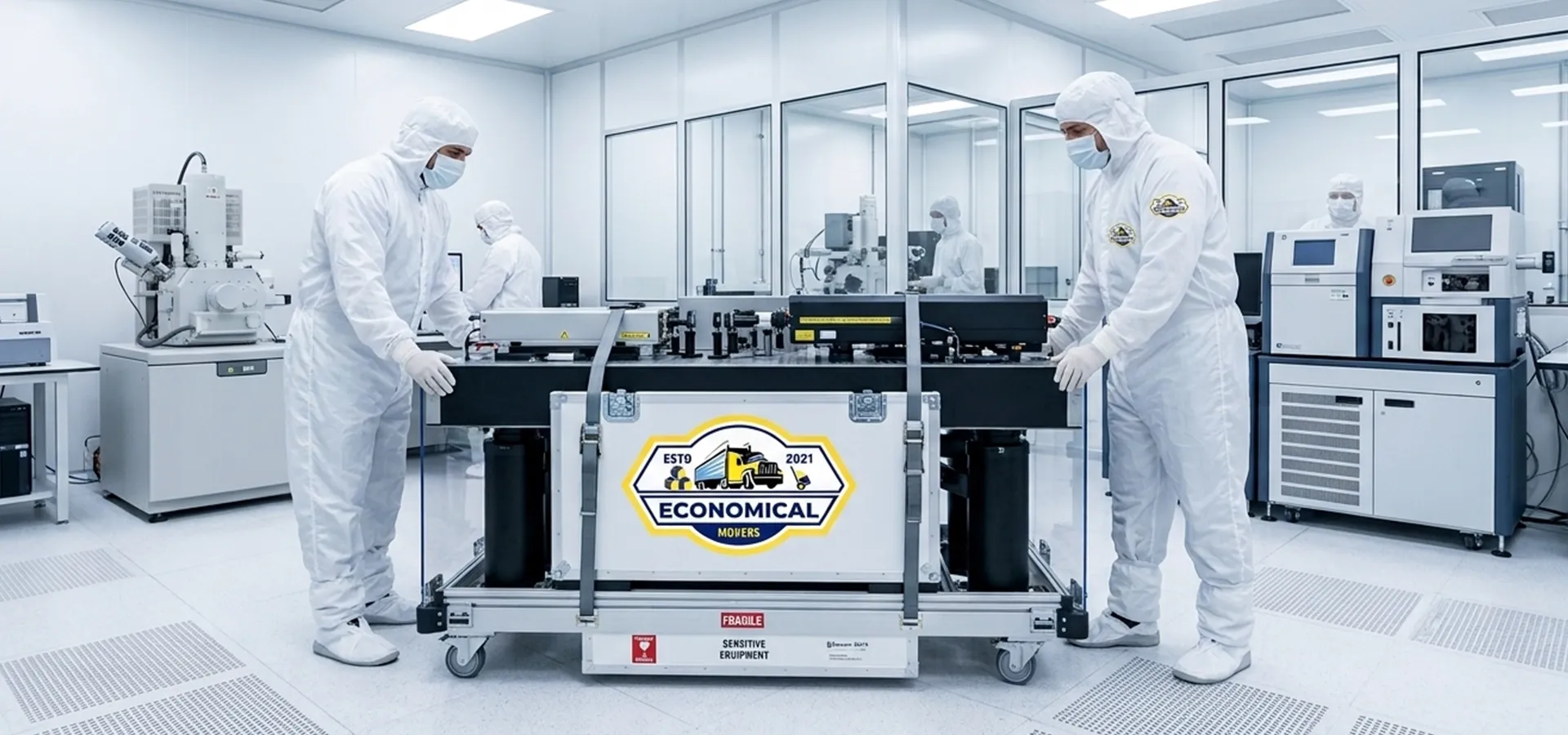
- Which items require custom crating?
- Which components should be removed before transport?
- Does this instrument need to remain upright throughout the move?
- How will vibration or sudden movement be controlled?
- What lifting method will be used?
- Who determines whether an instrument can safely be disconnected?
- What happens if manufacturer instructions conflict with the proposed moving method?
Weak answer: “We’ll wrap it carefully.” Useful answer: the mover identifies the equipment, states the handling restriction, describes the required preparation, and names who is responsible at each stage. That level of specificity is what separates a real plan from a sales pitch.
Find Out Where The Mover’s Responsibility Actually Starts and Ends
Before booking, clarify who is responsible for each stage of the move. Map out who owns each task:
| Task | Who Is Responsible? | Confirmed Before Moving Day? |
|---|---|---|
| Equipment shutdown | ______ | Yes / No |
| Cleaning or decontamination | ______ | Yes / No |
| Utility disconnection | ______ | Yes / No |
| Packing or crating | ______ | Yes / No |
| Physical transport | ______ | Yes / No |
| Reconnection | ______ | Yes / No |
| Calibration or qualification | ______ | Yes / No |
The purpose of this table is not to assign every task to the mover. It is to make sure each responsibility has an identified owner before moving day.
Moving an instrument and making that instrument operational again are not necessarily the same service. Some scientific equipment may require OEM technicians or specialist contractors for shutdown, reconnection, calibration, certification, or validation. Assuming the moving quote covers all of this can leave important work unassigned or lead to additional costs later.
Check Whether The Equipment Is Actually Ready To Be Moved
The laboratory also has work to complete before the moving crew arrives. Before equipment enters the mover’s custody, determine whether it needs:
- Emptying
- Cleaning or decontamination
- Fluid or gas removal
- Rotor or component removal
- Safe shutdown
- Manufacturer preparation
- Hazard identification
The moving company should not be expected to decide whether laboratory equipment is biologically, chemically, or radiologically safe to remove. That determination should come from the laboratory or the appropriate biosafety, radiation safety, environmental health and safety, or other qualified specialist, not from the moving crew.
The University of Toronto, for example, requires laboratory equipment and refrigerators to be emptied and free of chemical, biological, radioactive, or other hazardous substances before its moving service will handle them.
Walk The Entire Route Before Accepting The Moving Plan
Don’t stop at “check doors and elevators.” Do a full equipment-to-route compatibility check for your largest or most sensitive instrument:
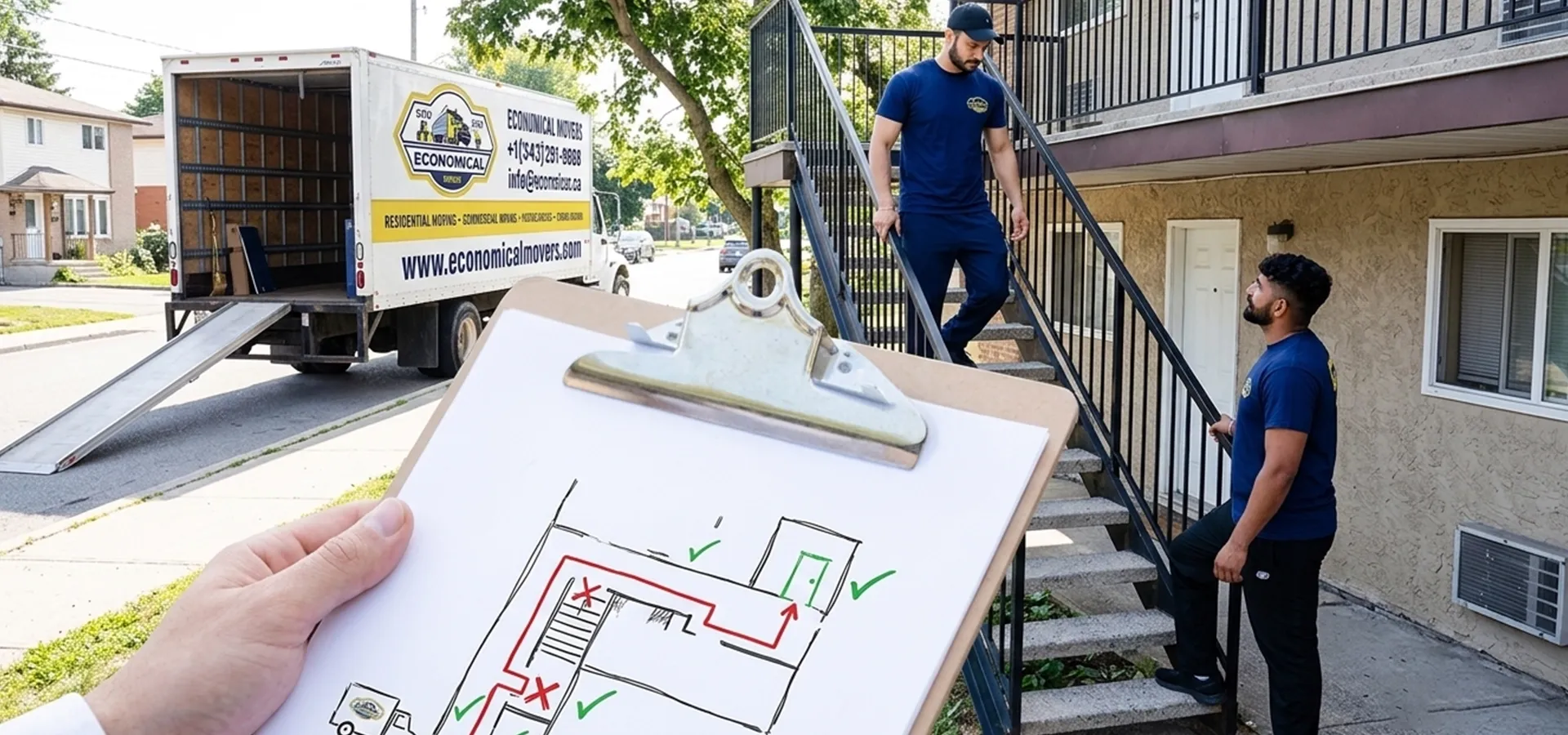
Instrument → doorway → corridor → elevator → loading area → vehicle → destination loading area → elevator → laboratory → final position
Verify door clearances, elevator dimensions and weight capacity, tight turns, thresholds, floor loading restrictions, loading dock access, long carries, stairs, and any temporary obstructions. For unusually heavy equipment, confirm floor-loading limits with the building or facilities team rather than asking the moving crew to make a structural determination.
Use the equipment’s packed dimensions, not only its operating dimensions. A unit that fits through a doorway on its own may no longer fit once it is placed on a skid or inside a protective crate.
Verify The Final Position Too
An instrument arriving at the new building doesn’t mean the relocation succeeded. The assigned laboratory position also needs adequate space and the right utility connections in place
Ask What Happens Between Pickup and Final Placement
Ask what happens to the equipment after it leaves the laboratory and before it reaches its final position.
- Will equipment travel with other shipments?
- How will it be secured inside the vehicle?
- Can anything be stacked beside or above it?
- Are intermediate stops planned?
- Who maintains custody of the equipment throughout?
- How is each asset checked in and out?
- What happens if delivery can’t reach the destination as scheduled?
For high-value or especially sensitive equipment, even a simple asset manifest showing when each item leaves the origin and is received at the destination can make responsibility much clearer.
Don’t Judge The Quote Until You Know What It Excludes
When comparing estimates, check exactly what is included in the proposed scope:
- Site assessment
- Special handling equipment
- Custom crates
- Packing
- Equipment positioning
- Additional technicians
- Waiting time
- After-hours work
- Additional stops
Before comparing the totals, ask two more questions:
- What equipment list and access assumptions is this estimate based on?
- What happens to the price if the inventory, access conditions, or required handling changes before moving day?
Then identify what may sit outside the mover’s quote entirely — manufacturer technicians, electricians, plumbers, calibration specialists, decontamination providers, or certification work. The lowest transportation quote may not represent the lowest total relocation cost.
Use One Sensitive Instrument As A Test Before Hiring The Company
Choose the most difficult instrument on your inventory and ask each prospective mover: “Walk me through exactly how you would move this from its current position to its final position.” Listen for whether they ask about model and weight, access, orientation, disconnect requirements, sensitive components, destination conditions, and manufacturer requirements. A company that gives an immediate, generic answer without gathering these details may not yet have enough information to understand the scope properly.
Red Flags To Notice Before Signing
Watch for these warning signs:

- A quote provided without understanding the equipment inventory
- No questions about model, dimensions, or weight
- No origin/destination access assessment for difficult equipment
- Unclear responsibility for disconnect/reconnect
- Treating all sensitive equipment the same way
- No discussion of manufacturer handling requirements
- Unclear insurance or damage coverage for high-value equipment
- No contingency plan for access or scheduling problems
The best questions are often the ones a mover asks you before giving you a plan.
Need A Quote For Moving Laboratory Equipment?
When requesting a laboratory moving estimate, provide the equipment list, approximate weights and dimensions, origin and destination access details, and any manufacturer handling instructions. This helps the moving team assess the physical scope and identify anything that needs to be coordinated before moving day.
Call +1 (343) 292-5550 or get a laboratory moving estimate.