Your office move is booked for Friday. By Monday at 8:30 a.m., everyone is supposed to be working from the new address.
Then Monday arrives.
The internet isn’t working. The boardroom table is still sitting in the loading dock because nobody booked the freight elevator. Half the staff doesn’t know their floor or desk number. The servers are still at the old office.
The problem isn’t the moving truck.
It’s coordination.
A successful corporate relocation involves two connected jobs:
- The commercial move: moving furniture, workstations, IT equipment, records, inventory, and other business assets.
- Employee relocation support: helping employees with things such as parking, transit, flexible hours or household moving when their relocation involves a change of home.
Both cost money. And employee relocation benefits can also have tax consequences that employers need to consider before payroll time.
This guide explains the costs, planning steps, and common problems to watch for when relocating an Ottawa office in 2026.
Corporate Relocation At A Glance
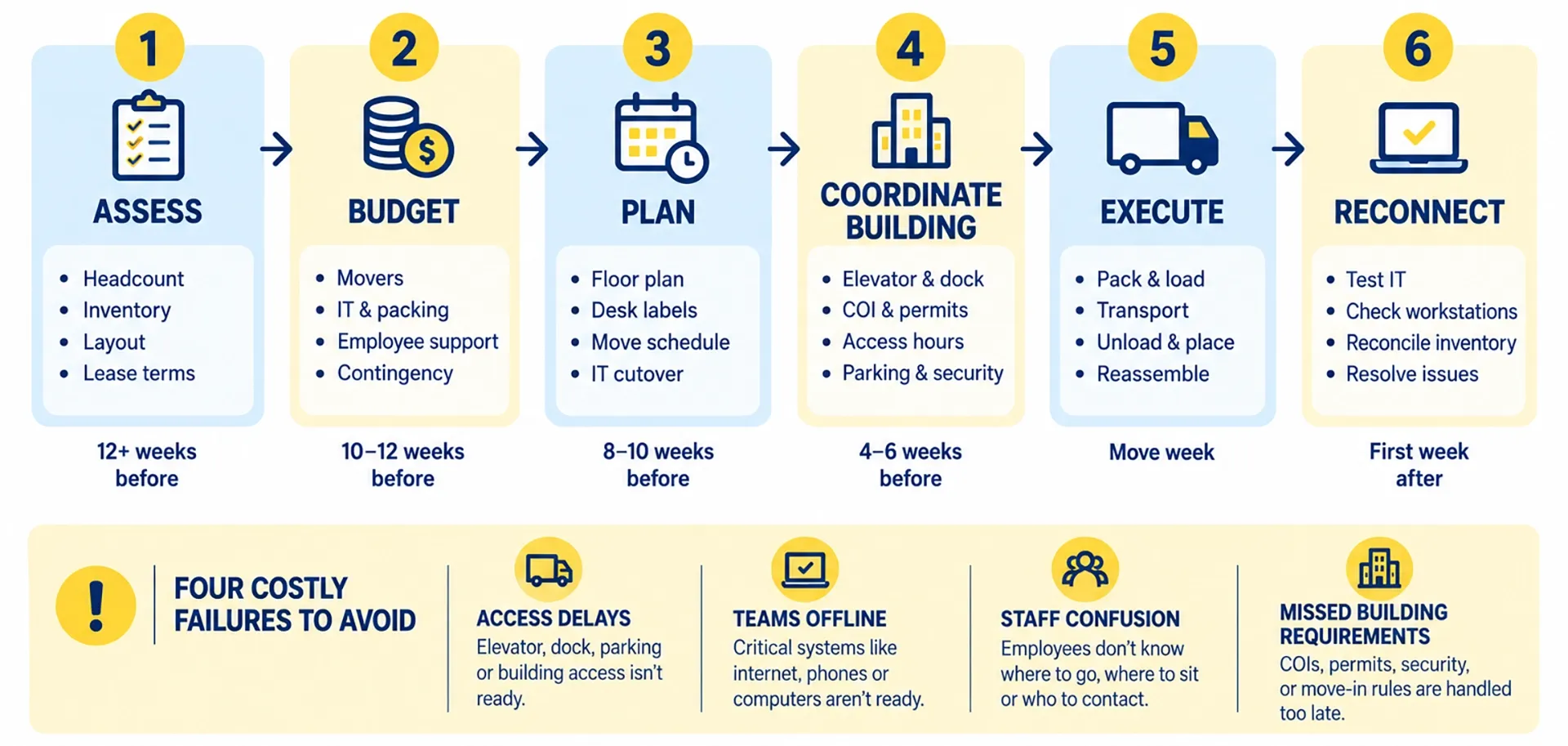
A successful office move isn’t just about the truck, it’s about people, planning and coordination.
This 6-step process (over about 12 weeks) helps Ottawa employers get the new office ready, avoid costly disruptions and keep business running.
What Employers Should Check Before Corporate Relocation
Corporate relocation planning in 2026 should account for more than the moving date. Before signing off on the move, employers should confirm that the budget, employee relocation policy, building requirements, and technology schedule reflect current requirements.
For an Ottawa relocation, review these items early:
- CRA relocation benefits: Confirm the current tax treatment of employer-paid or reimbursed employee moving expenses before announcing a relocation package. Keep receipts and supporting documentation where required.
- HST: Make sure moving quotes and internal budgets clearly distinguish the quoted price from applicable HST and identify any services billed separately.
- Building requirements: Ask both the current and new building for their current rules on loading docks, freight elevators, certificates of insurance, access hours, parking, security clearance, and move-in procedures.
- Internet and telecom: Confirm installation and activation dates with the internet and telecommunications providers well before the move. Do not assume service at the new address will be active on moving day.
- Municipal requirements: Check whether the move requires street occupancy, parking, loading-zone, or other permits and confirm the application timelines that apply to your move.
- Employee support: Review whether changes to parking, transit, working hours, remote-work arrangements, or household relocation assistance need to be communicated or documented as part of the move.
- Business continuity: Build the 2026 move schedule around the systems and teams that cannot afford an extended outage. Test critical systems before employees arrive at the new office.
Because rules, building procedures, pricing, and service lead times can change, verify the details that apply to your specific relocation rather than relying on an older moving plan.
How Much Does Corporate Relocation Cost In Ottawa?
A 10- to 20-person Ottawa office move with Economical Movers typically costs $1,672 to $2,090 CAD for the crew and truck, before 13% HST.
That typically includes:
- Moving crew
- Truck
- Dollies
- Protective padding and blankets
- Workstation disassembly
- Workstation reassembly
IT disconnect/reconnect, packing materials, and after-hours scheduling may be quoted separately.
| Office Size | Crew & Truck Setup | Typical Duration | Per Hour Cost of Movers | Estimated Total Cost (CAD) |
|---|---|---|---|---|
| 5–10 Staff | 2 Movers + 1 Truck | 4–7 Hours | $159 | $636 – $1,113 |
| 10–20 Staff | 3 Movers + 1 Truck | 8–10 Hours (1 Day) | $209 | $1,672 – $2,090 |
| 20–50 Staff | 4 Movers + 1 Truck | 1–2 Days | $269 | $2,152 – $4,304 |
| 50+ Staff | 5–6 Movers + 1–2 Trucks | 2+ Days or Phased Relocation | $299–$339 | From $4,784 – $5,424+ |
*Note: The figures in this table reflect standard Economical Movers pricing and are subject to change according to the specific size of the move, inventory volume, and actual time taken. Truck fees are charged separately and cost $160 to $299 depending upon the location and move size. Prices are before 13% HST and exclude packing materials and IT services.
How Is The Final Price Calculated?
A simple way to think about the moving cost is:
Crew hours × crew rate + truck fee + materials + IT services + after-hours charges = subtotal
Then:
Subtotal × 1.13 = total including HST
Billing details should be confirmed before publishing:
- When does the moving clock start?
- When does it stop?
- Is there a minimum number of hours?
- Is travel time charged?
What Can Increase The Moving Cost?
1. The Amount You’re Moving
Filing cabinets are heavier and slower to move than many people expect. If you have twenty loaded cabinets, they can add significant labour time.
Use the move as an opportunity to purge old files and equipment.
2. IT Equipment
Servers, switches and multi-monitor workstations need careful handling. Cabling should be labelled, equipment protected, and any required crates or anti-static materials planned in advance.
Treat IT as its own moving budget rather than assuming it is part of the standard office move.
3. Building Access
The physical route matters.
A short move between two floors with easy elevator access can be much faster than moving the same amount of furniture through a long lobby, shared elevator, and restricted loading area.
A site visit gives the mover a chance to assess the actual route at both buildings.
4. Your Moving Schedule
Many businesses move evenings or weekends so employees can continue working during normal business hours.
Confirm the mover’s after-hours and weekend rates before setting the schedule.
Why Downtime Costs More Than The Moving Invoice

Twenty staff at a loaded cost of $50 an hour, offline for eight hours, is $8,000 far more than the mover’s typical day rate of $1,672 – $2,090 ($209/hr). If the after-hours premium is less than one day of idle payroll, the premium is the cheaper option. For practical ways to keep your team working during an office move, see our guide to how Ottawa office movers reduce downtime in moves.
Three decisions protect that number: load out Friday evening and Saturday so the team never sees an empty office; phase departments if the move needs two days, revenue teams last out and first in; and have internet and phones live and tested at the new address before the first desk leaves the old one.
One person owns the schedule, is the single contact for the mover and both buildings, and can make a decision at 7:00 PM on move night without a call.
Your 12-Week Corporate Relocation Checklist
12+ Weeks Assess. Appoint the move lead. Read both leases for make-good and access conditions. Set a budget with 10–15% contingency. Inventory everything and decide what is not moving. Identify any staff who need a relocation package and put the tax structure above in front of payroll.
8–10 Weeks:
Budget and plan. Written quotes against a site visit. Finalise the floor plan and desk numbering. Get both buildings’ elevator, dock, COI and clearance requirements in writing. Draft the staff communication.
4–6 Weeks:
Coordinate the building. Confirm the mover. Book elevators and docks at both ends. Submit COIs. Confirm ISP install and IT cutover dates fibre activation in Ottawa can take weeks. Apply for street permits.
2 Weeks:
Prepare the team. Colour-coded labels keyed to the floor plan. Tell staff what they pack (personal items) and what the crew handles (furniture, IT, shared areas). Confirm parking, access, and run schedule with the mover.
Move Week Execute. Department-by-department schedule. IT reinstalled and tested before staff arrived. Inventory reconciled at both ends before the last truck leaves.
First Week after Reconnect. One tracked list for missing items. Verify every workstation. Collect feedback. Walk the old premises against the make-good clause before returning keys.
Full month-by-month timeline: office downtime guide.
Keeping Employees Productive During The Move
Employees do not resist moves; they resist not knowing. Announce the date, the reason, and the milestones as soon as the lease is signed. Give the practical details: transit, parking, what is nearby. Be exact about what they pack. Hand each person a first-day plan: desk number, badge, who to call when the monitor does not turn on.
For anyone whose commute changes materially, announce the support (transit pass, parking, adjusted hours) with the move date. A commute problem announced with its solution is a logistics note; without one, it is a resignation risk. For more practical ways to support employees through the transition, see 7 strategies to ensure employee retention and satisfaction during a business move.
How Economical Movers Handles Your Office Relocation
At Economical Movers, we help Ottawa businesses plan and manage commercial relocations from the initial planning stage through to the final setup.
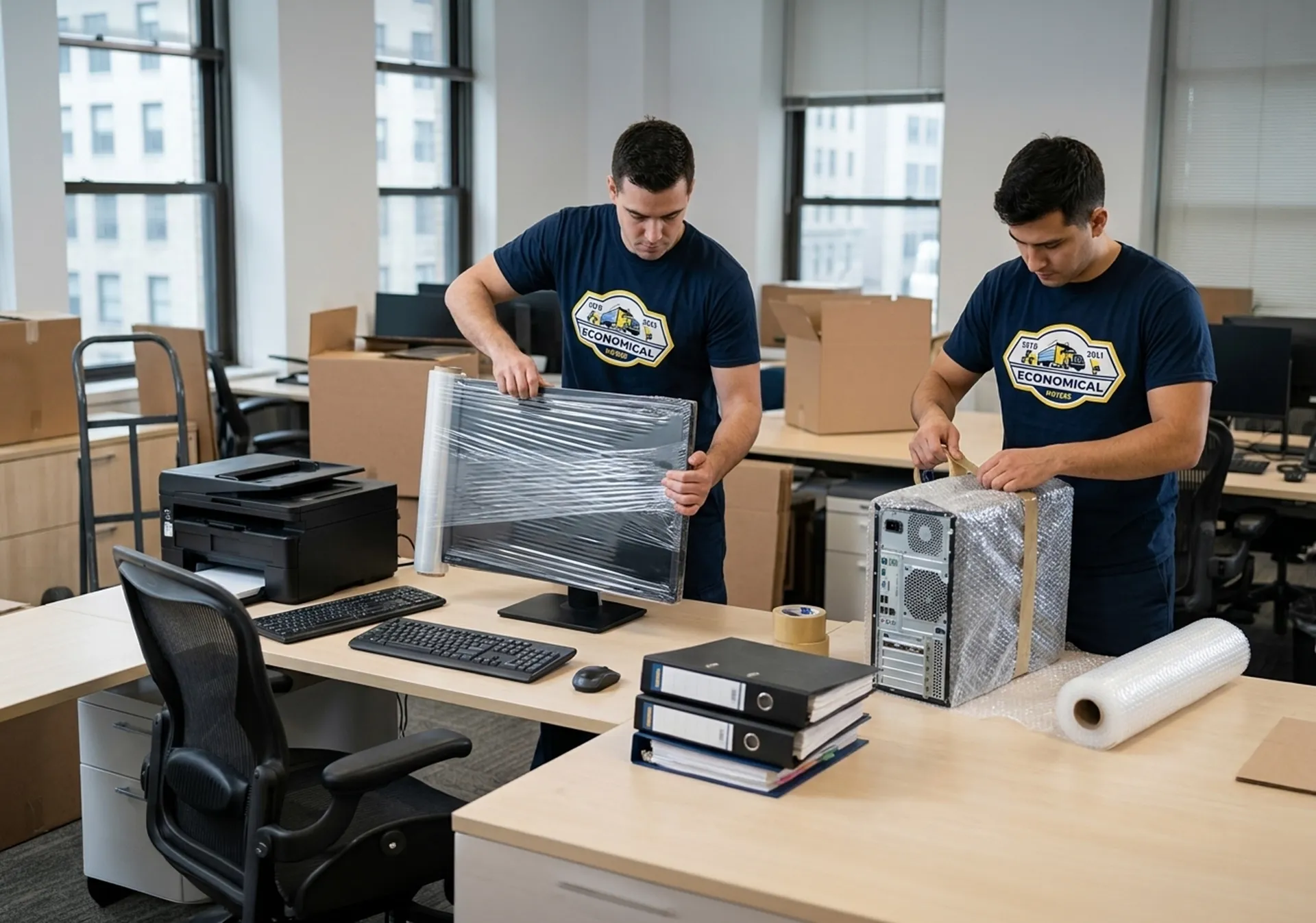
Our team handles the physical moving process, including office furniture, workstations, equipment and other business items. We focus on making the move organized, efficient and as disruption-free as possible.
Our commercial relocation process includes:
- Before the move: We assess your current and new locations, review access routes, inventory and layout requirements, and use this information to prepare your moving plan and quote.
- Packing and disassembly: We can disassemble and protect office furniture and workstations, then label items according to your floor plan so everything can be placed where it belongs at the new location.
- Moving and setup: Our crew loads, transports, and unloads your office items, then reassembles and places furniture according to the agreed plan.
- IT and specialized equipment: IT equipment and specialized items can be handled according to the scope agreed for your move and your internal IT team’s requirements.
- Commercial scheduling: We can coordinate your move around your business hours, including after-hours or weekend scheduling where available.
You can also read our detailed guide on how Economical Movers helps businesses move with ease.
Common Corporate Relocation Mistakes
- Moving things you don’t need: Shred old files and remove unused furniture or equipment before the move. It saves moving time and storage space.
- Forgetting the old office: Check your lease and complete any required repairs, removals or make-good work before handing back the keys.
- Not updating your address: Update your website, Google Business Profile, invoices, email signatures, CRA records and courier accounts.
- Keeping IT and moving plans separate: Coordinate IT, facilities and movers so internet, phones and computers are ready when employees arrive.
- Promising relocation benefits too early: Decide what the company will cover, whether receipts are required and how payroll will treat the benefit before making promises.
A Smooth Corporate Move Starts Before Moving Day
The move is judged Monday at 8:30, not by how fast the truck was loaded. Book the building before the truck, stage IT before desks, put one person in charge, and structure staff support so it survives payroll review.
Planning a corporate relocation in Ottawa? Get Your Free Quote or call +1 (343) 292-5550.