Moving To The Suburbs In Canada Changes Your Daily Life, From Longer Commutes And Higher Maintenance To More Space And Quiter Living, Helping You Balance Lifestyle, Costs, And Long-Term Comfort.
Moving to the suburbs in Canada is often seen as the next step, especially for those transitioning into suburban living for more space and a better overall lifestyle.
Recent housing trends across Canada show a steady shift toward suburban areas, particularly as buyers prioritize space, affordability, and long-term value.
It is not simply a housing upgrade but also an opportunity to improve your day-to-day life.
From commuting patterns and daily routines to social interactions and overall pace of life, the suburban lifestyle in Canada feels very different from what many people expect.
While a bigger home and less noise are key advantages, the transition can take some adjustment.
Many people are surprised by how much their routine, responsibilities, and accessibility change after relocating to suburban neighbourhoods in Canada.
Understanding these changes ahead of time can make a significant difference.
This guide breaks down what actually changes after moving to the suburbs, so you are better prepared not just for the move, but for life after it.
What More Space Means For Suburban Homeowners
For many Canadians, moving to the suburbs is about gaining space, along with a few changes that may not be immediately noticeable.
Larger homes, extra rooms, basements, garages, and outdoor areas offer a clear upgrade compared to most city properties.
According to Canadian housing reports, larger suburban properties typically require more ongoing maintenance than smaller urban units.
Maintaining suburban homes in Canada often includes:
- Lawn care during warmer months
- Snow removal in winter
- Seasonal upkeep, such as gutter cleaning and exterior maintenance
Unlike condo living, where many responsibilities are handled by property management, suburban homeowners are responsible for managing these tasks themselves.
Over time, this becomes a regular part of home upkeep and routine.
There is also the issue of storage. While having a basement or garage may seem ideal at first, these spaces often fill up quickly.
With the right organization, these spaces can remain functional and add long-term value to your home.
The shift is not just physical; it is also mental. You are no longer just living in your space; you are actively managing and maintaining it.
Commuting and Daily Travel Change In Canadian Suburbs
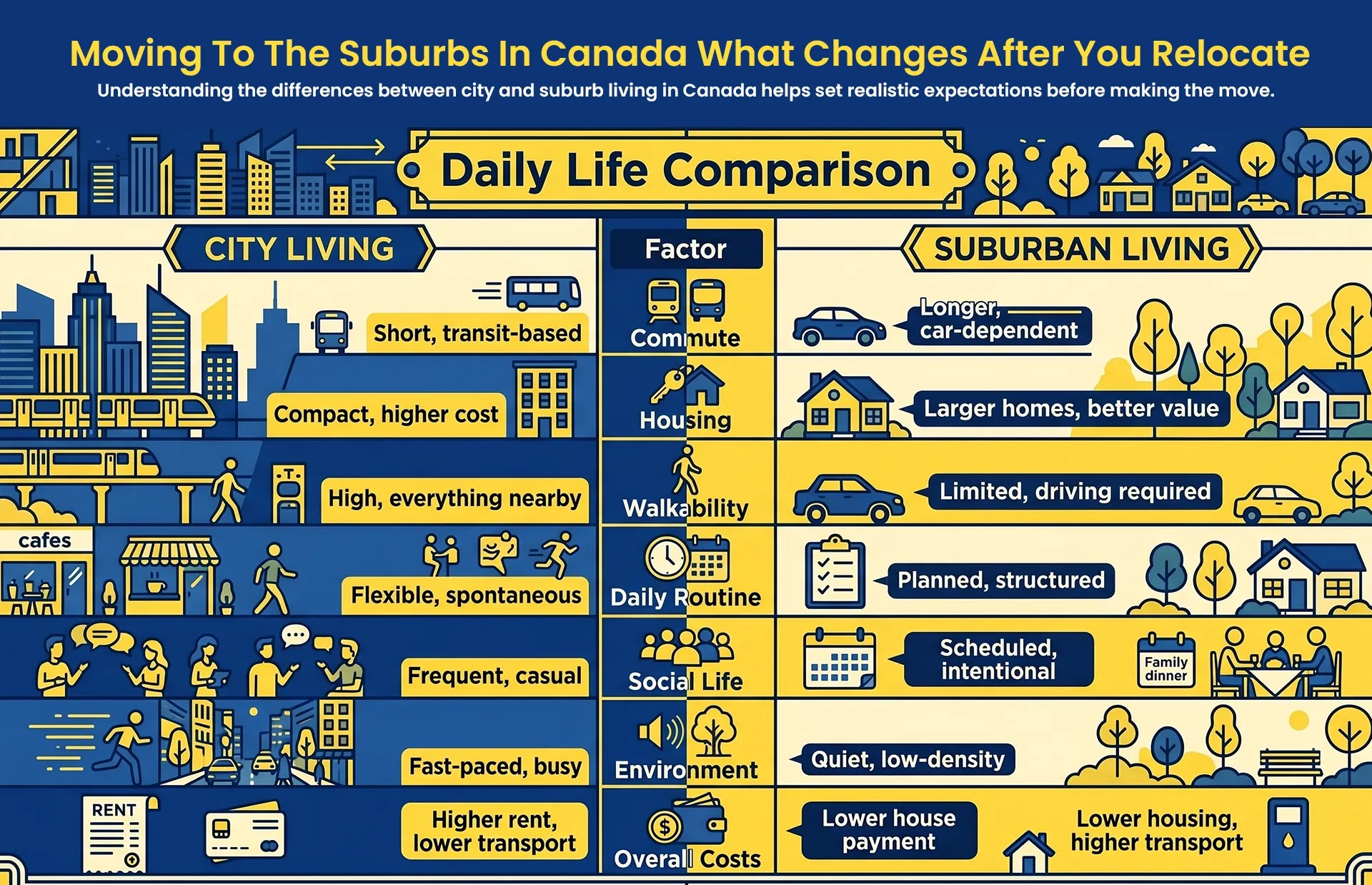
One of the most noticeable differences after moving to the suburbs is how you get around.
Transportation studies across major Canadian regions consistently show higher car dependency in suburban areas than in urban centres.
While some areas offer public transit, it is generally less frequent than in major urban centres.
This shift naturally changes how you plan your day when moving from the city to the suburbs in Canada.
Simple activities such as:
- Grocery shopping
- School drop-offs
- Gym visits
- Social outings
are often planned together to avoid multiple trips.
Commuting times may vary by location. Even if you are not travelling every day, when you do, it involves more planning.
Traffic patterns, highway routes, and peak hours begin to play a much larger role in your schedule.
What many people may not expect is how this affects their daily routine.
In the city, spontaneity is easier. You can step out and access what you need quickly.
On the contrary, life after moving to the suburbs in Canada becomes more structured and planned.
Many residents find the added space and quieter environment make this trade-off worthwhile.
How Living Costs Change After Moving To The Suburbs
A common assumption about moving to the suburbs is that it is more affordable.
Housing prices in many suburban areas are lower than in city centres.
Industry cost analyses in Canada indicate that while housing may be more affordable in suburban areas, transportation and maintenance expenses often increase over time.
On the surface, you may get:
- A larger home for the same budget
- More value per square foot
However, these apparent savings are often balanced by new and ongoing expenses.
These typically include:
- Higher transportation costs, including fuel, insurance, and vehicle maintenance
- Increased utility bills for larger homes
- Ongoing maintenance and repair costs
- Property-related expenses such as landscaping and snow removal
As a result, suburban living is structured differently in terms of overall costs.
Understanding this cost shift is essential when evaluating the best suburbs in Canada.
It helps you plan for long-term affordability rather than focusing solely on the initial purchase price.
What This Means for Your Move: Moving to the suburbs is not just about budgeting. The way your move is planned, based on home size, distance, and access, can directly impact timelines, costs, and overall efficiency.
Lifestyle And Daily Routine Changes In Suburban Living
This is where the most noticeable change happens when adjusting to suburban living in Canada, and where expectations may differ from reality.
Slower Pace and Quiet Adjustment
Lifestyle surveys across Canada show that suburban residents report higher satisfaction with space and environment, but different levels of convenience compared to city residents.
For many people, this is the primary reason for moving from the city to the suburbs, offering less noise, more privacy, and a calmer environment.
However, this adjustment is not always immediate.
For those used to constant activity in the city, the quieter surroundings can initially feel unfamiliar, but many people grow to appreciate the calm environment over time.
More Spread-Out Neighbourhood Layouts
In many suburban neighbourhoods in Canada, walkability is generally lower compared to urban areas.
Shops, cafes, and essential services are typically more spread out, which changes how daily life is structured.
This often results in:
- More planned outings
- Greater reliance on driving
- The need to plan errands in advance
This shift is one of the most practical changes people experience after transitioning into suburban living in Canada, especially if they are used to the convenience of city living.
Social Dynamics Shift
Social interactions also change in noticeable ways.
In cities, interactions often happen naturally during daily routines. In contrast, life within the suburban lifestyle in Canada becomes more structured.
Socializing is more intentional, with planned visits, scheduled meetups, and fewer spontaneous encounters.
Over time, this leads to a different kind of social rhythm. It is not necessarily less social, but it is more organized and predictable.
Key Benefits of Moving To The Suburbs For Families
For many Canadians, this shift leads to a noticeable improvement in quality of life, especially over the long term.
Despite the adjustments, moving to the suburbs in Canada offers clear advantages, especially for families and those planning for long-term living.
Canadian real estate and community planning data consistently highlight suburban areas as preferred choices for families seeking long-term stability.
- More living space for growing families
- Access to schools, parks, and community facilities
- Safer and less densely populated environments
Features such as backyards, quieter streets, and family-oriented neighbourhoods create a more stable and comfortable setting compared to city living.
These benefits are especially impactful.
Families with children, remote workers, and long-term homeowners tend to benefit the most from the Canadian suburban lifestyle.
Their daily routines align more closely with what suburban environments offer.
For others, the experience can be different.
Those who prioritize convenience, walkability, and frequent social activity may notice the trade-offs more clearly after moving from the city to the suburbs.
How Moving Logistics Change When Relocating To The Suburbs
Another important aspect to consider when moving from the city to the suburbs in Canada is how different the process itself can be.
Professional moving data show that suburban relocations typically involve higher volumes and longer loading times than urban apartment moves.
City-based moves, especially those involving condos, are often shaped by access restrictions such as:
- Elevator bookings
- Strict move-in time slots
- Limited parking access
Suburban moves, on the other hand, typically involve:
- A higher volume of items to transport
- Longer distances between locations
- More detailed planning for loading and unloading
The logistics shift from restriction-based challenges to planning around volume and distance.
As a result, suburban moves often require:
- Larger moving crews
- More time for packing and loading
- Careful scheduling to manage travel time
This is where working with experienced movers becomes important, especially for long-distance or high-volume relocations.
Proper planning and coordination can make a significant difference in ensuring a smooth and efficient move.
What This Means for Your Move: Because suburban moves often involve larger volumes and longer distances, working with movers experienced in handling multi-level homes and coordinating long-distance moves can significantly improve efficiency and overall move time.
Who Benefits Most From Moving To The Suburbs
Suburban living is not a one-size-fits-all solution.
The experience of suburban living in Canada depends largely on how well your lifestyle aligns with what these environments offer.
A Good Fit
Moving from the city to the suburbs tends to work best for:
- Families looking for more space and long-term stability
- Remote workers who do not rely on daily commuting
- Long-term homeowners planning to settle in one location
Less Ideal For
The transition may be more challenging for:
- People who rely heavily on public transit
- Those who value walkability and quick access to amenities
- Individuals who prefer a more spontaneous and fast-paced lifestyle
The key factor is alignment. When your priorities match the Canadian suburban lifestyle, the transition feels more natural and sustainable over time.
When they do not, the adjustment period can take longer and may feel more noticeable in daily routines.
How Long It Takes To Adjust To Suburban Living After A Move
One of the most overlooked aspects of moving to the suburbs in Canada is the adjustment period.
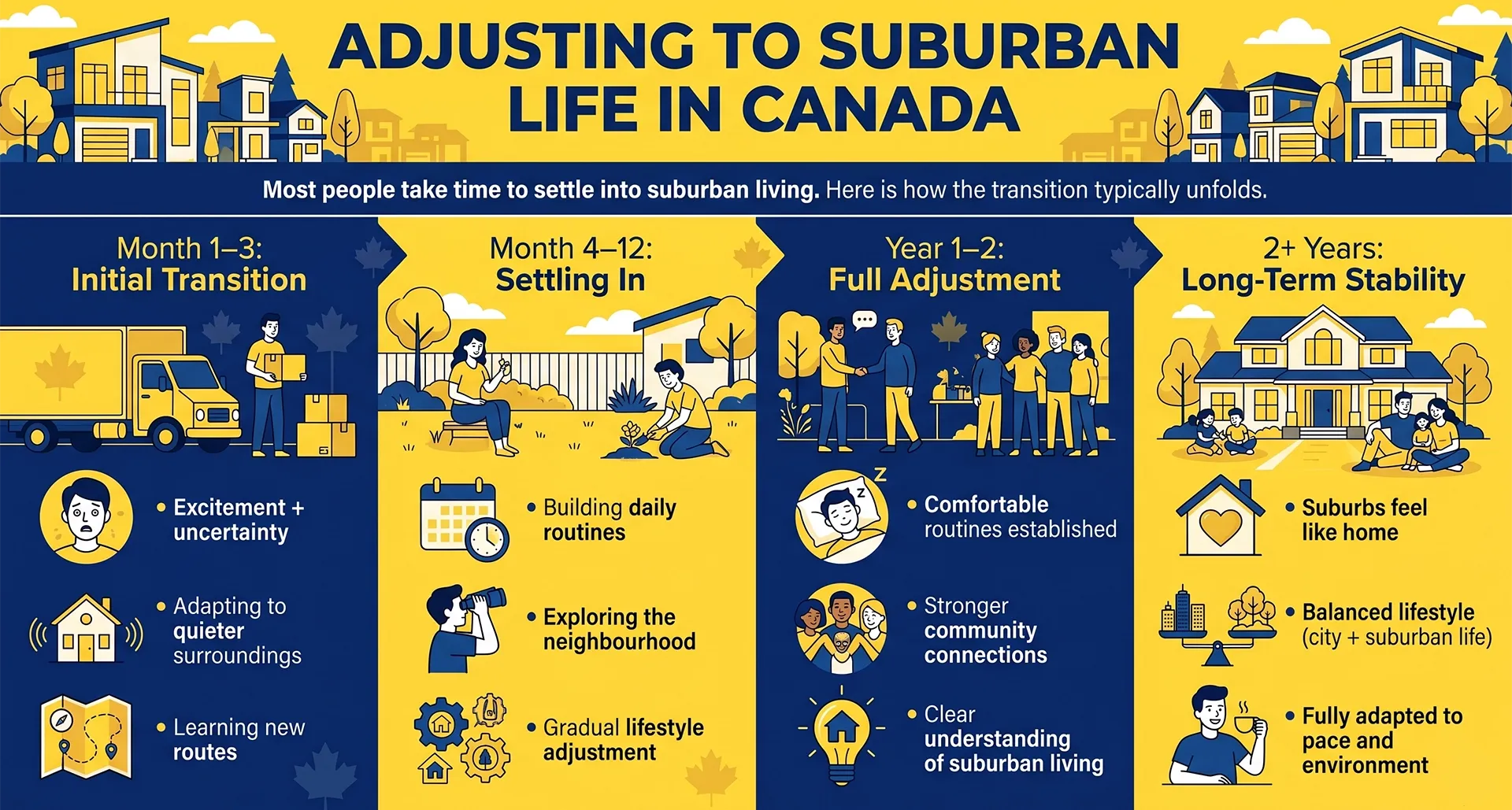
While every experience is different, most people go through a similar transition after moving from the city to the suburbs.
First 3 Months
- A mix of excitement and uncertainty
- Adjusting to quieter surroundings
- Learning new routines and daily patterns
6 to 12 Months
- Becoming more familiar with the neighbourhood
- Establishing consistent routines
- Gradually building local connections
1 to 2 Years
- Feeling fully settled into suburban life
- Increased comfort and stability
- A stronger sense of community
The timeline can vary depending on lifestyle and expectations. However, one thing remains consistent. Adjusting to the Canadian suburban lifestyle happens gradually.
Is Moving To The Suburbs In Canada The Right Choice For You?
Suburban living in Canada offers clear advantages, including more space, quieter surroundings, and greater long-term stability.
It also introduces new routines, responsibilities, and lifestyle changes that come with the transition to suburban living.
The transition after moving from the city to the suburbs is not just about location. It is about how your daily life changes over time.
Understanding what changes after the move helps you make more informed decisions.
From commuting and costs to social dynamics and home maintenance, these shifts also make it easier to adjust to suburban living in Canada.
Whether you are exploring the best suburbs in Canada or planning your next move, the goal is not just to relocate.
By this stage, most people have a clearer idea of whether suburban living aligns with their needs.
With the right expectations and planning, many people find suburban living to be a rewarding long-term choice.
The next step is to plan the move itself to avoid delays, damage, and unnecessary stress.
Planning Your Move To The Suburbs?
If you’re moving from a condo or townhouse into a larger home, proper planning makes a significant difference. Get a detailed moving estimate based on your home size, layout, and relocation distance to ensure a smooth transition.
Moving To The Suburbs In Canada: Common Questions Answered
Q. Is Moving To The Suburbs In Canada Cheaper Than Living In The City?
A. Moving to the suburbs can reduce housing costs, but overall expenses often shift. Higher transportation, utilities, and home maintenance costs can balance out the savings over time.
Q. What Are The Biggest Lifestyle Changes When Moving From The City To The Suburbs?
A. The biggest changes include reduced walkability, increased car dependency, quieter surroundings, and more structured daily routines compared to city living.
Q. How Long Does It Take To Adjust After Moving To The Suburbs?
A. Most people take several months to a couple of years to fully adjust, depending on lifestyle, location, and how quickly they build routines and community connections.
Q. Are Suburbs In Canada Better For Families?
A. Suburbs are often better suited for families due to larger homes, quieter neighbourhoods, and access to schools, parks, and outdoor space for long-term living.
Q. What Should I Consider Before Moving To The Suburbs In Canada?
A. Key factors include commute time, transportation options, total living costs, home maintenance responsibilities, and whether the suburban lifestyle fits your daily needs.
Q. Is Suburban Living In Canada Worth It Long Term?
A. Yes, suburban living can be a strong long-term choice for those seeking more space, stability, and a quieter environment. However, it depends on lifestyle preferences, especially around commuting, convenience, and social activity.
Q. What Are The Hidden Costs of Suburban Living In Canada?
A. Hidden costs often include higher transportation expenses, increased utility bills for larger homes, ongoing maintenance, and seasonal costs such as snow removal and landscaping.