

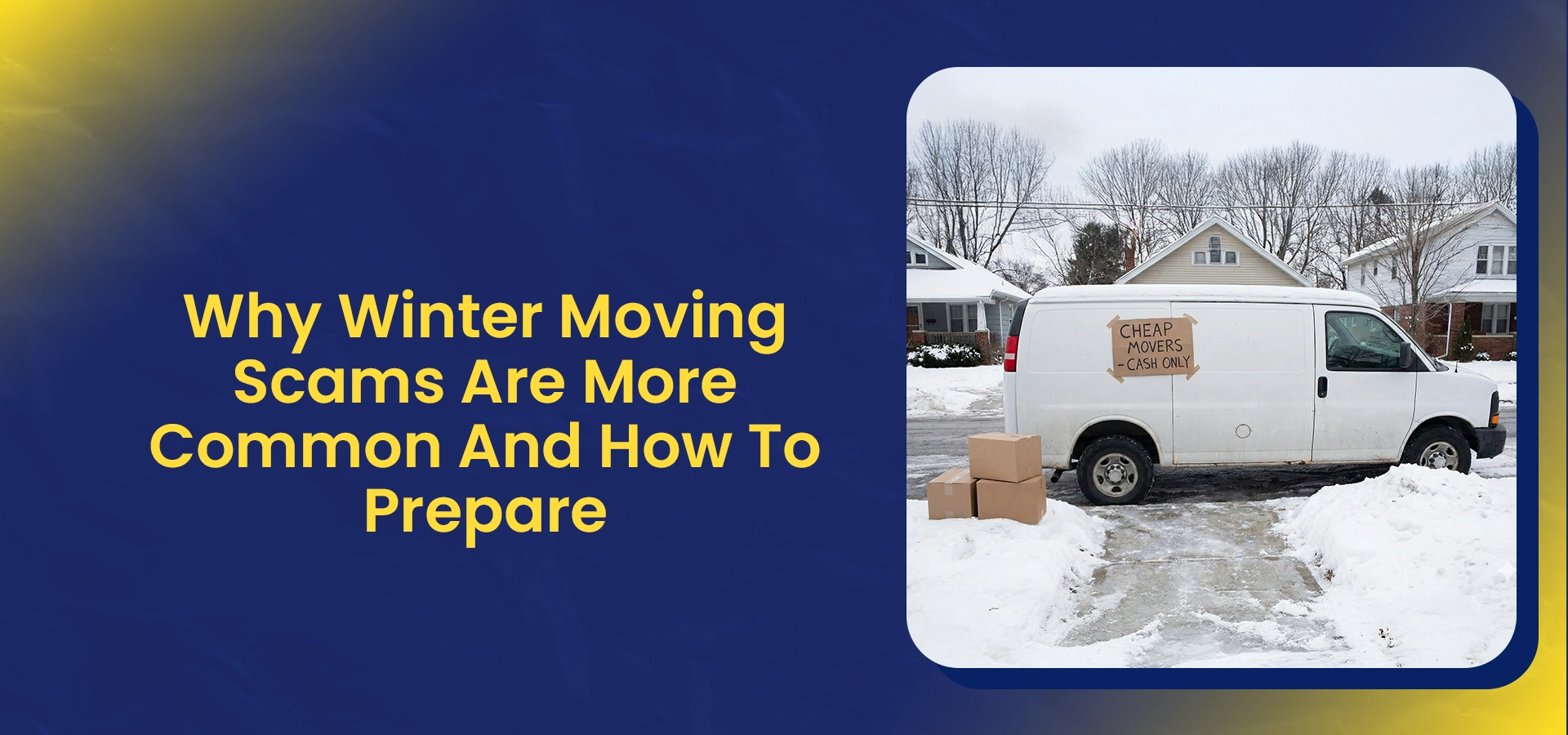
Winter moving scams can cost you time and money. Learn the key red flags to avoid dishonest movers and protect your belongings during winter moves.
It’s tempting to think that moving during the quieter winter months offers a discount and an easier experience. The moving industry slows down, and companies are often eager to fill their schedules. But this slow season can also create a perfect storm for fraudulent movers who prey on budget-conscious customers. The reality is that lower demand can push disreputable companies to use deceptive tactics, making the risks far greater than the savings.
According to a report from the Better Business Bureau (BBB) on movers, complaints frequently cite issues around final price discrepancies and undisclosed fees, a persistent threat year-round. This guide is your complete defence. We’ll break down the most common financial, contractual, and seasonal traps specific to Canada so you can safely choose a mover and avoid falling victim to Winter Moving Scams.
How To Avoid The Lowball Moving Estimate Scam And Get A Binding Quote In Canada
The most common way a move spirals out of control financially is right at the start: the initial estimate. The scam is often referred to as “Bait and Switch.” A mover quotes an impossibly low price, sometimes thousands less than competitors, to secure your business. Once your belongings are on the truck, the price suddenly increases, often based on a made-up reason like “underestimated volume” or “extra labour.”
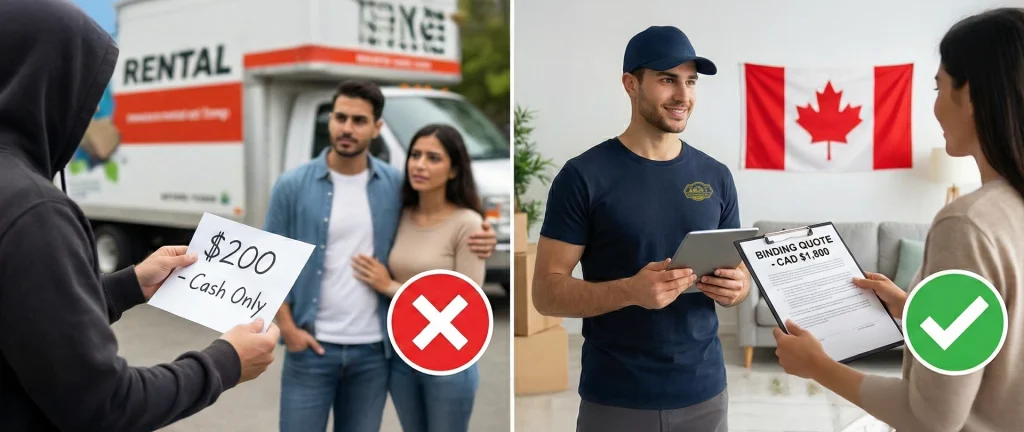
In Canada, understanding your estimated type is critical. Moving quotes are often based on either weight/volume (for long distance/inter provincial moves) or hourly rates (for local moves).
- Non-Binding Estimate: This is essentially an educated guess. The final cost can, and often does, exceed the estimate. Movers may provide this verbally or in writing, but it offers you little protection.
- Binding Written Quote: This is a fixed price. It guarantees that the cost will not exceed the written amount, provided the inventory of items does not change. This is a far safer option and should always be your goal.
For the highest level of protection, insist on a Binding Maximum Price Quote. This ensures the final bill cannot be higher than the quoted amount, but it can be lower if, for instance, the actual weight of your shipment comes in under the estimate. Always insist on a written, binding agreement that clearly defines the final price ceiling.
Mover Deposit Limits In Canada: Why Cash-Only And Big Upfront Fees Are Scams
Moving companies have legitimate business expenses, fuel, labour, and truck maintenance and they need assurance you’re committed to the move. A reasonable deposit is standard practice. However, fraudulent movers have no intention of providing a service; they only intend to take your money and disappear or hold your goods hostage.
Here’s The Financial Reality You Should Stick To:
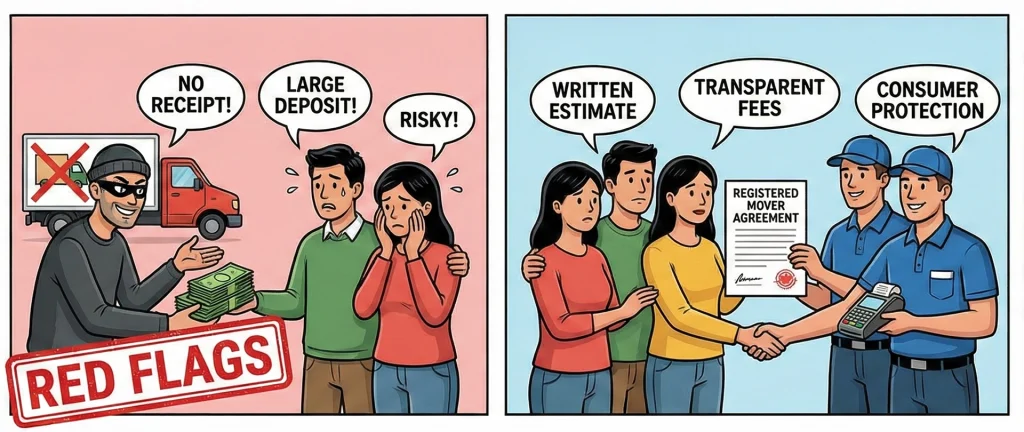
- Acceptable Deposit Range: 10% to 20% of the total estimated cost is standard and appropriate. Anything higher than 30% should raise serious concerns.
- The Payment Method: A reputable Canadian company will readily accept a credit card or Interac e-Transfer for the deposit. Paying by credit card is your most important safeguard, as it allows you to dispute the charge if the company fails to show up or breaches the contract.
If a mover insists on a deposit paid entirely in cash, a wire transfer, or a cashier’s check, walk away immediately. These methods leave no paper trail, offer no recourse, and are a classic indicator of a scam. The second you hand over cash, you lose all leverage.
How To Check A Mover’s License And Verify CAM Membership In Canada
Unlike the US, Canada does not have a single mandatory federal registry like the USDOT for all movers. Therefore, checking a company’s credentials requires more diligence, especially looking for industry membership and insurance.
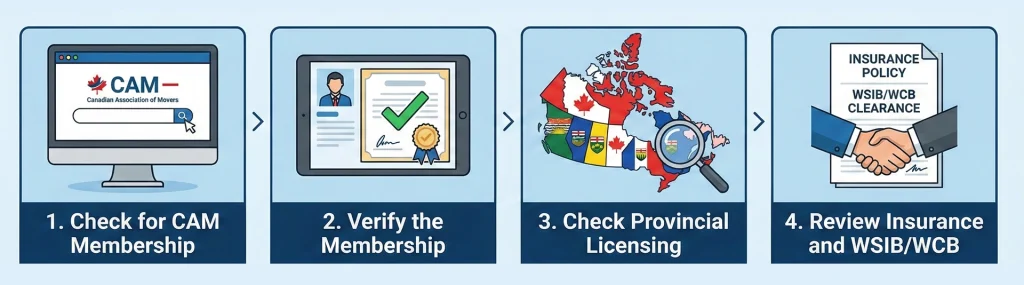
The Most Reliable Verification Process In Canada Is Checking The Canadian Association of Movers (CAM):
- Check for CAM Membership: CAM is the authoritative national association representing movers. Membership indicates a company has met certain ethical standards, is insured, and is committed to fair practice. Reputable movers proudly display the CAM logo.
- Verify the Membership: Go to the official CAM website and use their search tool to confirm the company’s membership status. Do not rely solely on a logo on a website.
- Check Provincial Licensing: While CAM is national, some provinces (like British Columbia) have specific regulatory bodies or requirements for long-haul carriers. Check your provincial transportation ministry website if the move is within your province.
- Review Insurance and WSIB/WCB: Ask the mover for proof of their cargo insurance and their provincial workers’ compensation coverage (WSIB in Ontario, WCB in other provinces). Legitimate companies must carry these for both liability and employee safety.
Skipping this step is how consumers fall for some of the most elaborate Winter Moving Scams. A company that avoids joining CAM or providing proof of insurance is not one you should trust with your household goods.
Physical Check: Is Your Moving Company’s Address Real (or Just a P.O. Box)?
Moving is a physical business that requires trucks, storage space, and administrative staff. If a company can’t prove a physical presence, they are likely a broker or a fraudulent operation.
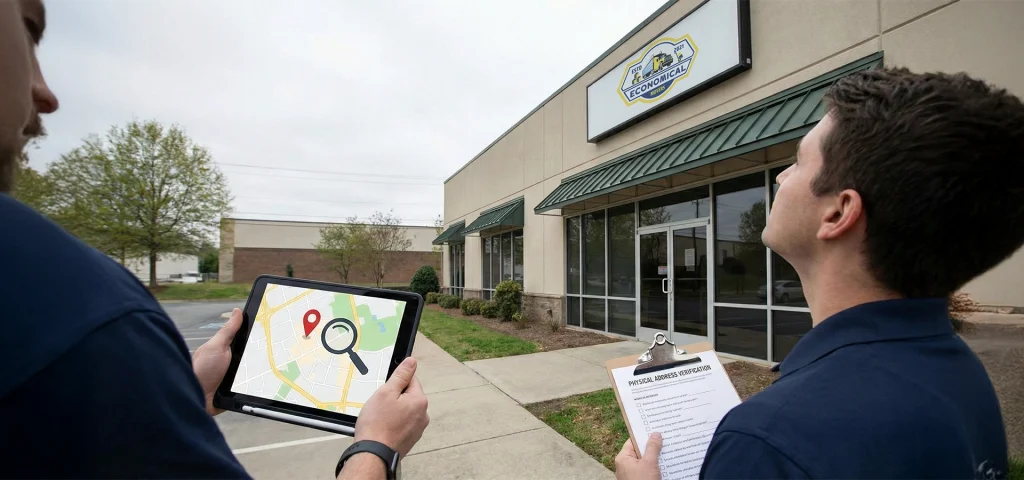
After you’ve verified their credentials, perform a simple physical verification check:
- Address Verification: Enter the company’s listed address into Google Maps to confirm it corresponds to a legitimate commercial or industrial property.
- What You Should See: You should see a commercial building, perhaps a warehouse, or at least a parking lot with fleet vehicles bearing the company’s logo.
- Major Red Flags: If the address is a personal residence, an empty lot, or a P.O. Box at a postal outlet, you are likely dealing with a shell company or a scam artist operating out of a virtual office. A legitimate moving company has significant overhead and a physical operational base. If they are a broker, they must clearly disclose this relationship in writing.
Preventing The Hostage Load Scam: Essential Clauses For Your Moving Contract
The “hostage load” is arguably the most terrifying of all Winter Moving Scams. This occurs when the mover loads your goods, drives away, and then demands an exorbitant amount of cash far beyond the original quote before they will unload your property. If you refuse, they hold your items until you pay. The contract is your only defense against this high-pressure extortion.
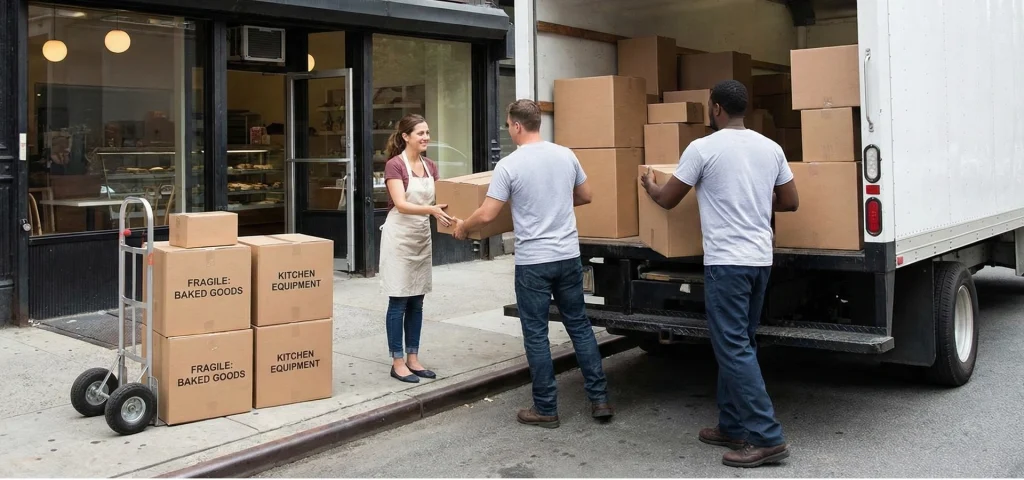
The Contract Must Explicitly And Item-By-Item Include:
- Full Inventory List: Every major item (boxes, furniture, electronics) must be listed. This prevents the mover from claiming you added more items later.
- All Fees Itemized: Every single potential fee fuel surcharges, long-carry fees, stair carries, and any winter-specific surcharges must be listed with an exact dollar amount or clear calculation method.
- Binding Maximum Price: The final, guaranteed maximum price must be clearly stated on the front page of the contract.
Never sign a blank or incomplete contract. Read every line and make sure you understand the terms before your items are loaded onto the truck. In the event of a hostage load situation, immediately contact the local police and the Canadian Association of Movers.
Mover Liability Explained: Why Standard Coverage Fails And You Need Declared Value
Movers in Canada are legally required to provide a minimal level of liability coverage for your goods, but this is almost always completely inadequate for the value of your possessions. Many customers mistakenly believe this basic coverage is sufficient.
- Basic Liability Coverage: Many movers quietly bury liability limits deep in their terms and conditions. When damage occurs, claims are often rejected or minimized by pointing to fine-print exclusions that most customers never see or fully understand.
- Declared Value Protection (The Option You Need): This is an added-cost option that you must specifically purchase. Under this, you assign a minimum value to your shipment, and the mover is responsible for the repair or replacement cost up to that declared value.
When getting your quote, always ask for the price of Declared Value Protection and what the actual replacement cost deductible or limit would be. A company that tries to downplay the importance of this is not acting in your best interest.
Watch Out For Winter Moving Hidden Fees And Weather Delay Surcharges
Moving in the cold Canadian winter comes with its own set of seasonal risks that scammers will leverage for extra profit. The two main areas of concern are weather delays and specialized winter labour.
- Weather Delay Fees: If a major snowstorm or ice event (or an unexpected road closure in Northern Canada) delays your move, a scammer might charge an exorbitant “truck idling fee” or a “storage-in-transit fee” without warning. Get written confirmation in your contract that defines the company’s policy on weather-related delays, including whether or not they will charge you for unavoidable acts of nature.
- Schedule Manipulation Fees: Some movers intentionally overbook winter routes, then cite “logistical conflicts” or “route changes” to justify added waiting charges, rescheduling penalties, or extended truck-time fees. These costs are often introduced after your belongings are already loaded, leaving little room to refuse.
Review Fraud: How To Spot Fake Mover Reviews and Name-Changing Scams
The last line of defense against deceitful companies is a thorough review of their online reputation. Fraudulent moving operations are often exposed in reviews, but they employ tactics to obscure their past.

- Check the Business Registry: Scammers who rack up too many bad reviews will often shut down and immediately re-open under a new name to escape their reputation. Check your provincial business registry to see if the company has a history of rapid name changes. A legitimate, long-standing company will have consistent branding.
- Spotting Fake Reviews: Be suspicious of patterns in overly positive reviews:
- Generic Language: “Fantastic service! Fast, friendly, and efficient.” (Lacks details about the actual move).
- Same Date Clustering: A mover who has 20 five-star reviews all posted within the same two-week period.
- Geographic Disconnect: Reviews that feel out of place for a local company (e.g., too many reviews referencing moving across the country when the company primarily does local moves).
- Check Verified Platforms: Focus on reviews on sites like the Better Business Bureau (BBB) and, if applicable, the Canadian Association of Movers (CAM) website, which tend to have more verified complaints than public review sites.
Your 3-Point Checklist to Hire A Safe Mover This Winter
Don’t let the rush of a deadline or the promise of a cheap rate lead you into a scam. By prioritizing safety and legal certainty over a low price, you can successfully navigate the Canadian winter moving season. Use this checklist before you sign any documents:
- Demand a Binding Quote: Do not accept a verbal or non-binding estimate. Insist on a written Binding Maximum Price contract that locks in your ceiling cost.
- Verify Canadian Credentials: Check for membership with the Canadian Association of Movers (CAM) and ask for proof of WSIB/WCB coverage and cargo insurance.
- Ensure a Low Deposit: Never pay more than 20% upfront, and always pay the deposit with a credit card for payment protection.
By following these simple steps, you can avoid the threat of Winter Moving Scams and focus on the excitement of your new home.
Share Your Scam Story And Find Out What To Do Next
Have you encountered a deceptive mover or a hidden fee during a winter move in Canada? Share your scam story in the comments below to help others stay safe!
If you are currently researching safe, transparent movers, companies like Economical Movers demonstrate what to look for: clear pricing and a focus on customer satisfaction, which helps avoid the traps of hidden fees.
As BBB accredited and certified movers in Ottawa, Economical Movers is committed to honest, clear communication from your first quote to final delivery. We understand that choosing a reputable company is your best defense against common moving fraud.
Your Top Winter Moving Scams And Safety Questions Answered
1. Why Am I Getting Multiple Calls From Moving Companies?
This usually happens because you submitted an online quote request, and your contact information was sold to multiple moving companies or brokers as a lead. Brokers, in particular, will call you aggressively, trying to secure a deposit before they even hire a licensed mover for the job. To stop the calls, only submit requests directly on the websites of verified, CAM-member companies.
2. How To Identify Fake Packers And Movers?
Fake companies often refuse to provide a Binding Written Quote, insist on large cash-only deposits, and lack legitimate physical offices or storage facilities. They also won’t provide proof of required insurance or membership in the Canadian Association of Movers (CAM). Always check their business registration and verify their contact details before proceeding.
3. What Are The Red Flag With Moving Companies?
Major red flags include demands for an upfront deposit higher than 20% or an insistence on payment via non-traceable methods like cash or wire transfer. Be wary if they provide only a non-binding estimate that seems impossibly low or if they have an address that is just a P.O. Box. A final red flag is the inability to provide verifiable proof of WSIB/WCB and cargo insurance.
4. What To Do If You Are Scammed By Movers?
If you suspect you have been scammed, immediately report the company to the Better Business Bureau (BBB) and file a complaint with the Canadian Association of Movers (CAM). If a mover is holding your goods hostage, contact the police and your provincial Consumer Protection agency. If you paid by credit card, contact your bank to dispute the charge immediately.
5. What Is The Hardest Room To Pack When Moving?
The kitchen is usually the hardest and most time-consuming room to pack due to the sheer volume of small, fragile, and oddly shaped items. It contains everything from sharp utensils and heavy appliances to delicate glassware and perishable food, requiring a variety of packing materials. Tackle the kitchen early by packing non-essential items first, like seldom-used serving dishes.
