
Before Renting A Stroage Unit In Ottawa, Learn About Admin Fees, Insurance charges, And Surprise Costs That Increase Your Monthly Bill.
Renting a storage unit in Ottawa may seem affordable at first, especially with low monthly rates and seasonal promotions. Students, families, and businesses often turn to storage for extra space, assuming the advertised price is all they’ll pay.
However, hidden costs can quickly add up, stretching budgets far beyond expectations. Many renters overlook mandatory insurance, setup fees, deposits, and access restrictions, only realizing the full cost after signing the contract. Travel distance and inconvenient hours can also increase expenses, making a supposedly “cheap” unit costly in practice.
This guide reveals the hidden fees, practical comparisons, and money-saving strategies you need to make informed decisions and avoid surprises when looking for affordable storage units in Ottawa.
1. Long-Term Storage Costs Add Up Quickly
- Price Increases After Promotions: Many facilities offer introductory discounts, often during low-demand seasons. Once the promotion ends, monthly rent can jump by 10–30%. Keep track of promotional periods and calculate what your true annual cost will be.
- Monthly Renewals and Contract Rules: Some storage contracts automatically renew each month, sometimes with small hidden fees or stricter rules. Review the terms carefully to avoid surprises, such as mandatory insurance changes or deposit adjustments.
- Student Summer Storage Expenses: Short-term storage for students may seem cheap, but renting for multiple summers or overlapping terms increases costs. Consider off-season rates or shared units to save money.
- Business Inventory Storage Costs: Businesses storing inventory long-term should account for unit size, access frequency, and security. Extra fees for climate control, insurance, or late payments can add hundreds of dollars annually.
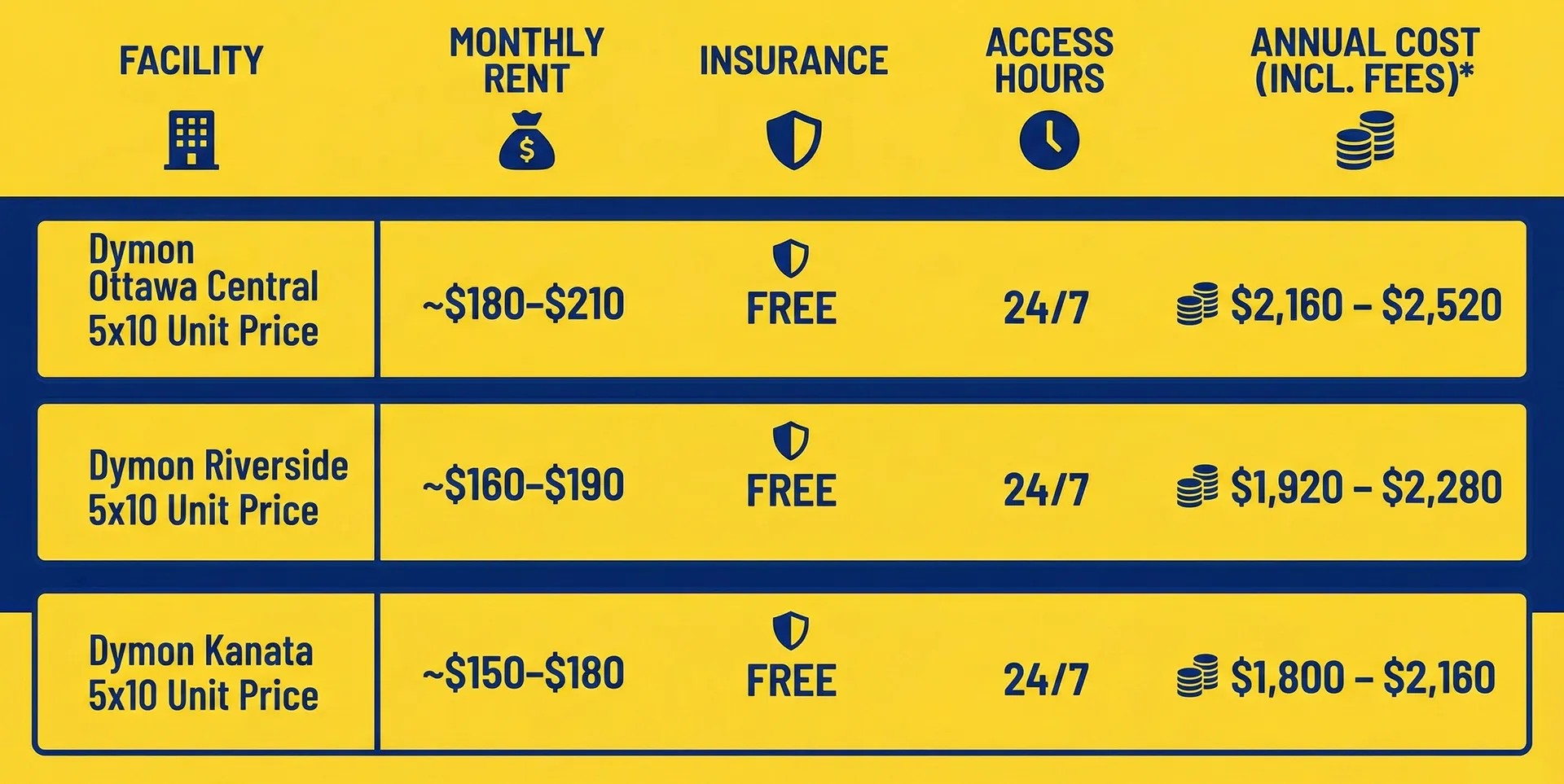
Comparing Long-Term Options in Ottawa: The cheapest advertised monthly rate is not always the best deal. Consider the total yearly cost, including rent after promotions, insurance, and travel. The table below compares typical long-term storage costs of (5×10 Units) at three Ottawa facilities:
2. Location and Access Costs In Storage Rental Ottawa
Where you rent a storage unit in Ottawa can significantly impact your total cost. Choosing a unit solely based on a low monthly rate may lead to hidden expenses such as travel, fuel, and inconvenient access. Here’s what to consider:
- Central vs. Outer Area Pricing: Units in downtown Ottawa or high-demand neighbourhoods often cost more. Facilities on the outskirts may appear cheaper, but the extra distance can add travel time and fuel costs.
- Travel and Fuel Expenses: Frequent visits to a distant storage unit can quickly erase any savings. Calculate the cost of round-trip travel, vehicle wear, and time when comparing units.
- Limited Access Hours: Some budget facilities restrict access to business hours, while others offer 24/7 entry. If you need evenings or weekends, limited hours may force multiple trips or scheduling challenges.
- Elevator and Facility Restrictions: Upper-floor units may require elevator use only during certain hours. Narrow hallways, loading dock rules, or booking requirements can make moving items slower and more stressful.
- True Cheapest Option: Don’t focus solely on the advertised rent. Compare total costs, including monthly rent, travel, insurance, and convenience. A slightly higher-priced unit closer to home with 24/7 access may be cheaper overall than a low-cost distant option.
Pro Tip: Make a short list of facilities within a reasonable radius, calculate all indirect costs, and choose a location that balances price, convenience, and security. This prevents surprises and ensures your storage unit truly fits your needs.
3. Choosing The Wrong Storage Unit Size Can Cost More
Selecting the right storage unit size is one of the most common mistakes renters make and it can be expensive. Paying for extra space you don’t need can add up quickly, sometimes costing hundreds of dollars a year.

- Measure Before You Book: Many facilities encourage renters to choose a larger unit by suggesting, “You might need extra room.” While flexibility sounds helpful, it often leads to paying for empty space. Take accurate measurements of your furniture, boxes, and other items. Create a simple inventory list and calculate the required floor space.
- Student Storage: For students needing summer storage, small lockers or shared units are usually enough. Boxes, small furniture, and seasonal items fit comfortably in a small or medium unit. Oversized units are rarely necessary and unnecessarily increase monthly costs.
- Family Storage: Families often require medium or large units depending on household size and furniture volume. A one-bedroom apartment may fit in a medium unit, while larger households or those storing bulky items need a larger unit. Planning carefully avoids paying for wasted space.
- Business Storage: Businesses storing inventory, documents, or equipment should assess shelving, stacking, and growth needs. Oversized units may be convenient but costly, while undersized units can create clutter and inefficiency.
- Senior Storage: Seniors should prioritize accessibility. Ground-floor units, wide hallways, elevators, and easy loading areas reduce physical strain. Sometimes, slightly smaller units with easier access are more practical than large upper-floor spaces.
Pro Tip: Balance cost, access, and actual storage needs instead of relying on sales recommendations. Choosing the right unit size upfront ensures you pay only for the space you truly need.
4. Extra Fees You Pay When Renting A Storage Unit In Ottawa
When renting a storage unit in Ottawa, the advertised monthly rate rarely tells the full story. Many renters focus on low promotional prices but end up paying additional charges that quickly add up. Knowing these fees upfront helps you plan your budget and avoid surprises. Common extra costs include:
- Admin and Setup Fees: Most facilities charge a one-time registration or account setup fee, ranging from $10 to $50. This is separate from your monthly rent.
- Mandatory Insurance: Even if your home insurance covers stored items, many facilities require facility-approved insurance. Costs vary depending on the unit size and contents.
- Lock Requirements: Some locations require the use of their approved lock rather than a personal one. Prices can range from $10–$30.
- Deposits: Refundable deposits are often required, particularly for short-term rentals or large units. While refundable, they tie up cash upfront.
- Late Payment Penalties: Missing a due date can trigger penalties and may even restrict access to your unit.
- Promotional Rate Expiry: Introductory discounts usually last 1–3 months. When they expire, monthly rent can increase by 10–30%, catching renters off guard.
Pro Tip: Always ask for a complete written pricing breakdown before signing. Include monthly rent, setup fees, insurance, and any potential penalties. This simple step ensures you understand the total cost and can accurately compare different facilities.
5. Conclusion: How To Save Money When Renting A Storage Unit In Ottawa
- Hidden costs can turn an affordable storage unit into a significant expense. To avoid surprises, always review the full pricing breakdown, including monthly rent, insurance, deposits, and any access fees. Factor in travel, fuel, and time, and sometimes a slightly higher-priced, conveniently located unit is cheaper overall.
- Measure your items carefully and choose the right unit size. Small units are suitable for students or seasonal storage, medium units fit most families, and large units are ideal for businesses with inventory. Seniors should prioritize accessibility over size.
- Compare long-term costs across multiple facilities. Look beyond promotional rates and calculate the true yearly expense. Use tables or spreadsheets to include rent, insurance, travel, and other fees.
Quick Tips: Ask questions upfront, track promotional expiries, and consider downsizing or selling items you rarely use. With careful planning, you can secure a storage unit in Ottawa that meets your needs, avoids hidden costs, and saves money in the long run.