

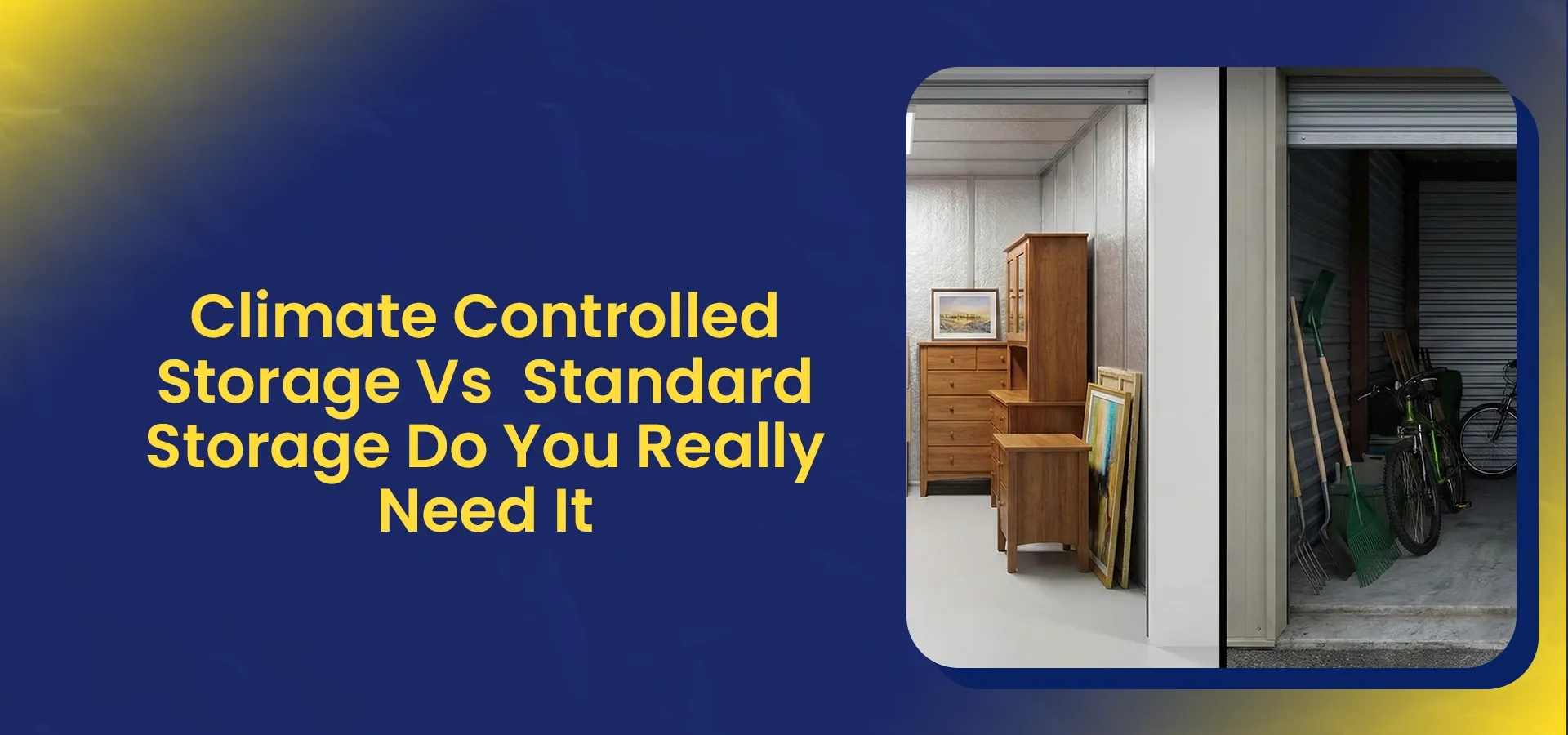
Not Sure About Climate Controlled Storage Vs Standard Storage? Compare Protection, Pricing, and Ideal Use Cases Before Renting A Unit.
In Canada, deciding whether to use climate controlled storage vs. standard storage is one of the first questions homeowners, renters, and businesses face when moving or storing belongings.
With so many options available, the decision can feel confusing, especially when you want to protect valuable items without paying more than necessary.
This guide breaks down the differences, benefits, costs, and risks of both storage options.
That said, it will help you decide which makes the most sense for your belongings, budget, and storage timeline.
What Is Climate Controlled Storage?
Climate controlled storage is a specialized storage solution that regulates temperature and humidity inside the unit.
Unlike standard storage, which is subject to external weather conditions, climate controlled units maintain a consistent environment to protect delicate or valuable items.
- Temperature range: Typically 15–25°C (59–77°F)
- Humidity control: Prevents moisture buildup, mold, and warping
- Access: Usually indoor units with secure entry
Why Climate Controlled Storage Matters: Items such as electronics, wooden furniture, antiques, fine art, documents, and musical instruments are highly sensitive to temperature and humidity fluctuations. Storing them in standard units can result in irreversible damage over time, especially when choosing between temporary and extended storage needs.
Our short-term vs. long-term storage guide explains how climate controlled units help preserve your belongings no matter how long you plan to store them.
What Is Standard Storage?
Standard storage (also called traditional storage) refers to units that lack temperature or humidity controls.
They are usually outdoor-access units and may be influenced by seasonal changes.
- Cost: Lower monthly fees than climate controlled units.
- Accessibility: May be easier for frequent access, depending on the facility.
- Suitability: Good for non-sensitive items like boxes of books, sports equipment, tools, or outdoor furniture.
Standard Storage Risks in Canada: While standard storage is economical, it carries risks for temperature-sensitive items, especially in Canada, where summers can be humid and winters extremely cold.
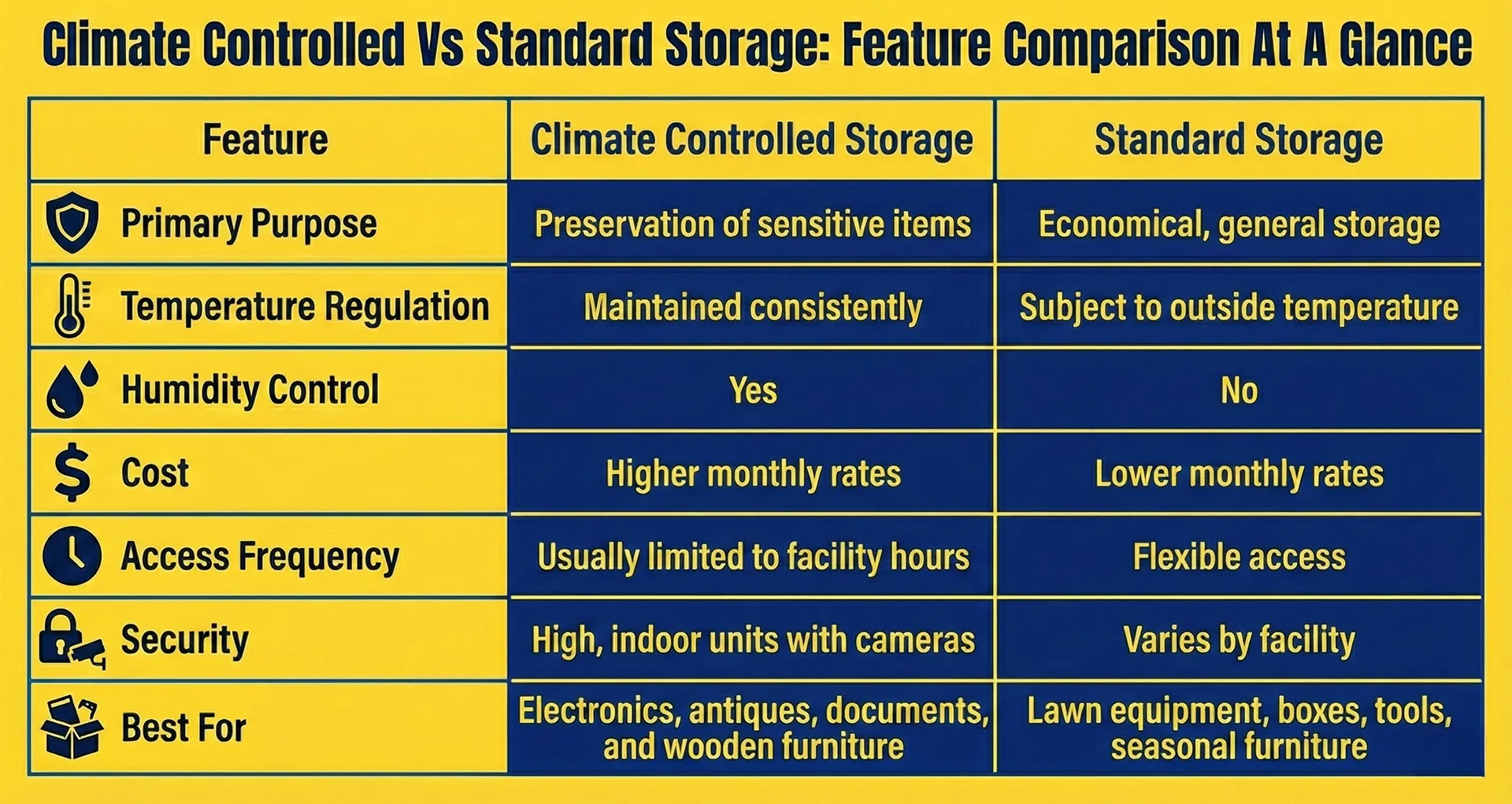
Use this metrics to compare the storage options between Climate controlled and Standard Storage
Seasonal Storage Needs In Canada
Canada’s climate makes storage choice especially important, even for short-term use.
- Winter Freezing can cause cracking, shrinkage, and material stress in wood and electronics.
- Summer Humidity increases the risk of mold, mildew, and corrosion.
- Rapid Temperature Swings create condensation inside standard units.
- Multi-Season Storage significantly increases the risk of damage without climate control.
Essential Point: If your items will be stored across seasons, climate controlled storage offers significantly better long-term protection.
The Right Storage Choice In Canada: Climate Controlled vs Standard
Choose Climate Controlled Storage If:
- You’re storing items for more than 30–60 days.
- Your belongings include wood furniture, leather, electronics, mattresses, artwork, or documents.
- You’re storing items through the Canadian winter or humid summer months.
- Replacement cost is high or emotionally significant.
- You want predictable protection, not seasonal risk.
- You’re asking questions like:
- Do I need climate controlled storage for furniture?
- Is climate controlled storage worth it for electronics?
- Do I need climate controlled storage for furniture?
Best for: Long-term storage, valuable belongings, climate-sensitive items, and peace of mind.
Choose Standard Storage If:
Choose Standard Storage If:
- Storage duration is short-term (a few days to a few weeks).
- Items are durable and non-sensitive (plastic bins, tools, metal equipment).
- You need frequent access to stored items.
- You’re storing during mild weather conditions.
- Cost is your primary concern, and risk is minimal.
Best for: Temporary storage, short moves, non-delicate household or business items.
Use this matrix to compare protection, risk, and cost at a glance.
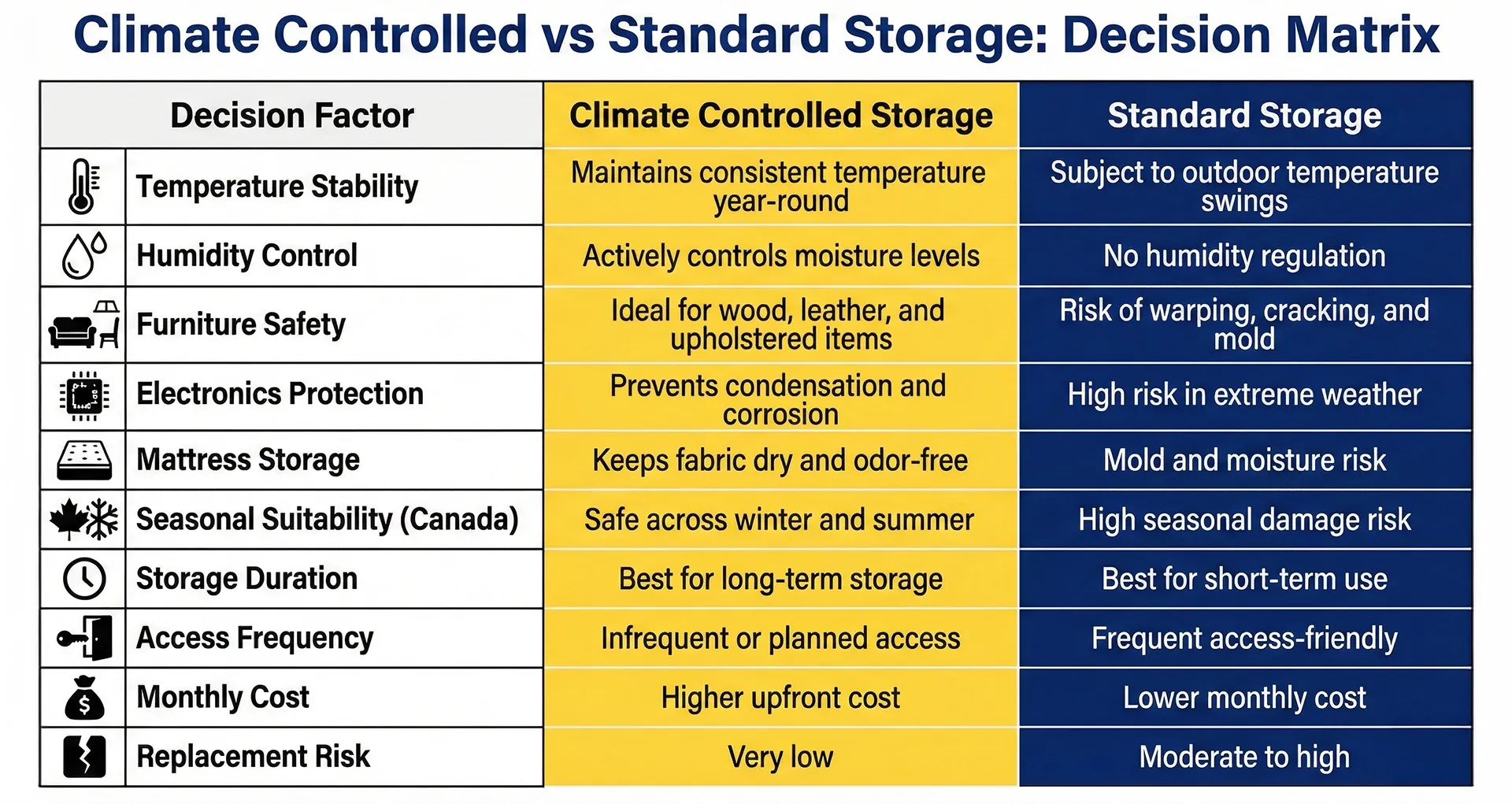
Essential Point: If an item would be expensive, difficult, or impossible to replace, standard storage is rarely worth the risk.
Benefits of Climate Controlled Storage In Canada
Choosing climate controlled storage provides several key advantages:
- Protects Sensitive Items – Prevents warping of wooden furniture, cracking of antiques, and mold growth on fabrics.
- Extends Lifespan of Electronics – Electronics can be damaged by moisture and extreme temperatures. Climate control helps preserve them.
- Reduces Risk of Damage During Seasonal Changes – In Canada, summer humidity and winter cold can be particularly harsh on stored belongings.
- Peace of Mind – Insurance claims are easier to manage when stored items are less likely to suffer environmental damage.
Expert Storage Insight: If you’re storing items like pianos, art pieces, or sensitive documents, climate controlled storage isn’t just an option; it’s a necessity.
Risks of Standard Storage Units In Canada
While standard storage is cost-effective, it has limitations:
- Temperature Fluctuations: Wooden furniture can crack or warp, electronics may malfunction, and photos or books can yellow over time.
- Humidity Issues: Moisture buildup can lead to mold, mildew, and corrosion on metal items.
- Pest Exposure: Depending on facility quality, rodents or insects can damage items.
- Seasonal Damage: Canadian winters with freeze-thaw cycles can create condensation inside units, affecting sensitive items.
Items That Require Climate Controlled Storage
If you’re wondering, “Do I need climate controlled storage for furniture?” The answer depends on the wood type, age, and overall value of the piece.
Certain items are highly sensitive to temperature and humidity and should always be stored in climate controlled units.
- Wood Furniture & Antiques – Warping, cracking, and joint separation
- Electronics (TVs, computers) – Condensation and internal corrosion
- Musical Instruments – Structural damage and sound quality loss
- Artwork & Photographs – Mold, canvas stretching, ink fading
- Documents & Books – Curling, yellowing, mildew
- Mattresses, Fabric & Leather – Moisture absorption, mold, cracking
Quick rule: If the item is valuable, difficult to replace, or moisture-sensitive, standard storage is a risk.
The cost varies by unit size, location, and facility, but here’s a general comparison:
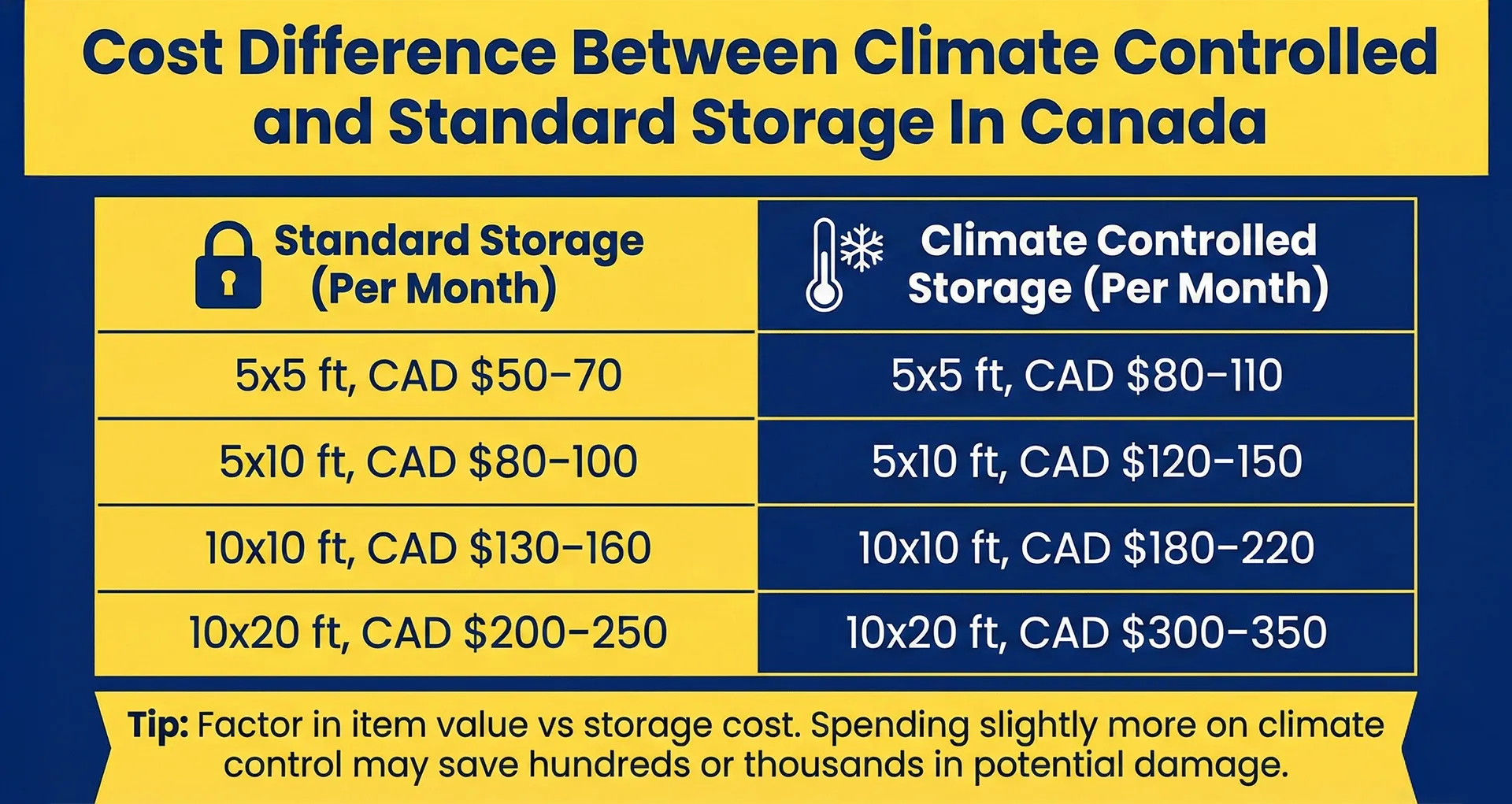
Tip: Factor in item value vs storage cost. Spending slightly more on climate control may save hundreds or thousands in potential damage.
Temperature Controlled vs Climate Controlled Storage: What’s The Difference?
Many people confuse temperature controlled with climate controlled storage:
- Temperature-controlled storage maintains a stable temperature but does not regulate humidity, leaving items exposed to moisture-related damage.
- Climate controlled storage regulates both temperature and humidity, offering full protection for moisture- and temperature-sensitive belongings.
What This Means for Your Items: If your items are susceptible to moisture, such as electronics, wooden furniture, paper, or fabrics, climate controlled storage is the safer choice.
How To Choose Between Climate Controlled and Standard Storage In Canada
Follow this simple checklist:
- Item Sensitivity: Are your items wood, electronics, antiques, or fabrics?
- Storage Duration: Longer storage periods favor climate control.
- Climate & Season: Ottawa summers and winters can damage non-sensitive items as well.
- Frequency of Access: Frequent access may justify a standard unit if items are durable.
- Budget: Compare potential replacement costs vs. storage fees.
Expert Recommendation: When comparing climate controlled storage vs. standard storage, the right choice depends on how long you’re storing, what you’re storing, and how much risk you’re willing to accept. If you’re unsure, spending a little more to protect your belongings often costs less than replacing them later.
Short-term + durable items → Standard Storage
Long-term + sensitive or valuable items → Climate-Controlled Storage
At Economical Movers, we provide secure, professional storage solutions, including climate controlled units to protect your valuables year-round.
Storage Cost vs Replacement Risk: Which Is Cheaper Long-Term?
The true cost comparison isn’t monthly rent—it’s storage cost vs replacement risk.
What most people overlook:
- The cost difference between climate controlled and standard storage is often modest
- Damage to furniture, electronics, or antiques can exceed storage savings in one incident
- Standard storage unit risks include warping, mold, corrosion, and material breakdown
- Long-term storage amplifies these risks significantly
- Climate control reduces uncertainty and long-term financial exposure
Quick takeaway: For valuable or sensitive items, climate controlled storage is often the more economical choice over time.
Storage Unit Considerations: Insurance, Security, and Accessibility
- Insurance: Check if your storage provider offers coverage. Many climate controlled units are eligible for lower-risk insurance rates.
- Security: Climate controlled units are usually indoors and monitored by cameras, providing extra protection for valuable items.
- Accessibility: Some climate controlled units have limited access hours, so plan accordingly.
Lower Cost Storage Alternatives To Climate Controlled Units
If climate controlled storage seems expensive, consider:
- Selling or donating low-value items
- Using standard storage for non-sensitive items
- Creating a home storage space (basement or attic with some climate protection)
Final Take On Climate Controlled Vs Standard Storage In Canada
Choosing between climate controlled storage vs. standard storage comes down to risk vs. cost.
- Use climate controlled units for valuable, sensitive, or long-term storage.
- Use standard units for non-sensitive, frequently accessed, or budget-conscious storage needs.
At Economical Movers, we help you evaluate your belongings, recommend the right storage solution, and ensure everything stays safe and accessible. Protect your items, reduce the risk of damage, and make your move stress-free.
If you need help deciding, a professional mover or storage expert can help assess your items and storage timeline.
FAQs About Climate Controlled and Standard Storage Options In Canada
Q1: Do I Need Climate Controlled Storage For Everyday Furniture?
Only for wooden, leather, or high-value furniture that could be damaged by moisture or temperature swings.
Q2: Can I Store Electronics Safely In Standard Storage?
Not recommended. Electronics are vulnerable to humidity and temperature fluctuations. Climate controlled storage is ideal.
Q3: How Much Does Climate Controlled Storage Cost Compared To Standard Storage?
Expect 30–50% higher monthly rates, depending on unit size and location. Consider this in light of potential damage to your items.
