You’ve got a moving date this winter and a house full of things you haven’t decided about. The patio set. The snow blower you won’t need at the condo. The boxes in the basement nobody has opened since the last move. Anything still undecided on moving day tends to get packed and loaded by default, and you pay to move it.
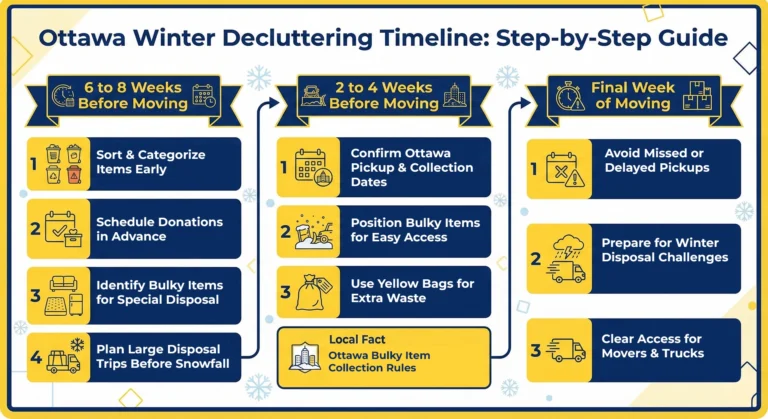
Fall is the time to sort it out. In October and November, selling and donating are still easy, and there’s time to book storage before the truck arrives. This guide covers what to do with unwanted items before moving: what to sell, donate, store or junk, with fall decluttering tips that fit an Ottawa winter. For a schedule, see our week-by-week winter decluttering timeline.
Why Fall Is The Last Easy Window Before An Ottawa Winter Move
Three things change between October and January:
• The Weather. Ottawa’s average overnight low drops to -2°C in November and -9°C in December, based on Environment Canada’s 1981-2010 averages. Buyers who’ll load a dresser in October are less keen on an icy driveway.
• What Buyers Want. Snow blowers, winter tires and skates sell before the first big snowfall. Patio sets and kayaks sell in spring.
• Free Options. The City of Ottawa’s Giveaway Weekend, when neighbours leave usable items at the curb, ran in spring this year (May 30 and 31). You can still give things away through a local Buy Nothing group.
What To Do With Unwanted Items Before Moving: Six Questions
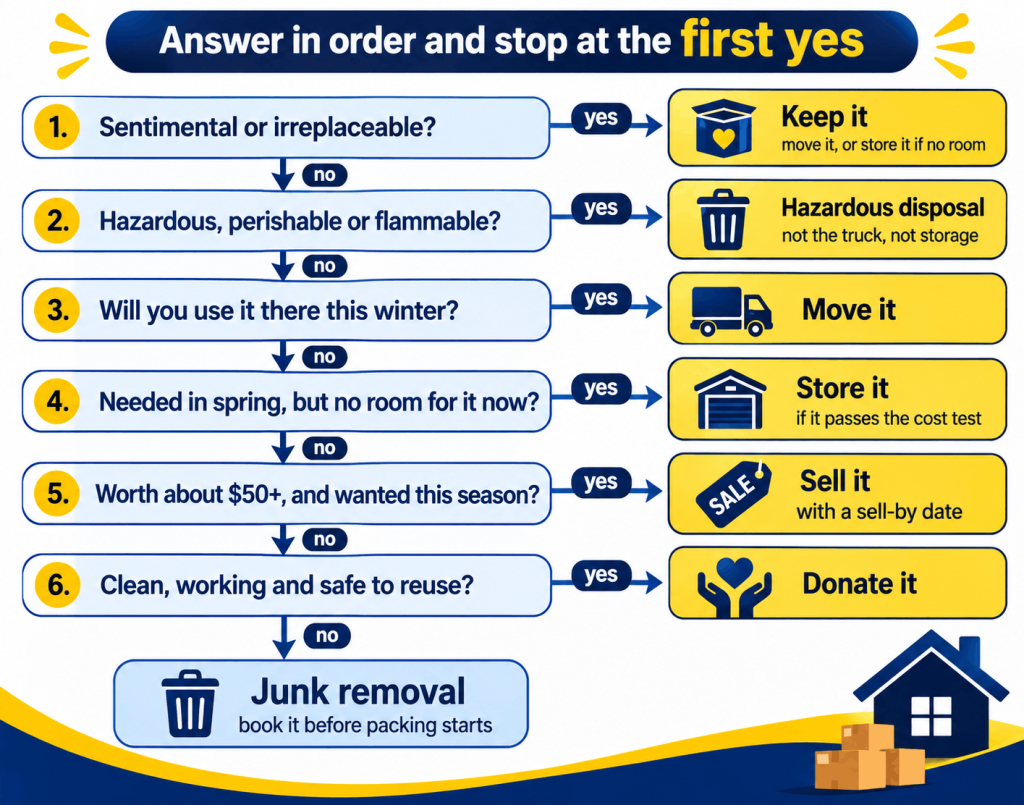
Asking whether you still love a kayak paddle doesn’t get you far. For a winter move, the better questions are about timing, value, and the cold. Go through these in order for each item and stop at the first yes. If you’re not sure what will fit in the new place, start with our five-question keep test.
1. Is It Sentimental Or Irreplaceable? Keep it. Move it if there’s room, or store it if there isn’t.
2. Is It Hazardous, Perishable Or Flammable? Follow the Ottawa disposal rules for hazardous items.
3. Will You Use It In The New Home This Winter? Move it.
4. Will You Need It In Spring, Or In A Bigger Home Later, But Have No Room For It Now? Store it, if it passes the cost test below.
5. Would It Sell For About $50 Or More, And Do Buyers Want It Right Now? Sell it. Selling takes time: taking photos, writing the listing, answering messages and waiting for buyers who don’t show up. That effort usually pays off for items worth $50 or more. For cheaper things, donating is faster.
6. Is It Clean, Working And Safe To Reuse? Donate it.
Everything else is junk. Book removal.
Decision guide: sell, donate, store or junk
Quick Reference: Common Fall Items and Where They Should Go
Adjust for your new home. A condo locker or a garage can change the answer for tires and the snow blower.
| Item | Best Option | Why |
|---|---|---|
| Antique or family furniture | Move it, or store it if there’s no room | What it means to you matters more than its resale price |
| Winter tires you no longer need | Sell in October or November | Buyers shop for them before the first snowfall |
| Snow blower | Sell if moving to a condo or apartment; otherwise move it | Drain the fuel either way |
| Patio set | Store if you’ll use it next summer; otherwise donate | Weak resale in fall |
| Barbecue | Sell, without the propane tank | Exchange or drop off the tank separately |
| Window air conditioner | Store, or sell at a discount | Demand returns in spring |
| Kids’ outgrown winter gear | Donate in October or November | Most useful before the cold sets in |
| Holiday decorations | Cut back before packing; move the rest | Fewer boxes at the busiest time of year |
| Old mattress | Junk | On the City’s not-allowed list for Giveaway Weekend |
| Car seat or crib | Junk | Safety items aren’t accepted for reuse |
Sell: What Moves Fast In Fall, and What Won’t
Sell Against The Season
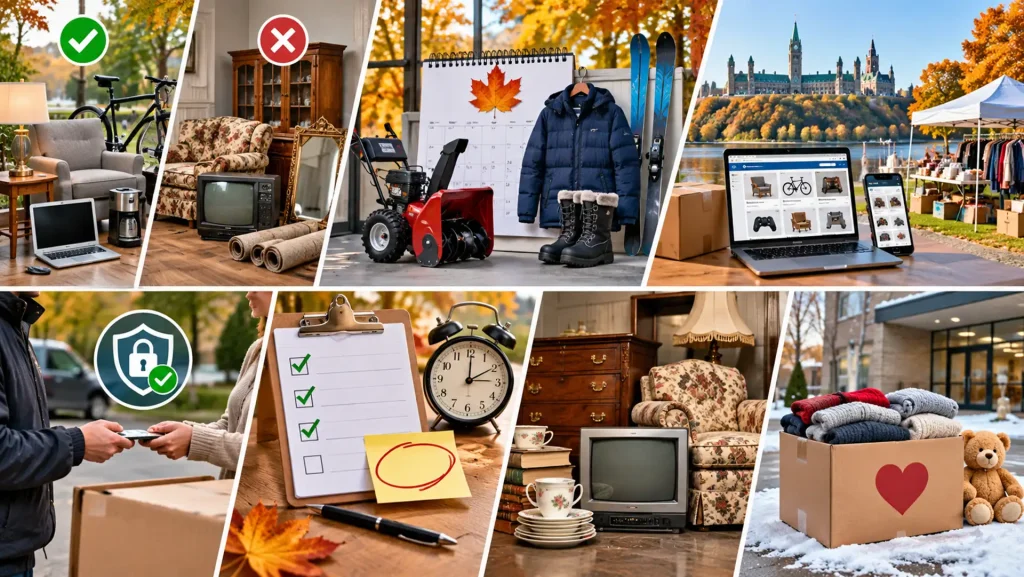
Winter gear gets the most interest just before the first real snowfall. If your new place has no room for it, list the snow blower, spare winter tires and outgrown skates now. Summer gear works the other way: patio sets, barbecues, kayaks and window air conditioners sit for weeks in October and draw low offers. Store them if you’ll want them again, or donate them.
Where To Sell In Ottawa
| Option | Best For | Cost | What to Expect |
|---|---|---|---|
| Facebook Marketplace | Furniture, appliances, kids’ gear | No fee on a local pickup sale; paid boosts are optional | Lots of local buyers and lots of “Is this available?” messages |
| Kijiji | Tools, tires, sporting goods | Free ads in most categories, with limits in a few | Buyers who already know what they want |
| Consignment store | Solid wood furniture, designer pieces, good clothing | The store keeps a share of the price | Slowest; you’re paid after it sells |
| Buy Nothing group | Usable things not worth listing | Free; you’re giving it away | Often the quickest way to clear small items |
Sell Safely
For anything you can carry, meet at one of five Ottawa Police Safe Trade Zones: marked parking spots at the Elgin Street, Kanata, Nepean, Leitrim and Orléans stations. Police say they “are not monitored 24/7,” so go in daylight and bring someone. For furniture picked up at your home, move it into the garage first and have a second adult there. With e-Transfer, wait until the money is in your account, not just an email saying it was sent.
Set A Sell-By Date
Choose a last day for selling. Make it early enough that you still have time to donate the leftovers or book junk removal before moving day. Anything that hasn’t sold by then goes to donation or junk. Don’t give it one more week. You’ll need that week to pack.
What Rarely Sells
Some things are hard to sell, so don’t spend time listing them:
- Particleboard furniture, because it gets weaker each time you take it apart
- Used mattresses
- Older TVs and printers
- Anything with missing parts
If it still works, give it away in a Buy Nothing group. If it doesn’t, add it to your junk removal list.
Donate: Getting Items To The Right Place Before The Snow
Donation bags often sit by the front door for weeks. Sort them first (clothes, kids’ things, food) so you can take each bag straight to a place that accepts it.
- Winter clothing. Shelters and newcomer programs need coats, boots, mitts and toques most in October and November, so donate them early. Note: Ottawa’s Snowsuit Fund only gives out new snowsuits and doesn’t take used ones. To help, give money instead.
- Kids’ things. Most donation spots take toys, books and kids’ clothes. Most won’t take car seats, cribs, baby gates, baby walkers or helmets, for safety reasons, and the City doesn’t allow them at Giveaway Weekend either. Put these on your junk list.
- Food. Movers can’t take frozen food or food that spoils. Put unopened, unexpired cans and boxes in the Ottawa Food Bank’s red bins at grocery stores.
- Tax receipts. If you want one, donate to a registered charity. For-profit thrift stores can’t issue them. The receipt shows what your items are worth now, not what you paid.
Store: Is a Storage Unit In Ottawa Worth It Over Winter?
If you’re renting space because your closing dates don’t line up, or while staging your home for sale, the real question is which items deserve a spot. A storage unit in Ottawa is only worth it for items that pass two checks.
The Cost Test
Add up the rent for the months you’d store the item. Then take what it would cost to replace it and subtract what you could sell it for today. Store it only if the rent is the smaller number.
The math leaves out two things. If an item matters to you, skip the test. And storage means moving things twice, so add the cost of the trip back out if you’re paying for one.
| Item | Cost to Replace | Could Sell For Today | Difference | Rent Until Spring | Decision |
|---|---|---|---|---|---|
| Patio set and two kayaks | $1,800 | $600 | $1,200 | $150 a month x 5 months = $750 | Store |
| Particleboard dresser | $500 | $100 | $400 | $75 a month x 8 months = $600 | Sell or donate |
The numbers are rounded to show the math, they aren’t real quotes.
What Shouldn’t Sit In A Cold Unit Through An Ottawa January
Ottawa’s average January low is -14°C. Facilities use storage terms loosely: “heated” may only mean above freezing, while “climate-controlled” should mean temperature and humidity are both managed. Ask what the unit actually controls, then watch for these:
• Latex Paint. Most cans say “protect from freezing.” Use it up, give it away or keep it somewhere heated.
• Wood Furniture In A Heated-Only Unit. Heat without humidity control dries the air out. The Canadian Conservation Institute says long spells of very dry winter air put furniture at high risk of cracking, especially thin veneer like that on many wardrobe doors.
• Leather, Fabric And Paper In A Damp Unit. According to the Institute, mould can appear in about 100 days at 70% humidity and in about two days at 90%.
• Gas-Powered Equipment. Drain snow blowers, lawn mowers and generators before they go in.
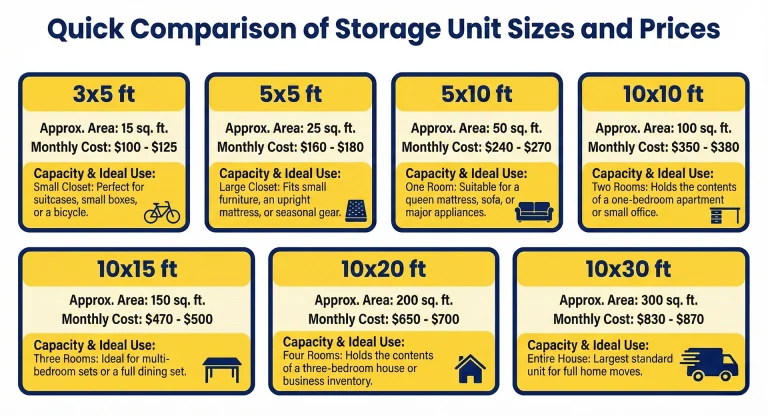
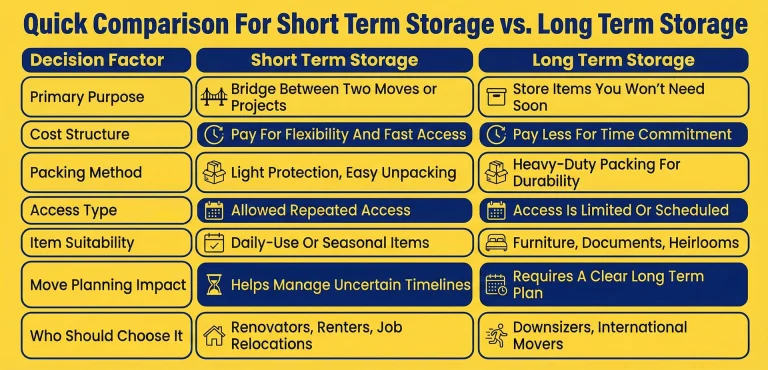
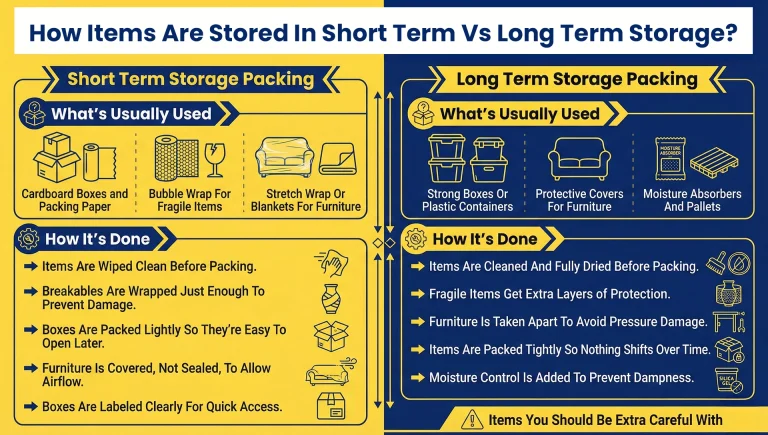
For unit sizes and how short and long rentals compare, see our guide to short-term vs long-term storage.
Junk Removal In Ottawa: When Nothing Else Works
Some things have no buyer and no charity that wants them: a stained mattress, a fridge that quit last summer, a shoebox of dead chargers. Book junk removal in Ottawa before packing starts. If your movers charge by the hour, every minute spent wrapping something bound for the dump is money spent on garbage. Ask whether the company donates or recycles what’s still usable, and whether there’s a minimum charge. Our Manotick guide covers what removal crews typically take.
Your Fall Decluttering Checklist
• Set aside sentimental and hazardous items first.
• List winter gear for sale before the first snowfall.
• Run the cost test on anything headed for storage.
• Pick a sell-by date. Unsold items go to donate or junk.
• Drop off winter clothing in October or November.
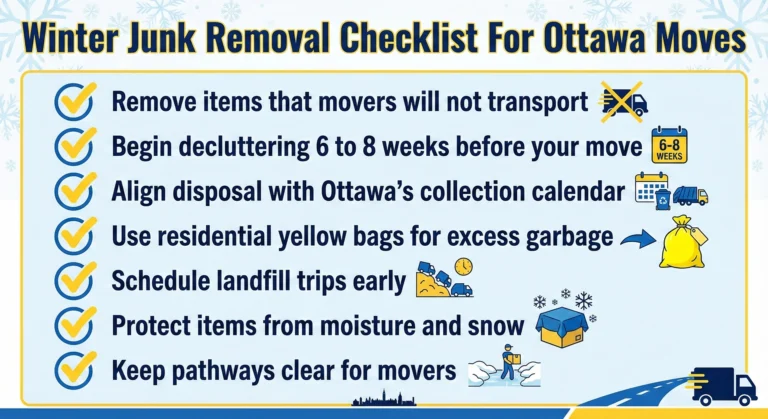
• Book junk removal before packing starts.
• Drain fuel from equipment and eat down the freezer before moving day.
Put these off until December and the moving truck ends up deciding for you. When you’re down to what’s coming with you, our winter packing checklist covers what people most often forget to pack.