


Move Without Hurting Your Home Sale. Experts Explain The Best Timing, Staging Strategies, And Moving Tips To Avoid Buyer Turn-Offs.
Many homeowners move because they are searching for a more family-friendly community, better security, a stronger long-term investment for their future, or a peaceful place to enjoy retirement. But while buying the next home is exciting, the process of moving during a home sale can create unexpected challenges.
Timing a move incorrectly, packing too early, or delaying the move too close to closing day can impact how buyers perceive a property and may even create complications during the final stages of a sale. That’s why careful planning — and the right advice — can make a major difference.
Moving is more than a logistical task; it’s a life-changing event. Expert guidance from real estate professionals, home stagers, and industry specialists can help homeowners make smarter decisions, save time and money, and avoid mistakes that could affect the success of their home sale.
To help homeowners navigate this process, we gathered insights from experienced professionals across the Ottawa real estate and home staging industries. In this expert guide, you will find the practical advice on important questions sellers often face — including when to move out, how staging and packing should be handled, and how to avoid delays that could put a sale at risk. By learning from their experience, homeowners can plan their move more confidently while protecting the value and success of their home sale.
👥 Meet The Experts
This blog features insights from experienced professionals across the real estate, home staging, and moving industries. First Let’s see who are these experts:

Shaunna McIntosh
Ottawa Residential Real Estate Specialist
Shaunna is an award-winning Ottawa REALTOR® recognized as one of the top real estate professionals in her market since 2021. She has earned national recognition within Royal LePage, including ranking in the Top 5% of Realtors nationwide and receiving the Red Diamond Award in 2025. Known for her professional, knowledgeable, and approachable style, Shaunna quickly puts buyers and sellers at ease throughout the real estate process. She is highly regarded for her deep understanding of the Ottawa real estate market and her ability to clearly guide clients through important decisions. Her honesty, attention to detail, and strong negotiation skills have made her a trusted real estate professional in Ottawa’s competitive housing market.
Visit Website
Tina Presley
Professional Home Staging and Design Specialist
Tina Presley is a home designer and professional stager with more than 11 years of experience helping homeowners prepare their properties for the market. Through her work, she combines creativity, project management expertise, and a strong passion for home décor and interior design. Tina is trained in space planning, design fundamentals, colour theory, and project management, and she is also CRDA certified. Her approach focuses on creating well-balanced, visually appealing spaces that highlight a home’s flow, lighting, and functionality. Known for delivering projects on time and on budget, Tina strives to create spaces that buyers instantly connect with.
Visit Website
Nav Dhall
Ottawa Real Estate Sales Specialist
Nav Dhall is a trusted Ottawa real estate agent dedicated to helping buyers and sellers achieve exceptional results. With in-depth knowledge of the local market, strategic pricing expertise, and a client-first approach, Nav ensures every transaction is smooth, transparent, and successful. Specializing in cost-effective selling solutions, Nav helps homeowners maximize their equity while keeping more money in their pocket.
Visit Website
Richard Payne
Halifax Real Estate Investment & Sales Specialist
Richard Payne is a REALTOR® with more than 13 years of experience helping families, professionals, and investors navigate the real estate market in Halifax. Before entering real estate, he worked as a Chartered Management Accountant, bringing strong analytical thinking and negotiation skills to every transaction. Richard is also the founder of the Halifax Homes and Lifestyles brand, where he provides practical guidance and a people-first approach to buying and selling homes. Known for his calm, strategic mindset, he helps clients make confident real estate decisions. Outside of work, he is a 3rd Dan Black Belt in TaeKwon Do, an avid rower, and a triathlete.
Visit Website
Julie Kern
Property Presentation and Home Staging Specialist
Julie Kern is the owner of Staged by Design, a professional home staging and design firm based in Ottawa. With a background in interior design and a CSP Staging Expert certification, Julie combines design expertise with real estate insight to help properties stand out in competitive markets. She works closely with homeowners, realtors, builders, and investors to create attractive, market-ready spaces that enhance a property’s appeal and value. Her services include vacant and occupied home staging, redesign, decorating, floor planning, and colour consulting. Julie is passionate about transforming spaces to help sellers make a strong impression on potential buyers.
Visit Website
Serge Papineau
Ottawa Residential Property Market Specialist
Born and raised in Ottawa, Serge Papineau has become one of the city’s most trusted names in real estate. Leading a boutique team with decades of combined experience, Serge and The Papineau Group deliver a premium, full-service experience tailored to each client’s individual needs. Built on honesty, integrity, professionalism, and expertise, and supported by a vast network of top professionals across Ottawa, Canada, and the U.S., The Papineau Group is dedicated to one thing: helping you win.
Visit Website
Tom Sapinski
Ottawa Home Buying and Selling Specialist
Tom Sapinski is an experienced REALTOR® who has been helping clients achieve their real estate goals since 2007. Based in Ottawa, he is known for providing practical guidance that helps buyers and sellers save time, reduce stress, and make confident decisions. Tom brings a client-first approach to every transaction, focusing on clear communication and long-term value for homeowners and investors. With deep local knowledge and years of experience in the Ottawa housing market, he helps clients navigate the complexities of buying and selling homes.
Visit WebsiteSo, you are familer with the experts now, it’s time to move forward with their advice. First we see what are their thoughts about the first question:

📦 When Should Sellers Move Out?
Timing a move while selling a home can be tricky. Moving too early may feel inconvenient for sellers, while moving too late can create unnecessary stress during closing. The right timing often depends on market conditions, staging needs, and the seller’s next living arrangements.
Many real estate professionals recommend planning the move carefully so the home remains clean, organized, and ready for showings. In some cases, moving out before listing can improve presentation and staging, while in others sellers remain in the home until just before closing. Check out what experts says about this:
1: Shaunna McIntosh – Residential Real Estate Expert
Sellers should plan to move out prior to the closing date, once the sale is firm. Until then, the focus should be on keeping the home show-ready: decluttered, clean, and easy to access for buyers. In Ottawa’s market, strong preparation paired with a well-coordinated move helps ensure a smooth closing without unnecessary risk or disruption.
If moving prior to listing is feasible, professional staging can significantly enhance the home’s presentation by highlighting scale, layout, and functionality, helping buyers clearly envision how they would live in and use the space.
2: Tina Presley – Home Staging & Interior Design Expert
As most sellers can only move out when the property is sold. I do however recommend that clients if possible take a vacation the first week on the market and for the launching of the first open house. This ensures the home stays in great shape.
3: Nav Dhall – Residential Real Estate & Home Selling Expert
Ideally, sellers should move out before listing for the best presentation and smoother showings.
Most commonly, sellers stay until 1–2 days before closing, which gives them time to secure their next home.
4: Richard Payne – Residential Real Estate Market Expert
It really depends on where you are moving to. The very last date is the day before the closing date but that can be too late and cause a lot of extra stress in what is already a stressful time. If you are looking to keep everything as smooth as possible you should prepare to have the house moved out and empty 2 days before the closing day. That allows for a full cleaning day with nothing in the house to make it look neat and clean for the new owners.
5: Julie Kern – Interior Design & Home Staging Expert
In a perfect world, sellers move out before the home hits the market. A vacant or professionally staged home not only photographs and shows better, but it lets buyers imagine their own lives there, opposed to yours, your dog’s, or the pile of your kid’s shoes by the front door. That said, we live in the real world. If moving out first isn’t possible, the goal is to make each property feel clean, calm, neutral, and show-ready. Buyers fall in love when a home feels easy to walk through and easy to imagine themselves in.
6: Serge Papineau – Luxury Residential Real Estate Expert
Best practice is for a seller to move out at least one to two weeks before closing. Doing so allows ample time to fully empty and clean the property, creates a meaningful buffer for both parties, and ensures the buyer’s final walk-through occurs once the home has been completely cleared. Avoiding a last-minute move significantly reduces the likelihood of disputes, deficiencies, or unexpected issues in the critical days leading up to – and including – closing day.
7: Tom Sapinski – Residential Real Estate & Relocation Expert
The easiest experience for sellers often comes from moving out before the home hits the market, although this is often not possible and having furniture at the home can help with staging. Overall though, moving out removes the stress of constant cleaning, last‑minute showings, and juggling family routines. When moving out early isn’t possible, I recommend sellers step out for the first few days of showings so we can build momentum without disrupting daily life.
Moving timelines can vary depending on each seller’s situation, but the insights from these professionals highlight one clear pattern: preparation and flexibility make the process smoother. Whether sellers move out before listing, shortly before closing, or remain in the home during the selling period, the key goal is to keep the property presentable and reduce last-minute stress. With the right planning and support, sellers can protect their sale while making the transition to their next home easier.
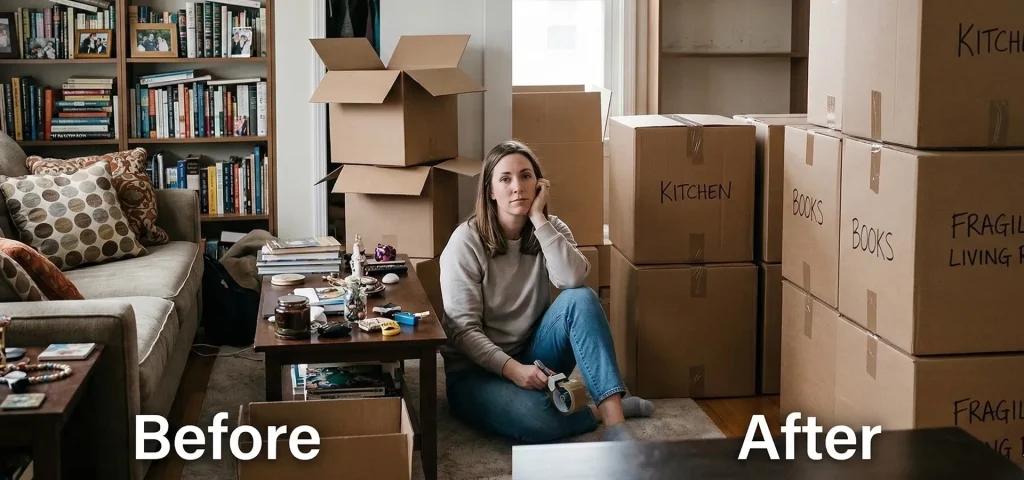
🎨 Should You Stage Before Or After Packing?
Staging too early can leave a home feeling empty and uninviting, while staging before decluttering may cause rooms to look crowded or overly personalized. Finding the right balance between packing and staging helps ensure the home looks clean, neutral, and easy for buyers to visualize.
Here’s what experts recommend when it comes to deciding whether to stage before or after packing.
1: Shaunna McIntosh – Residential Real Estate Expert
Homeowners should pack up personal items before staging. Decluttering and removing excess furniture first allows the stager to showcase the home’s layout, scale, and natural light. In the context of listing a home for sale, this helps buyers focus on the space itself rather than personal items, making it easier for them to visualize living there.
2: Tina Presley – Home Staging & Interior Design Expert
Staging is usually done after decluttering and packing, repairs, cleaning and landscaping.
3: Nav Dhall – Residential Real Estate & Home Selling Expert
Stage after decluttering and partial packing. Pack away personal items, extra furniture, and clutter first, then stage to make the home look clean, spacious, and neutral. This helps buyers visualize the space better while keeping the home show-ready.
4: Richard Payne – Residential Real Estate Market Expert
This is an interesting question as it depends on the quality and condition of the furniture and furnishings in the house and if the stager can work with that furniture. The best staging is a whole house staging where furniture and furnishings are brought in to complement the style the stager is going for to attract the most suitable buyers. But then the owners have to live in the houses as well! Often a seller should de-clutter and pack to the bare minimum needed to live in the house and then see if staging is an option to work with.
5: Julie Kern – Interior Design & Home Staging Expert
Always after packing! Think of staging as the finishing touch, not the starting point. Packing away excess furniture, personal items, and clutter gives a stager a clean canvas to work with. From there, we can properly scale the space, highlight the best features, and create a look that feels polished and intentional (and photographs beautifully). Staging before packing is like getting dressed up before you got ready and cleaned your closet… it just makes things harder than they need to be.
6: Serge Papineau – Luxury Residential Real Estate Expert
Staging should take place once the homeowner’s personal items and valuables have been packed and securely stored. As part of our service, we cover the cost of staging and arrange for a professional stager to visit the home in advance. During that consultation, the stager works with the seller to create a clear, actionable checklist to ensure the property is fully prepared prior to installation.
7: Tom Sapinski – Residential Real Estate & Relocation Expert
When it comes to staging, the simplest and most efficient approach is to pack first and stage second. Once the excess items are out, the stager can work with a clean, open canvas, which makes the home show better and saves the seller from packing twice.
Across these expert perspectives, one common strategy stands out: declutter and pack first, then stage the home. Removing personal belongings and unnecessary furniture allows staging professionals to highlight the property’s best features while keeping the space open and inviting. This approach not only improves how the home looks in photos and showings but also helps buyers focus on the home itself rather than the seller’s belongings.

⏳ How To Avoid Buyer Walk-Aways Due To Move Delays?
One of the most common reasons for closing-day issues is poor moving coordination. Without a clear timeline, reliable movers, and backup plans, sellers can find themselves rushing to clear the home at the last minute. This can lead to disputes, delayed possession, or unnecessary tension between buyers and sellers.
Closing day is one of the most critical moments in a home sale. By this stage, buyers expect the property to be completely ready for possession. However, unexpected moving delays, unfinished packing, or last-minute logistical problems can create stress and uncertainty — and in some cases, may even risk the deal falling apart.
Here’s what real estate professionals and staging experts recommend to help sellers avoid buyer walk-aways caused by moving delays.
1: Shaunna McIntosh – Residential Real Estate Expert
In the Ottawa real estate market, sellers can attract more buyers by being flexible with the closing dates they are willing to accommodate. Once the sale is firm and all conditions are met, proactive moving plans become essential. Booking a reliable moving company early helps prevent move-out delays, while contingency options such as temporary storage or short-term accommodations provide a safety net in case of unexpected setbacks. These steps ensure a smoother process and give sellers peace of mind during what can be a stressful time.
2: Tina Presley – Home Staging & Interior Design Expert
Having a plan in place with a great moving company that can quickly get them packed up and relocated.
3: Nav Dhall – Residential Real Estate & Home Selling Expert
Stay organized and plan your move early. Have packing, movers, and your next living arrangement confirmed before the closing date. Be flexible with closing dates and keep clear communication with buyers to prevent delays that could cause deals to fall through.
4: Richard Payne – Residential Real Estate Market Expert
Be prepared! Sellers need to be somewhat flexible with closing days so preparing in advance with packing really helps this work. Don’t be moving out the evening before a closing, have a date in mind that works with the movers/packers well in advance so they have time to work with their planning. Then be flexible depending on what the buyers ask for on a closing date within reason that is hopefully close to your original date you were looking for.
5: Julie Kern – Interior Design & Home Staging Expert
A little planning goes a long way. The most successful sellers have a game plan in place before listing with professional movers booked, storage lined up, and a realistic timeline in mind. Flexibility is a huge bonus too. Being ready to move quickly or offer a smooth possession date can make buyers feel confident and excited instead of hesitant. In hot markets especially, delays can cool momentum fast. When sellers are prepared, the sale feels effortless, and that’s exactly what buyers love!
6: Serge Papineau – Luxury Residential Real Estate Expert
We strongly recommend hiring a reputable, insured moving company. Attempting a DIY move or relying on unverified movers can lead to costly delays and complications. It’s important to remember that once a sale closes, ownership transfers immediately. Any items left behind may be deemed abandoned, with removal costs charged back to the seller. Accessing the property after closing without the buyer’s consent constitutes trespassing and could expose the seller to legal liability.
7: Tom Sapinski – Residential Real Estate & Relocation Expert
To avoid losing buyers due to move‑related delays, sellers should plan their move timeline before the listing goes live. Pre‑booking movers, setting realistic closing dates, and having a clear packing plan all help prevent last‑minute scrambling. Buyers feel more confident when they see the seller is organized and ready, and that confidence keeps deals together.
Looking across these expert insights, preparation is the key to avoiding move related deal risks. Sellers who plan their move early, book trusted movers, and maintain flexibility around closing dates create a smoother experience for everyone involved. When buyers see that the seller is organized and ready for a seamless transition, it builds confidence in the transaction and helps ensure the sale closes successfully.
📌 Key Takeaways From The Experts
Selling and moving your home simultaneously is a massive juggle, but it doesn’t have to be a nightmare. After speaking with industry experts, we have narrowed down a few practical strategies to keep the process on track.
Here are the top tips to keep the transition as smooth as possible.
1. Should You Move Out Before Listing Your Home?
If you can afford you can try to move out before listing the house, or a few days before you handover your property. The reason is simple, empty space is easier to clean and maintain.
2. How Do You Keep Your Home Show-Ready Every Day?
While your home is on the market, keep it show-ready. This means you have to maintain daily clutter, keeping the counter clean and keeping the personal photos away, since it is better to let buyers imagine their lives in the house without making them feel like intruders in your home.
3. Should You Pack Before Staging Your Home?
When planning to sell or move, pack up the extra furniture and personal knick-knacks before buyers start visiting. By removing non-essential items, you create space to breathe and let natural light reach the floor. This way, your home appears bigger and allows essential features to be highlighted.
4. When Should You Start Planning Your Move?
Moving days are quietly sneaking up on you. If you’re a little too lazy to find a moving truck or buy proper packing materials, you’ll be stressed, which will ultimately lead to mistakes. Book your move in advance and prepare your schedule ahead of time, so everything stays manageable.
5. Does Organization Impact the Sale of Your Home?
Believe it or not, your level of organization affects the buyer’s mood. When you are ready to hand over the keys and have everything in order, it indicates to buyers that the property is well-maintained. As a result, this builds trust and keeps the deal moving forward smoothly.
At the end of the day, getting ahead of the logistics and leaning towards professional tips does more than just lower the heart rate. It ensures you don’t leave money on the table and helps you shift to your next property without a meltdown.
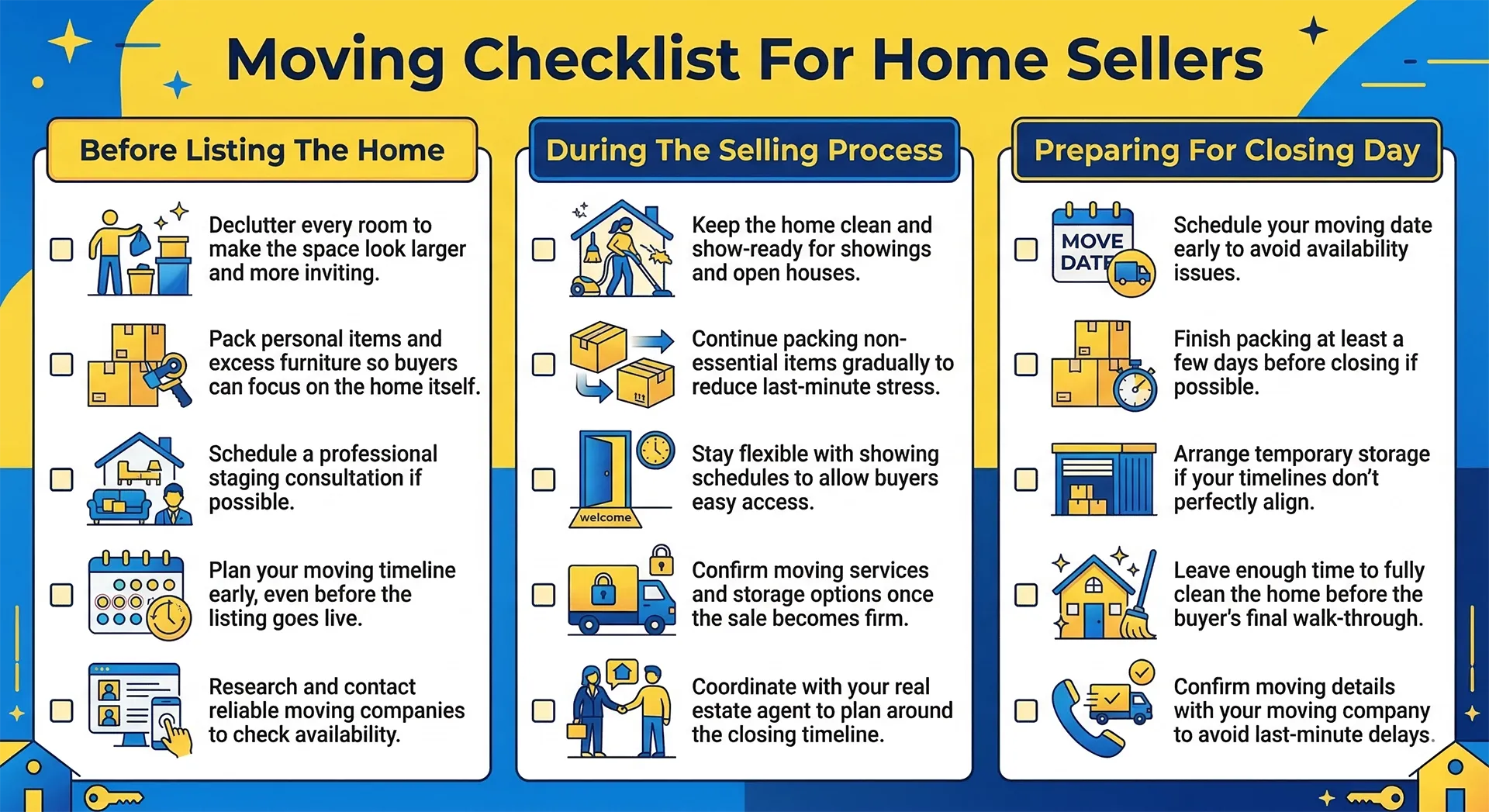
✅ Expert Moving Checklist For Home Sellers (Before Listing, During Showings, and Before Closing)
Selling a home while preparing to move requires careful timing and organization. Based on insights from real estate agents and home staging professionals, here is a practical checklist homeowners can follow to keep their move and home sale running smoothly.
🏡 Final Tip From The Experts
The most successful home sales happen when moving plans and selling strategies work together. Preparing early, packing strategically, and working with experienced professionals can help homeowners protect the value of their property while making the transition to their next home much smoother.
📣 Is Your Home On Sale? Let Economical Movers Help You
Planning a move while selling your home can be stressful, especially when timing, staging, and closing dates must align perfectly. Working with a reliable moving company can make a major difference in keeping your sale on track.
At Economical Movers, our experienced team helps homeowners move efficiently while minimizing disruption during the selling process.
We offer:
✔ Professional packing and unpacking services
✔ Residential moving across Ottawa and surrounding areas
✔ Secure storage options for temporary move situations
✔ Reliable scheduling to match real estate closing timelines
Whether you’re preparing your home for staging or planning a smooth move before closing day, our team is ready to help make the process easier.
👉 Get a free moving quote today and plan your move with confidence, Contact Us.


One Comment
Great article, thank you for the feature in the article!