Short term storage suits moves lasting days to weeks with frequent access needs, while long term storage works best for months-long needs like relocation, downsizing, or business inventory — cost, duration, and item sensitivity determine the right choice.
We’ve all been in a situation where there are too many items and not enough storage. However, you can’t just throw them away, because these items are essential. This can even get tricky when you’re moving house, renovating your property, or need extra space for your business.
In times like these, storing your belongings in a dedicated facility can make life much easier. But choosing storage is not as simple as it seems.
There are different storage options available, which makes decision-making hard, especially when choosing between short term and long term storage. So, which one do you choose?
It depends on your requirements. If you want to store items for less than a few days to one-two months, short term storage is best, but if no immediate access is needed, long term storage is best. That said, the decision is not always this simple.
Therefore, in this short term storage vs long term storage guide, we will understand the differences between the two. This will enable you to choose without overspending or compromising on safety and convenience.
How Much Does Short Term Vs Long Term Storage Cost?
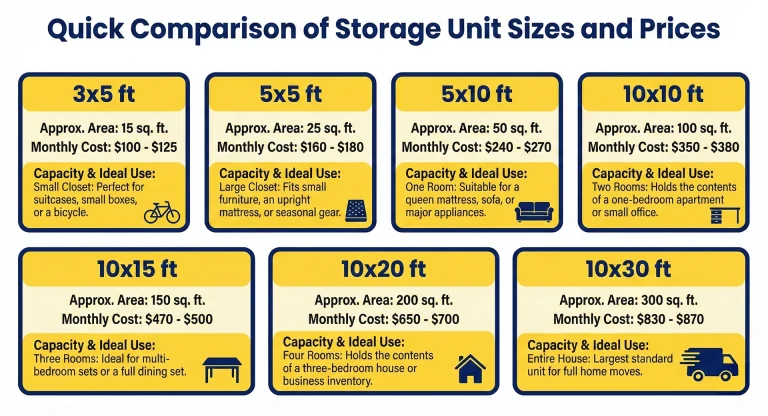
The cost of storage mainly depends on the duration, type of storage, and access frequency. Short term storage usually costs more on a monthly basis because it offers flexibility and frequent access. Long term storage is comparatively economical when items are stored for an extended period. All storage charges are billed monthly, and a standard GST of 13% applies to the total amount.
Is It Worth Storing Items Or Replacing Them? (Cost Vs Item Value)
When choosing between short term and long term storage, it is important to compare storage costs with the items’ actual value. Storing low-value items for a long period may cost more than replacing them later. On the other hand, long term storage makes financial sense for valuable furniture, documents, collectibles, or items with emotional value. Evaluating depreciation versus storage cost helps avoid unnecessary monthly expenses while keeping important belongings safe.
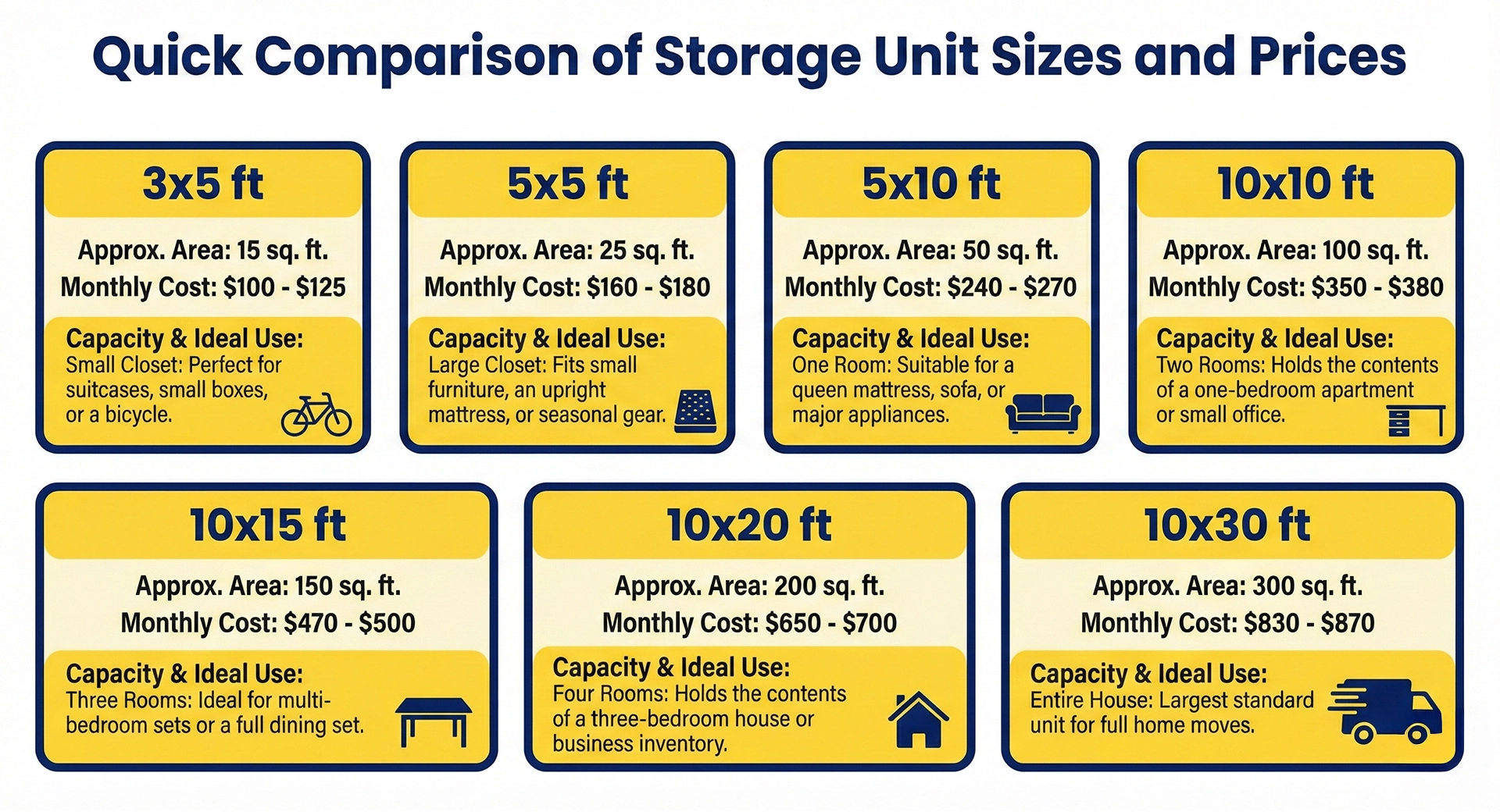
Here is a quick overview of different storage unit sizes, their estimated monthly prices, and what they are best suited for. This comparison helps you understand which storage unit fits your needs without overpaying.
Who Should Store Items In Dedicated Storage Facilities?
You can choose storage if you have excess items that are only needed occasionally, used seasonally, part of extra business inventory/instruments, or kept for sentimental reasons. A storage facility is also ideal in situations when a family is moving, renovating a property, or there are space constraints.
Here are some more key reasons that make extra storage space necessary:
For Family or Individuals
- Moving House or Downsizing: Furniture, appliances, wardrobe, utensils, and household items.
- House Renovation: Furniture, electronics, carpets, decorative items.
- Moving Abroad: Furniture, appliances, personal belongings, books, and household equipment.
- Seasonal Items: Seasonal decorations, heaters, coolers, winter clothing, furniture.
- Sentimental Items: Photos, memorable items, jewelry, artifacts, collectibles.
- Infrequently Used Items: Furniture, appliances, and hobby items.
For Businesses
- Finished Goods: Packaged products, retail inventory, surplus goods.
- Industrial Equipment: Tools, machinery parts, construction equipment, maintenance units.
- Documents: Archived files, legal documents, financial records, contracts.
- Factory Machinery: Manufacturing machines, spare components, production tools.
- Furniture: Desks, chairs, workstations, cabinets, and meeting room furniture
- Real-Estate Items: Staging furniture, signage, display units, maintenance equipment.
What Is Short Term Storage Vs Long Term Storage?
Short term and long term storage are two different storage options used for different time frames.
As its name suggests, short term storage is used for a couple of days to a few weeks. On the other hand, long term storage is suitable for storing items for a few months to a year.
What Are The Differences Between Short Term Storage Vs Long Term Storage Facilities?
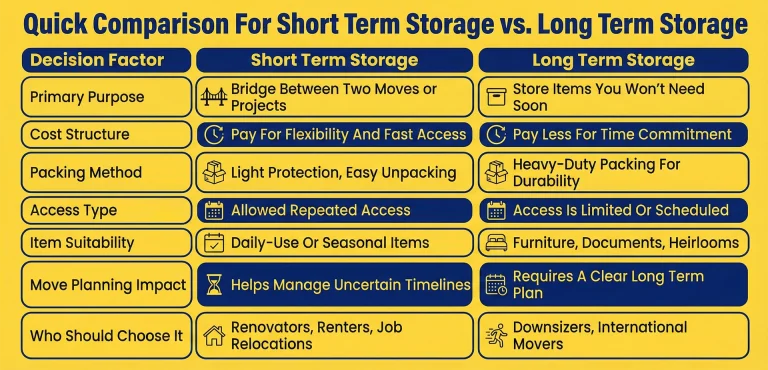
There are many differences between short and long term storage, beyond the time duration. These include:
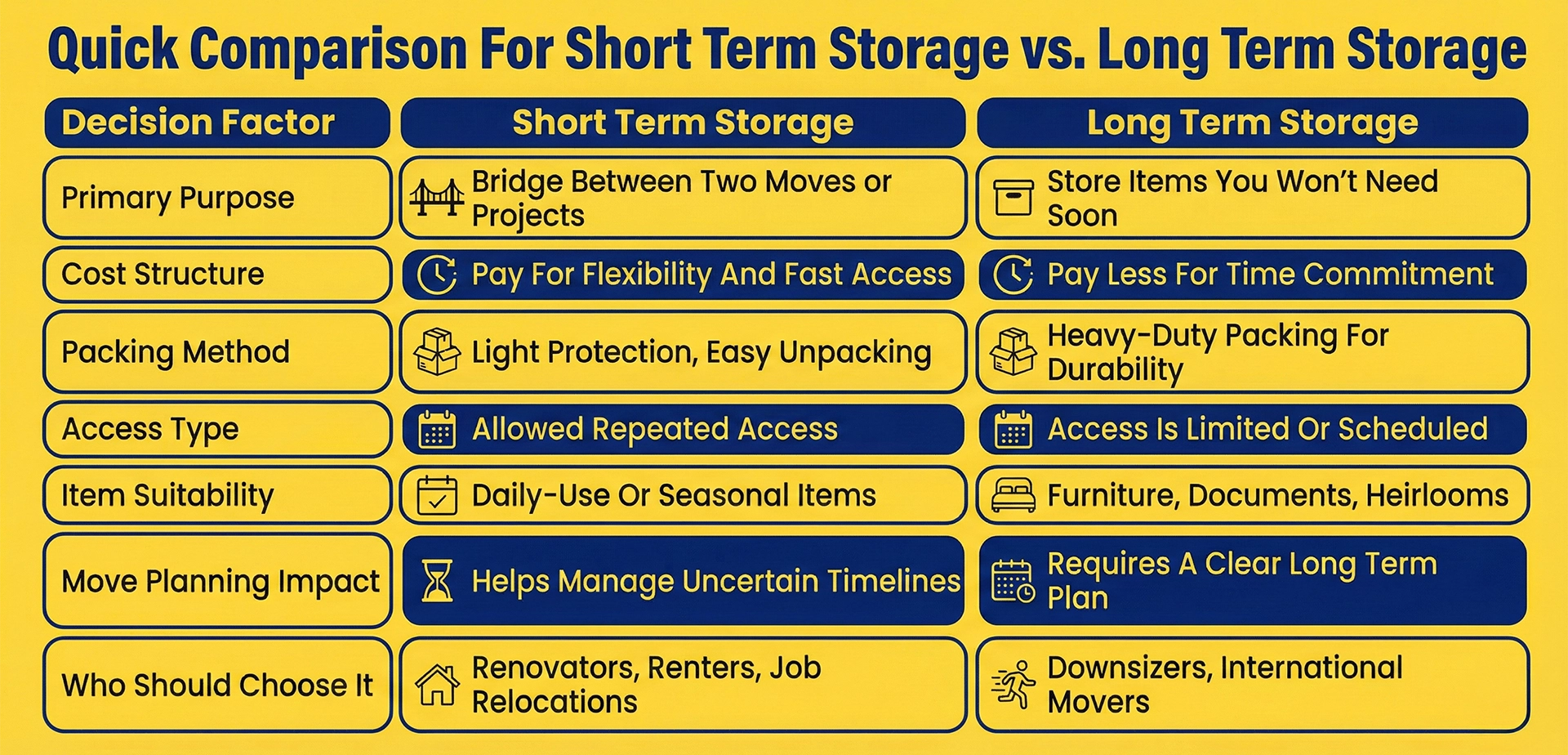
Short Term Storage
- Flexibility and operational speed are primary objectives
- The contract period is short
- The cost is generally high due to the contract period
- Access is frequent
- Facility layout has wide aisles and easy exit placement
- Security includes perimeter defenses, camera surveillance, and access controls.
- Climate control is optional.
Long Term Storage
- Preservation and cost-efficiency are primary objectives.
- The contract period is long
- Storage cost is lower
- Access is infrequent
- Most of the long storages are high-density and have rear-facility placement
- Security is focused on long-term monitoring and pest management
- Climate control is essential
If you’re unsure which storage option to choose, this comparison will help you decide.
How To Choose Between Short Term and Long Term Storage?
Now that you understand each of these approaches, let’s find out which one best suits you. Below we have covered real-life scenarios that people choose from these storages:
When Is Short-Term Storage Ideal For You?
There cannot be a fixed number of situations that mandate choosing short term storage. As a rule of thumb, if the purpose of your move is not more than one to two weeks, short term storage is suitable regardless of the circumstance. Below are some instances you can relate to when choosing temporary storage:
1. Delayed Move-In or Move-Out Dates
If your move-in or move-out date is delayed because your home lease ends early or another issue prevents you from moving on the scheduled day, short term storage can be a convenient way to safely store your belongings until you are ready.
2. Staging or Decluttering Your Home
For real estate buyers and sellers, short term storage makes sense. Using this kind of storage makes it easy to stage your home for sale by temporarily moving furniture and other items to storage units. This way, you can organize your space to look more appealing and keep it functional.
3. Going Home During Semester Breaks
If you have finished your semester at a college in another city and want to visit family while keeping your belongings safe, short term storage is a good selection. Storage units have all the security features to ensure your items stay protected until you return.
4. Emergency Situations
If guests unexpectedly arrive at your home, your factory goods are delayed for any reason, or a medical situation occurs, short term storage can help you keep your items safe until you need them.
5. Frequent Access To Stored Items
If you have items such as furniture or appliances that you need only once or twice a week but want to keep nearby, short term storage is a good option.
When Is Long Term Storage Ideal For You?
Long term storage is ideal for storing your belongings for three to four months, six months, or even longer. Many people ask how long you can store furniture, and the simple answer is that furniture can be safely stored for several months or even years, as long as it is packed properly and kept in a secure, climate controlled storage facility. The examples below show common situations where choosing long term storage makes sense.
1. When Relocating Internationally or Taking Extended Travel
Long term storage is perfect when moving out of the country permanently or when traveling abroad for several months. You can store your belongings that you want to keep rather than sell. This way, you can use them again when you come back to your home country.
2. When Downsizing or Lifestyle Changes
Whether downsizing to a smaller home or office, or in the case of retirement, a new job in a different city, or kids moving out, long term storage is suitable. Long term storage provides enough space to store the entire home and office belongings that are not needed immediately. This helps keep your items and space organized until you need them.
3. For Business Inventory and Office Storage Long Term Storage
For businesses and offices, long term storage is a viable solution to keep extra inventory or furniture. There are many reasons why an office may be expanding or downsizing, or when you want to store seasonal inventory, excess supplies, or important documents. Long term storage can help keep these items safe and organized for extended periods.
4. For Seasonal Equipment and Household Items
If you have Christmas decorations, seasonal equipment, winter home appliances, or sports gear that you use only during specific times of year, long term storage is the perfect solution. It allows you to store belongings in a safe, climate controlled space, ready for use the next season.
5. For Work Relocation or Military Deployment
If you have found a new job or your current employer has shifted you to another city, or you are deployed to a different location but have not yet found a permanent place for all your belongings, long term storage is appropriate. It provides a secure facility to store your items until you are ready to settle at your new location, allowing you to focus on your relocation or deployment without worrying about your belongings.
6. For Storing Inherited Properties
Valuable or inherited items can be safely stored in a climate controlled storage facility. You can later decide whether to keep them or sell them. Whether storing heirlooms, furniture, or other precious items, long term storage keeps them safe from damage, dust, or rust.
7. When Storing Collectibles Or Valuables
Storing collectibles or valuable items such as antiques, memorabilia, original artwork, pianos, or vintage electronics at home is not ideal since there is always a risk of damage or theft. Long term storage facilities ensure these items remain in pristine condition until you want to display or move them to another location.
What Is Storage Insurance and What Security Features Should A Facility Have?
What Is Storage Insurance?
Storage insurance provides coverage for your belongings if they are damaged while stored in a storage facility. Many moving companies offer insurance that covers the entire unit, rather than individual items.
Typically, this coverage applies only if the unit remains under the mover’s exclusive control. If you have frequent or unscheduled access to the unit, the insurance may become void, as there is a higher risk of damage occurring outside the mover’s supervision. Therefore, it is essential to discuss access terms and insurance eligibility, whether for short term or long term storage, directly with your service provider.
What Security Features Does A Storage Facility Must Have?
Security should be a top priority when storing your items. Here are the essential security features you should check when choosing a storage facility:
- Camera Surveillance – 24/7 monitoring to keep your items safe.
- Security Guards – On-site personnel ensure only authorized access.
- Climate Control – Protects sensitive items from heat, humidity, or moisture.
- Strong Infrastructure – Secure walls, doors, and fencing prevent damage or theft.
- Check-In/Check-Out Systems – Tracks who enters and exits the facility.
- Individual Unit Locks – Each unit should have its own secure lock.
- Alarms & Fire Safety – Fire alarms, sprinklers, and unit alarms protect against accidents and tampering.
- Good Lighting – Well-lit areas deter theft and improve safety.
- Access Control – Keycards or PIN codes restrict entry to authorized users.
- Pest Control – Regular measures protect items from rodents or insects.
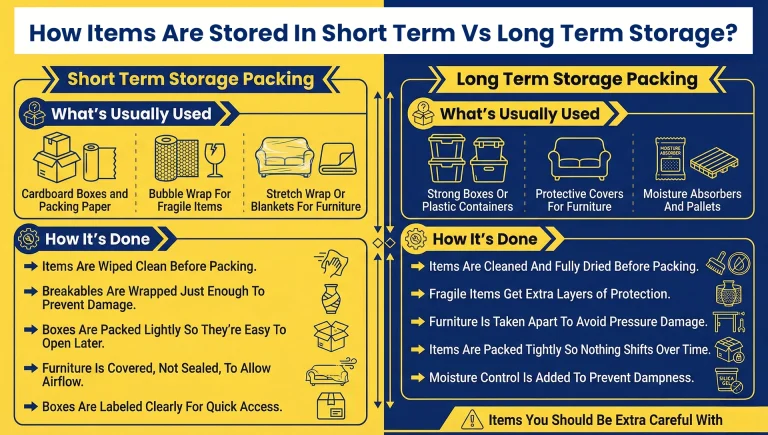
The way items are stored depends on how long they will stay in storage. Short term storage focuses on quick access, while long term storage is all about protecting items over time.
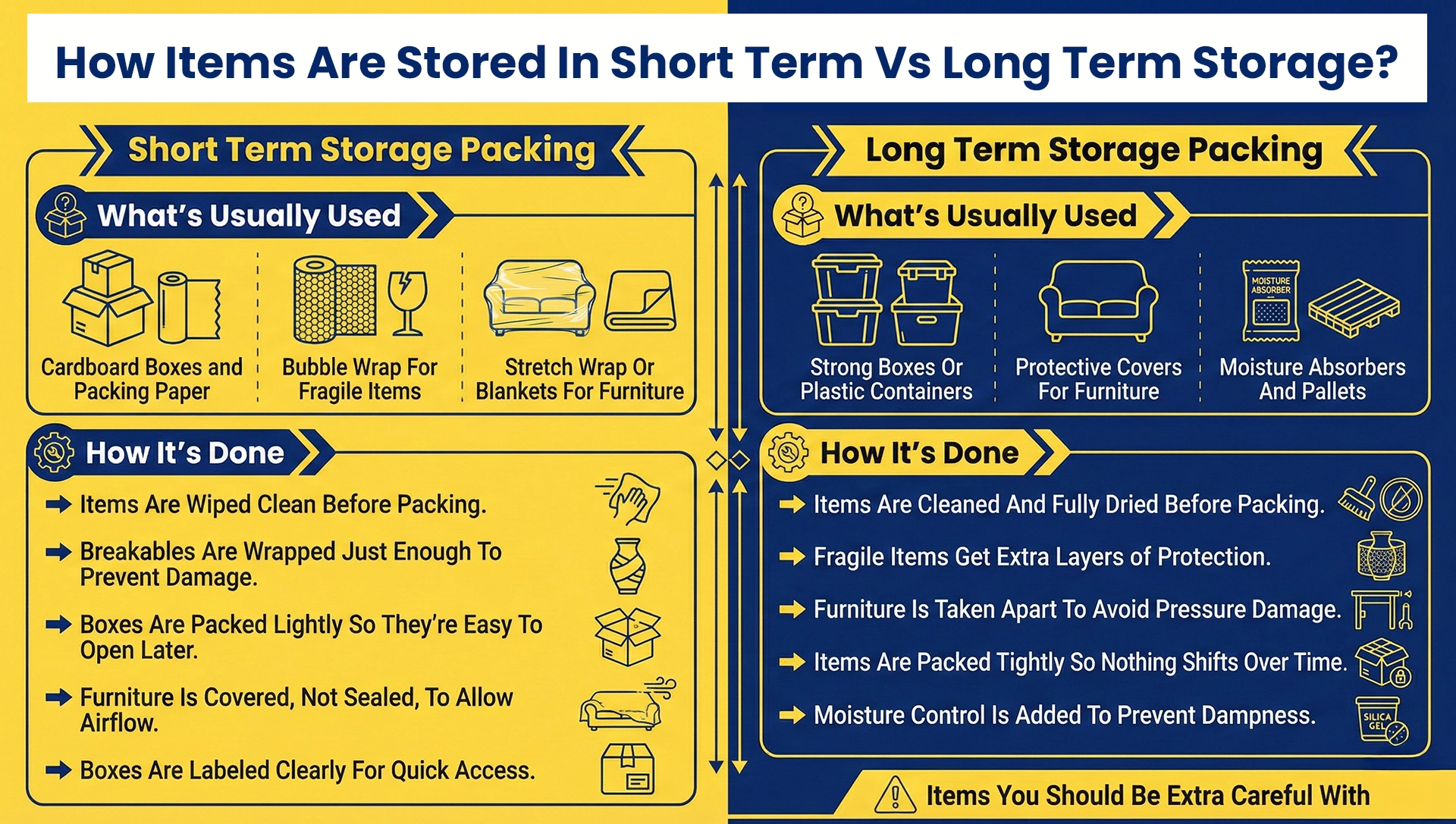
The way items are stored depends on how long they will stay in storage. Short term storage focuses on quick access, while long term storage is all about protecting items over time. Long term storage needs more care because items stay packed for months or even years.
Some Items Need Extra Attention When Stored:
- Wooden furniture and antiques
- Electronics and appliances
- Mattresses and fabric items
- Important papers and photos
These items can be damaged easily by moisture, weight, or temperature changes.
Maintenance Requirements For Storing Items
Even stored items need some basic care:
- Replace moisture absorbers when needed
- Choose climate controlled storage if possible
- Keep items raised off the floor
- Avoid sealing items that need airflow
- Check stored items from time to time
A little care goes a long way in keeping your items safe.
What Items Should Not Be Stored In Storage?
There are a number of items that shouldn’t be stored in any storage, these include:
- Flammable Items: These can catch fire or explode due to heat, poor ventilation, or accidental sparks inside storage units.
- Money: Cash can be easily lost or stolen, and storage facilities are not designed to protect it.
- Jewelry: Valuable items should stay with you, as storage units are not ideal for securing high-value belongings.
- Food items: Food attracts insects and rodents and can spoil, causing damage and bad odors.
- Plants: Without sunlight, water, and air circulation, plants will not survive in storage.
- Medication: Temperature changes can reduce effectiveness and make medicines unsafe to use.
- Sensitive chemicals: These may leak, react, or release harmful fumes, creating safety risks.
Other Storage Alternative Beside Short Term Storage And Long Term Storage
If storage doesn’t suit your needs after considering everything, there are other options you can explore.
Sell: You can sell items you no longer feel are worth storing. There are several online platforms like Facebook Marketplace where you can list them, or you can check with friends to see if they might need those items.
Declutter: You can also remove unwanted items that are taking up valuable space. An authorized junk removal company near you, such as Economical Movers junk removal, can help dispose of them safely and responsibly.
Create Your Own Storage Space: If external storage isn’t a viable option, consider creating your own storage space. You can use an unused area in your home or office, or even set up a small dedicated storage room.
Ask a Friend, Neighbour, or Relative: This is a budget friendly option. Ask friends, relatives, or neighbours if they have extra space where you can temporarily store a few items.
Donate: If certain items are no longer in use, donating them is a good option. Look for local charitable organizations like Helping With Furniture (HWF) Ottawa that accept gently used items.
Final Take On Short Term And Long Term Storage
Storing your items in a storage facility is an important decision. It helps keep your belongings safe, but you should always be careful from a financial point of view as well. Make sure you are not spending money in the wrong place, as this could result in both financial loss and damage to your stored belongings. Always take time to properly evaluate your options before making a decision.
Choosing between short term and long term storage becomes much easier when you clearly understand your needs. It mainly depends on how long you plan to store your items and how often you need access to them. Before finalizing your storage option, consider key factors such as storage duration, security features, ease of access, and insurance coverage to ensure your belongings remain protected.If you are still confused or need guidance, you can contact Economical Movers. Our team is always ready to answer all your questions related to moving and storage and help you choose the right solution.
Common Questions About Storage Units In Ottawa
Q: How Is Storage Insurance Different From Moving Insurance?
A: Moving insurance provides coverage while your items are being packed, transported, and delivered. Storage insurance, on the other hand, protects your items while they are stored in a storage unit.
Q: How Easy Is It To Access A Stroage Facility To Store Items?
A: If your items are stored through a moving company, usually only the movers have access. If you rent directly from a storage company, you can access your items yourself according to their facility’s rules.
Q: Who Packs Storage Items, Movers Or Customers?
A: Movers can pack and store your items for you, but you also have the option to pack your belongings yourself if you prefer.
Q: Who Provides The Cheapest Storage Units In Ottawa?
A: Economical Movers offers some of the most affordable storage units in Ottawa.
Q: What Types of Storage In Ottawa For Rent Are Available?
A: Economical Movers provides both short-term and long-term storage options to suit different needs.