

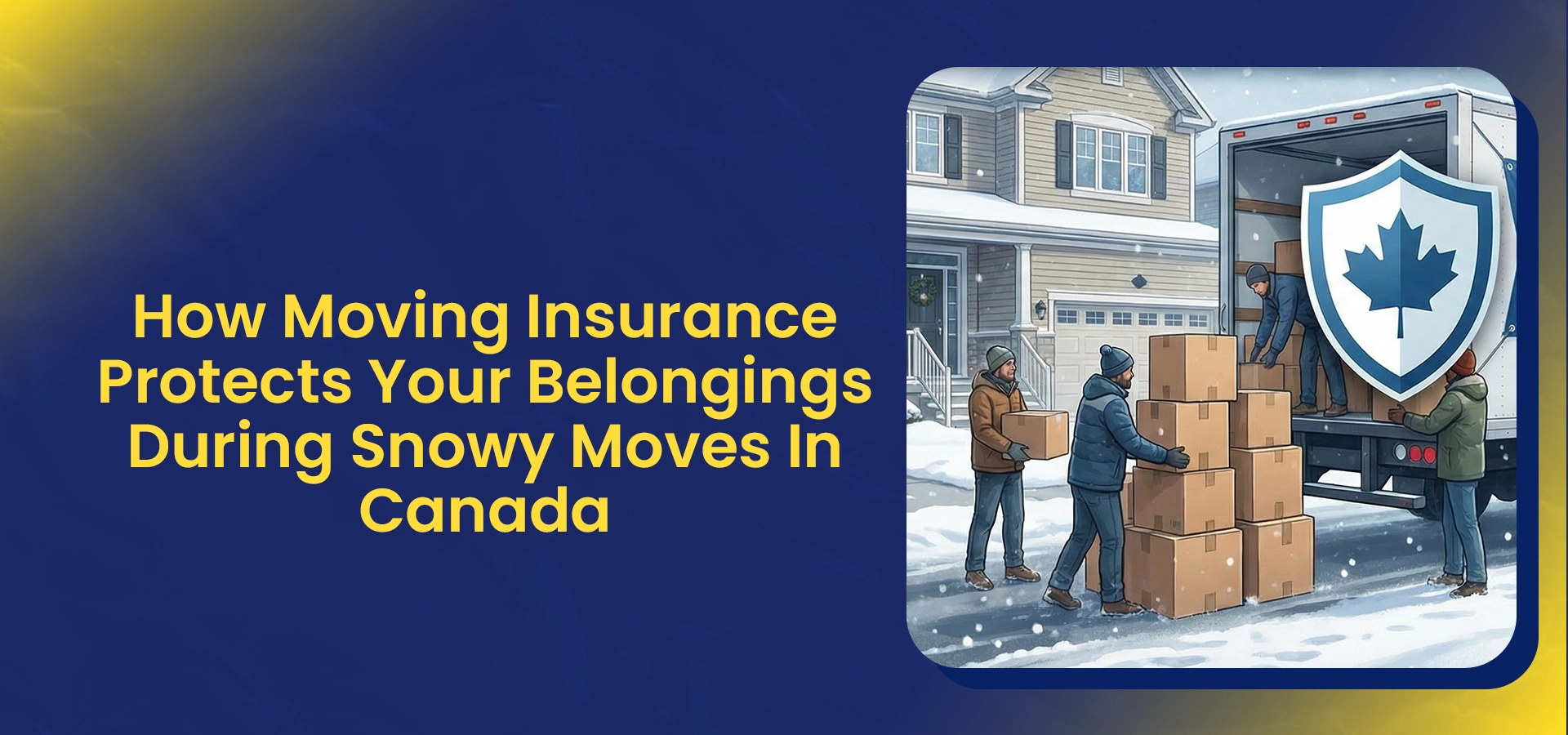
Moving insurance for Canadian winter moves protects belongings from snow moisture, icy handling accidents, weather delays, and cold damage — basic liability rarely covers these risks, making full value or third-party coverage essential.
In Canada, winter is not a minor inconvenience, it is a defining season. From heavy snowfall in Ontario and Quebec to icy prairie highways and subzero temperatures in Alberta, winter conditions create unique challenges for anyone planning a move. Unlike warmer months, winter moves in Canada involve constant exposure to snow, ice, freezing temperatures, and unpredictable delays.
According to Transport Canada and provincial road safety data, winter driving conditions contribute to collision rates that are approximately 20 to 30 percent higher than dry-season travel. The Insurance Bureau of Canada also reports a seasonal rise in property and transit-related damage claims.
This is why moving insurance winter moves in Canada plays a critical role, protecting household and cold related damage during winter moving.
How Moving Insurance Protects Against Snow-Specific Losses
Proper moving insurance provides financial protection against the unique types of damage that commonly occur during Canadian winter moves involving snow, ice, and extreme cold.
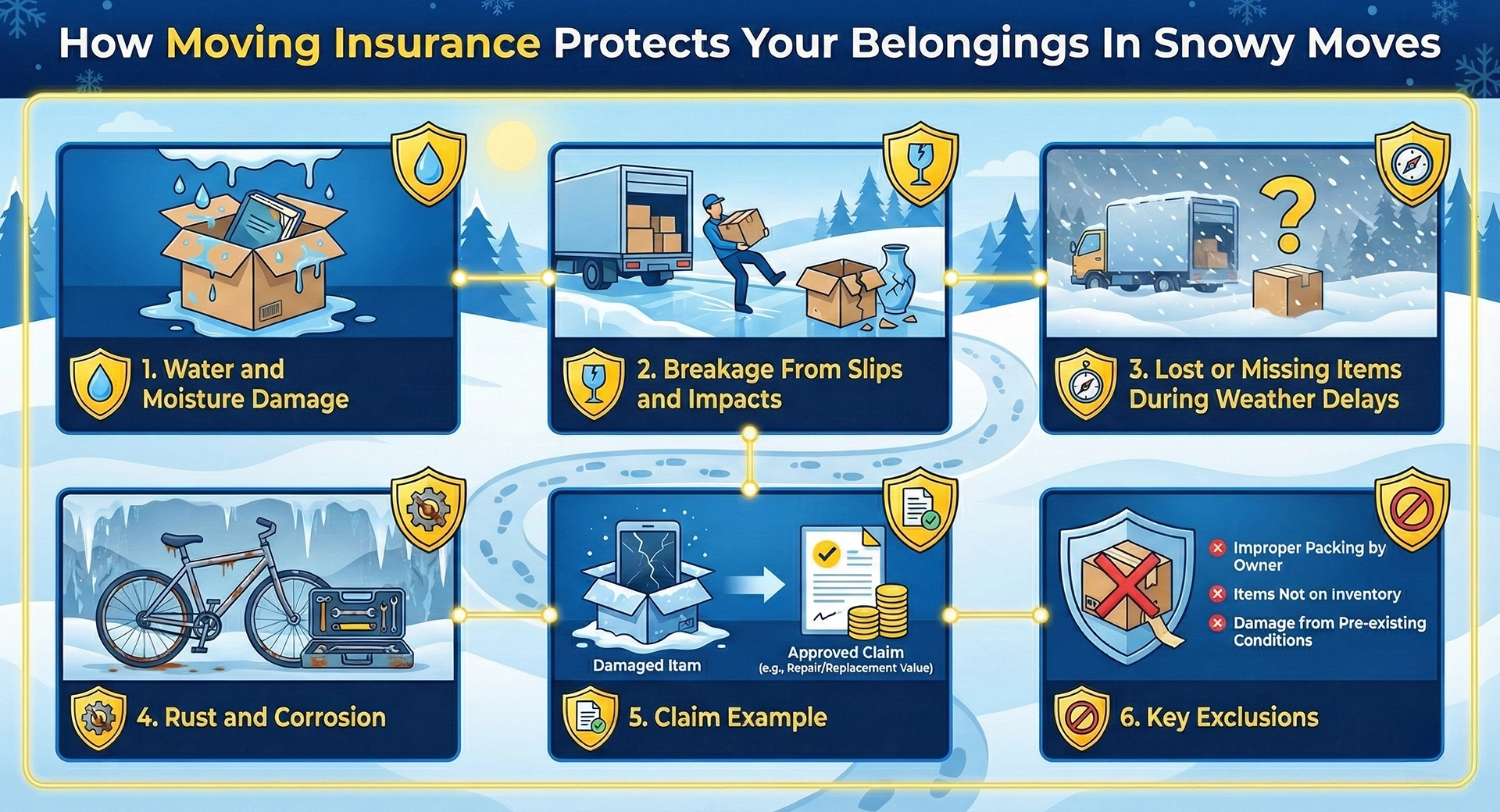
Way 1. Water and Moisture Damage
Moving insurance can cover damage caused by melted snow soaking into furniture, mattresses, and boxed belongings during loading and unloading.
Way 2. Breakage From Slips and Impacts
Drops caused by icy conditions are commonly covered under full value or third-party policies, provided packing and handling standards are met.
Way 3. Lost or Missing Items During Weather Delays
Winter storms can delay deliveries or require temporary storage. Insurance can compensate for items lost or damaged during extended handling periods.
Way 4. Rust and Corrosion
Snow exposure can cause corrosion on metal furniture, appliances, and tools. Some policies cover rust if it occurs during the insured move period.
Claim Example
A wooden dining table absorbs moisture during a snowy load-in. Days later, the surface warps. With full value protection, the insurer may pay for professional repair or replacement, minus the deductible.
Key Exclusions
Damage caused by improper owner packing, pre-existing issues, or excluded extreme weather events may not be covered. Policy review is essential.
How Moving Insurance Works In Canada
Understanding how moving insurance works in Canada is critical, especially for moving insurance winter moves.
Type 1. Basic Carrier Liability
In Canada, movers are required to provide basic liability coverage, but this protection is extremely limited. Compensation is often calculated by weight, not by actual value, meaning expensive items may receive minimal payouts.
Type 2. Released Value Protection
This is often bundled with the move at no extra charge, but it offers very low reimbursement levels and does not reflect replacement cost.
Type 3. Full Value Protection
Full value protection is an upgraded option where the mover is responsible for repairing, replacing, or compensating damaged items at their current value, subject to policy limits and deductibles.
Type 4. Third-Party Moving Insurance
Independent Canadian insurers offer moving insurance policies that often provide broader protection, including coverage for weather-related risks and storage-in-transit scenarios.
What Covers Snow-Related Risks
Only full value protection or third-party moving insurance meaningfully covers damage caused by snow, ice, and winter handling conditions. Basic liability rarely addresses these risks adequately.
Common Canadian Misconceptions
Many Canadians believe movers are automatically responsible for all damage. In reality, unless enhanced coverage is selected in advance, compensation is often limited.
Why Snowy Moves Are Dangerous For Your Belongings
Snowy moving conditions in Canada increase the risk of damage at every stage of the move, from transportation and handling to loading and unloading in icy environments.
Reason 1. Slippery Roads and Winter Driving Conditions
Canadian winter roads increase the risk of sudden stops, skidding, and reduced maneuverability for large moving trucks. Even experienced drivers face challenges when highways are snow-packed or urban streets are icy. A minor impact can shift cargo inside the truck, damaging furniture and stacked boxes.
Reason 2. Moisture and Freezing Temperatures
Snow melts quickly during loading and unloading, turning into moisture that seeps into cardboard, fabric, and wooden items. Furniture can absorb water, causing warping or mold. Electronics moved from freezing temperatures into heated spaces can develop internal condensation, leading to delayed failures days or weeks later.
Reason 3. Loading and Unloading Hazards
Most winter related damage occurs outside the truck. Icy driveways, snow-covered steps, and frozen walkways increase the likelihood of drops, collisions with railings, and crushed items. These winter moving risks are significantly higher in older neighbourhoods with narrow access or uneven surfaces.
Reason 4. Real Winter Damage Examples In Canada
Common claims during Canadian winter moves include cracked flat-screen TVs, soaked mattresses, rusted bed frames, damaged hardwood furniture, and broken glass items. Many of these losses are either underpaid or not covered at all under basic mover liability.
Assessing Your Risk Level Before A Canadian Winter Move
Before selecting moving insurance for a Canadian winter move, it’s important to evaluate your household’s exposure to snow, ice, and cold-related damage:
- Heavy or Bulky Furniture: Harder to handle on icy surfaces and more likely to cause accidents.
- Electronics, Antiques, or Hardwood Items: Vulnerable to moisture, freezing temperatures, or warping.
- High-snowfall regions: Increases risk of delays, slips, and storm-related damage.
- Walkways, stairs, or elevators: Icy or narrow access makes handling difficult.
- Long-distance moves: Extended travel raises exposure to winter hazards.
Simple Winter Risk Checklist
Assign points to each factor that applies to your move. Add the points to assess your overall winter damage risk:
- Heavy furniture: +2
- Electronics and appliances: +2
- Long-distance move: +2
- High snowfall region: +3
- Poor access conditions: +3
A score above 6 indicates high winter damage risk, making comprehensive insurance strongly advisable.
Choosing The Best Moving Insurance For Winter Moves
Selecting the right moving insurance for winter moves in Canada requires balancing coverage limits, deductibles, and winter-specific risks such as moisture exposure, delays, and handling accidents.
Replacement Value vs Declared Value
Replacement value coverage allows you to replace damaged items with similar new ones. Declared value policies cap payouts but offer lower premiums.
When Full Value Protection Makes Sense
It is ideal for family homes, condos with elevators, and moves involving valuable or hard-to-replace items.
Important Winter Add-Ons
- Climate and moisture protection
- Accidental damage riders
- Storage-in-transit coverage
Deductibles and Premium Impact
Lower deductibles increase premiums but reduce out-of-pocket costs when winter damage occurs.
How Premiums Are Calculated For Winter Coverage In Canada
Insurers typically assess:
- Total declared value of goods
- Distance and regional weather severity
- Seasonal accident data
- Packing quality and materials used
- Accessibility challenges at both locations
Typical Cost Range
Moving insurance premiums in Canada usually range from 1% to 5% of the declared value, with winter moves often leaning toward the higher end due to elevated risk.
Reducing Costs Without Underinsuring
- Use professional packing services
- Provide accurate inventories
- Choose appropriate deductibles
Mistakes To Avoid When Choosing Winter Moving Insurance
When planning a winter move in Canada, many people make simple but costly mistakes with their moving insurance. Avoiding these pitfalls ensures your belongings stay protected during snow, ice, and cold conditions:
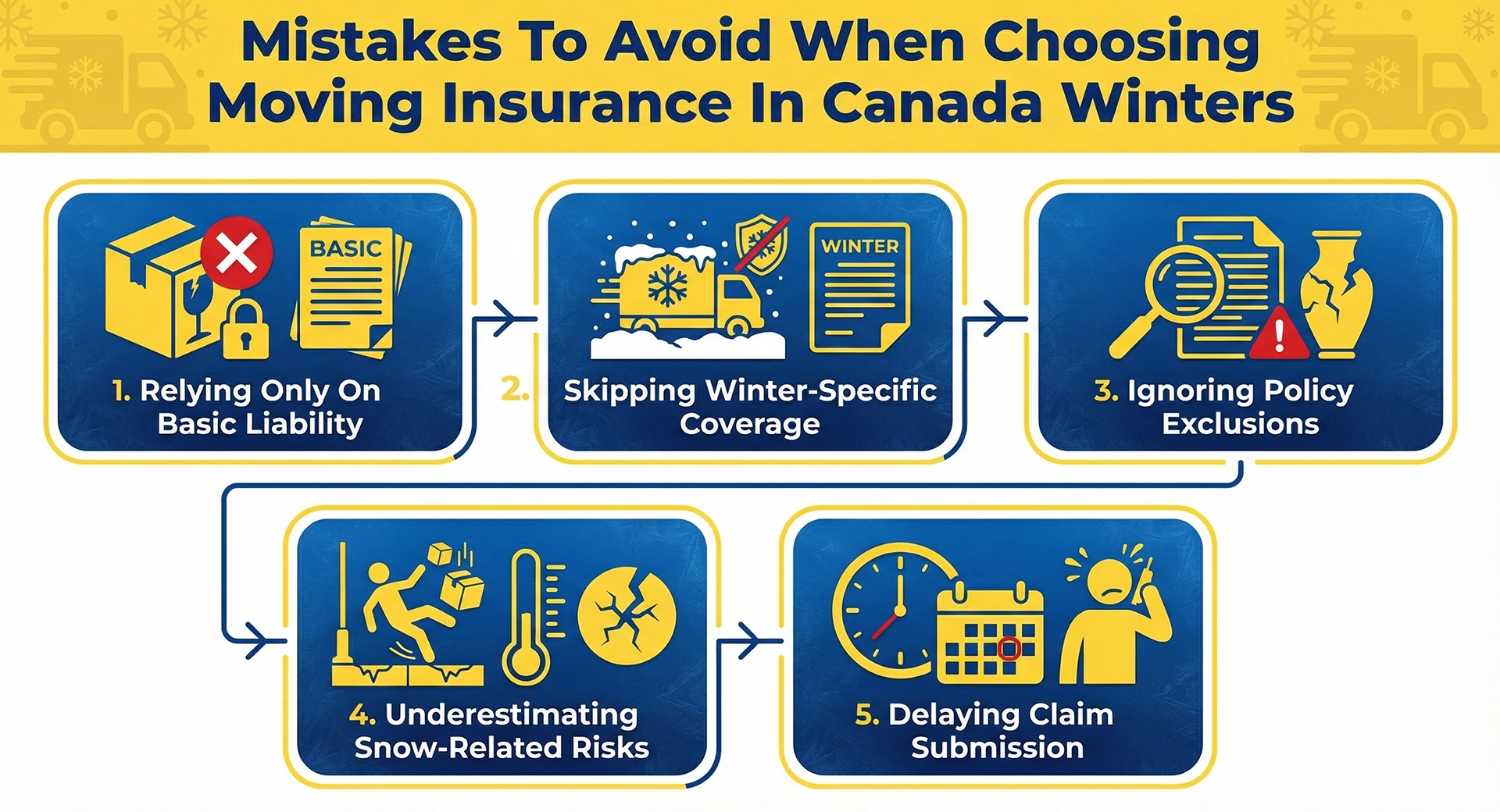
Mistake 1. Relying Only On Basic Liability
Many Canadians assume the free coverage from movers is enough, but it often only reimburses a few dollars per pound. In winter moves, this leaves expensive or fragile items vulnerable to snow, ice, and handling damage.
Mistake 2. Skipping Winter-Specific Coverage
Winter moves come with unique risks moisture, ice, and delayed deliveries. Without winter-specific insurance riders, claims may be denied or underpaid.
Mistake 3. Ignoring Policy Exclusions
Policies often exclude pre-existing damage, DIY packing, or extreme weather events. Reading the fine print prevents unpleasant surprises during a snowstorm move.
Mistake 4. Underestimating Snow-Related Risks
Even minor snow or ice can cause slips, furniture tipping, or moisture damage. Proper insurance ensures these common winter hazards don’t become costly mistakes.
Mistake 5. Delaying Claim Submission
In snowy conditions, documentation is critical. Filing late or without photos can reduce or invalidate compensation.
At Economical Movers, we help clients avoid these mistakes by offering comprehensive winter move coverage and guiding them through claim processes.
Winter Moves Handled By Economical Movers In Ottawa
At Economical Movers, we have performed countless winter moves across Ottawa, handling snow, ice, and freezing temperatures while ensuring our clients’ belongings remain protected. Our team works carefully during snowy conditions, from loading and unloading to transportation, always using proper procedures and coverage to minimize risk.

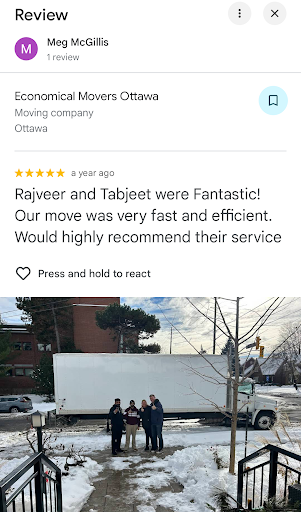
Over the years, we’ve learned that moving insurance for winter moves is essential. Proper coverage protects household items from moisture, slips, and delays caused by snowstorms, giving our customers peace of mind even in Canada’s harshest winter conditions.
Conclusion: Making Smart Coverage Choices For Snowy Canadian Moves
Canadian winters amplify every moving risk, from moisture exposure to handling accidents. Choosing the right moving insurance for winter moves protects your belongings when conditions are unpredictable and unforgiving.
Before moving day, evaluate your risk, understand your moving in snow insurance coverage options, and ask detailed questions. In a Canadian winter, proper moving insurance is not just protection, it is a practical necessity.
For Canadians planning a move in snowy conditions, choosing moving insurance for winter moves is the safest way to protect your belongings. Contact Economical Movers today to get a personalized quote
Frequently Asked Questions About Moving Insurance In Canada
1. What Is Third- Party Moving Insurance In Canada, And When Is It Used?
Third-party moving insurance in Canada is coverage bought from an independent insurer instead of the moving company. It’s usually used when higher protection is needed than standard mover liability provides.
2. What Is The Best Moving Insurance In Canada?
The best moving insurance in Canada offers full value protection with clear coverage terms. Economical Movers provides some of the best moving insurance options for protecting household items.
3. What Is The Winter Moving Insurance Cost In Ottawa?
Winter moving insurance in Ottawa typically depends on the value of your belongings and the level of coverage chosen. Costs are often slightly higher in winter due to increased weather-related risks.
4. What Is The Price of Cheap Moving Insurance?
Cheap moving insurance prices vary based on coverage limits and deductibles. Economical Movers provides cheap moving insurance options without compromising essential protection.
5. Do I Need Moving And Storage Insurance If My Items Are Going Into Storage?
Yes, because standard mover coverage may not apply once items enter storage. Moving and storage insurance helps protect your belongings while they are stored.
6. Does Moving Insurance Cover Winter Moves In Canada?
Yes, proper moving insurance winter moves coverage protects your belongings from snow, ice, and cold-related damage, ensuring peace of mind during Canadian winter relocations.

One Comment
I am now not certain where you are getting your information, however good topic. I must spend a while learning more or figuring out more. Thanks for magnificent info I used to be in search of this info for my mission.