A stress-free December move in Canada requires early booking, thermal packing for electronics and appliances, floor protection against slush, simplified holiday celebrations, and confirming utility activation before holiday service closures.
December: a month defined by twinkling lights, holiday cheer, and often, an overwhelming schedule. For Canadians planning a December move, this festive period presents a serious dual challenge.
You are battling not only the standard logistics of moving but also the unpredictable severity of winter weather and the intense social pressure of the holidays. This guide offers proactive, practical holiday moving tips and strategies tailored specifically for a Canadian cold weather relocation.
The key to a smooth move lies in thermal packing, advanced scheduling, and managing holiday expectations. For those seeking cost-effective service during this busy time, Economical Movers, established in 2021, specializes in transparent, efficient relocations without the usual holiday premium.
Holiday Moving Tips Canada: Conquering Winter Weather And Safety
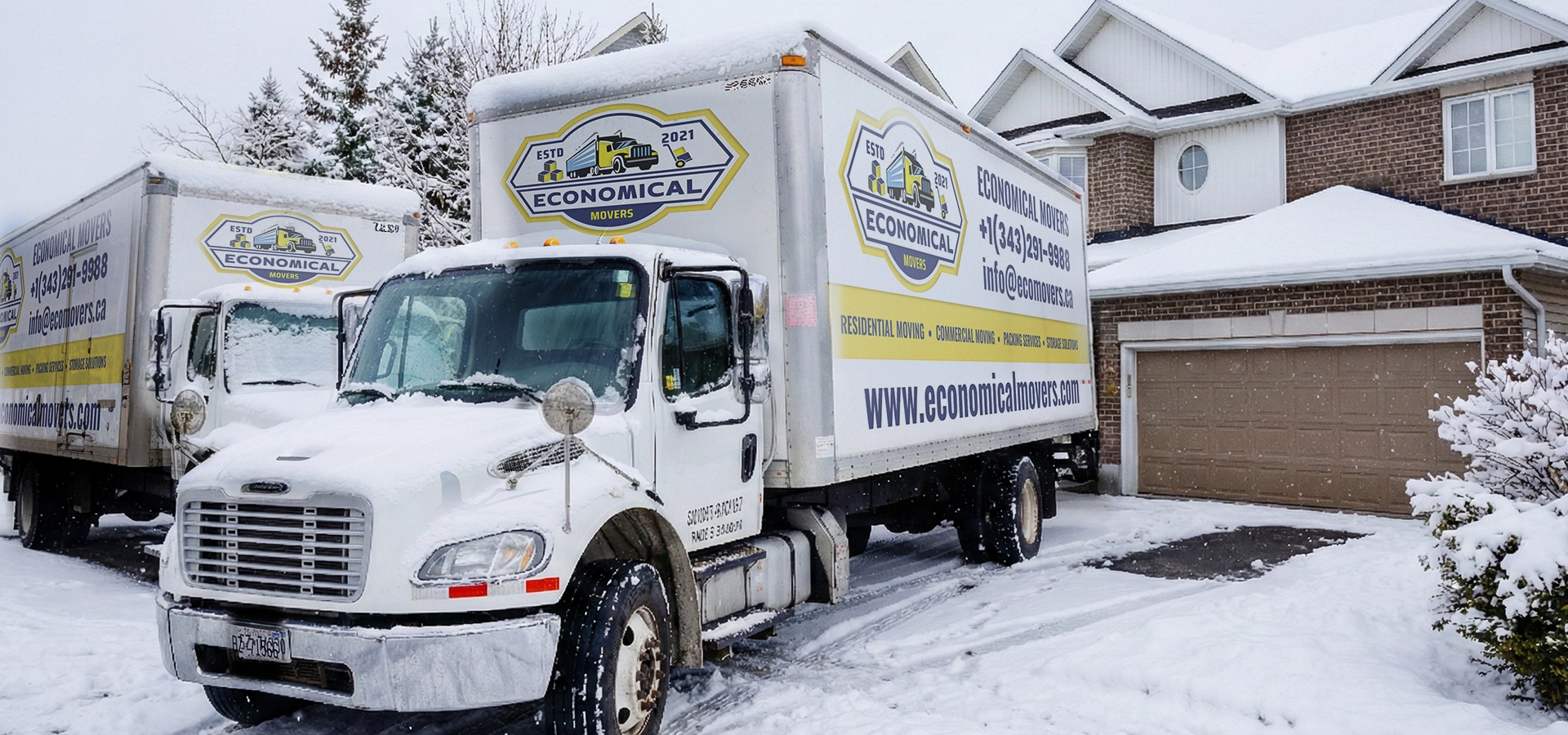
December in Canada means prioritizing geo-specific safety and logistics. The primary challenge is the snow, ice, and cold, which affects everything from scheduling to personal safety.
Tip 1 -Booking & Scheduling For December Moving In Ottawa
Winter demands that you secure professional help early and understand their cold-weather policies.
Secure Your Date: Why Early Booking Is Critical For December Moving Ottawa
Moving companies see a spike in demand right before the holidays and at the beginning of the month. Booking your move at least four to six weeks in advance is non-negotiable. This is especially true for popular urban centres like Ottawa, where the pool of available, reputable movers shrinks rapidly. Waiting risks having to settle for a last-minute, unvetted service or facing exorbitant holiday surge prices.
- Asking About The Mover’s Snow Delay And Cancellation Policies. Don’t assume. Ask your mover directly: “What is your protocol for a snowstorm that prevents the truck from safely operating? Is there a penalty-free rescheduling window, or a fixed delay fee?” Understanding this upfront prevents stressful surprises on moving day.
- Identifying The cheapest Days (Mid-Week, Early December) Vs. Costly Holiday Surcharges. The most economical time to move is generally mid-week (Tuesday to Thursday) in the first two weeks of December. Avoid the final two weeks, and absolutely avoid December 24th, 26th, and 31st, as many movers implement significant holiday surcharges or simply do not operate.
Tip 2 -Snow and Ice Safety Tips For Moving During Winter In Canada
Safety for yourself, your family, and the moving crew is paramount.
- Clearing Driveways And Walkways 24 Hours Prior For Mover’s Safety. You must create a clear, hazard-free path. The path needs to be cleared all the way to the curb, widened beyond a simple single-person walkway, and actively salted. Slips and falls are the number one winter moving risk, potentially leading to injuries or delays.
- Essential Winter Day Supplies (Salt, Shovels, Flashlights). Have a heavy-duty shovel, fast-acting ice melt (not just rock salt, which is slower), and battery-operated flashlights or headlamps immediately accessible. Daylight hours are short in December; ensuring adequate, safe lighting around entrances is critical for evening-time safety checks.
Tip 3 – How To Protect Your Home and Belongings During Holiday Moving In Canada
The winter environment poses direct threats to both your old and new homes during the move.
Interior Floor Protection Against Slush and Salt
Movers will inevitably track in snow, salt, and slush. This is not just a mess; the corrosive salt can damage hardwood floors and ruin carpets.
- Strategic Use of Old Blankets, Towels, and Cardboard Runners. Do not rely solely on your mover’s basic floor runners. Lay down a heavy-duty layer of waterproof floor covering, or use large, inexpensive cardboard sheets taped together along high-traffic routes (the main door, main hallway, and stairs). Old towels or blankets placed directly at the entry points act as sacrificial mats to absorb the bulk of the melt.
Advanced Packing: Essential Holiday Moving Tips For Cold Damage Prevention
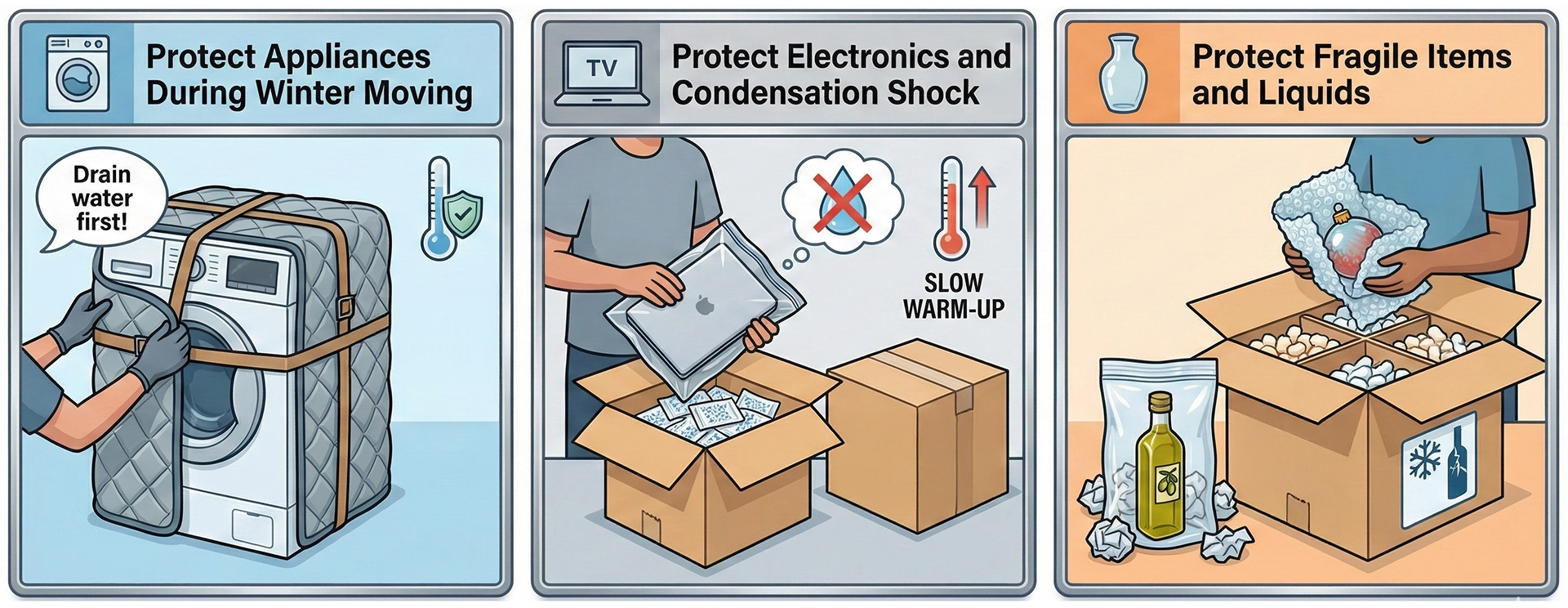
The cold is more than an inconvenience; it can cause irreversible damage to electronics, appliances, and certain furniture if not managed correctly. This requires specialized packing techniques beyond standard bubble wrap.
Tip 1- Protect Appliances During Winter Moving
Water left in lines will expand and potentially crack internal components when the temperature drops below freezing during transit.
The 48-Hour Defrost Rule For Fridges and Freezers
Appliances must be completely dry before they are loaded onto an unheated truck. A standard fridge/freezer requires at least 48 hours of defrosting with the doors propped open to allow air circulation and total evaporation. A quick wipe-down is not enough, as moisture can hide in gaskets and coils.
- Comprehensive Draining of Washer Hoses And Water Dispenser Lines. Washing machines must have their hoses drained and the drum towel-dried. The water dispenser line in a fridge is particularly vulnerable; follow the manufacturer’s instructions to blow out or thoroughly drain every drop of water from the internal line and reservoir.
- Tips For Preventing Mold And Mildew During Transit. To prevent mold, place small containers of baking soda or commercial moisture absorbers inside the appliances, and secure the doors just slightly ajar with a small bungee cord or rubber band, allowing air to circulate during the move.
Tip 2 – Protect Electronics And Condensation Shock
Moving from a warm home to a cold truck and back into a warm new home creates a risk of condensation shock, where water droplets form inside sensitive circuitry.
Insulating Sensitive Devices
Standard moving boxes and bubble wrap offer little thermal protection.
- Wrapping TVs And Computers In Thermal/Wool Blankets, Not Just Bubble Wrap. Before boxing, wrap high-value electronics like flat-screen TVs, monitors, and CPUs in heavy-duty thermal blankets, old wool blankets, or specialty thermal moving blankets. This provides a crucial layer of insulation to slow the temperature change.
- The Acclimation Protocol: Waiting 12–24 Hours Before Plugging In Cold Electronics. This is critical. When you arrive at the new, warm home, immediately take the electronics inside. Do not unpack them from their blankets or boxes, and do not plug them in. Let them sit for 12 to 24 hours to slowly reach room temperature. This allows any potential condensation to evaporate harmlessly before power is applied.
Tip 3 – Protect Fragile Items and Liquids
Certain household items react poorly to severe colds.
Safeguarding Liquids and Plants
- Transporting All Liquids And Indoor Plants In The Heated Cabin of A Vehicle. Any item containing water, including cleaning supplies, paint cans, certain cosmetics, cooking oils, and indoor plants, must be transported in a heated vehicle (your car or the cab of the truck). Exposure to freezing temperatures can kill plants and cause liquids to expand and burst their containers, creating a massive, damaging spill.
Minimizing Stress When Moving During Holidays
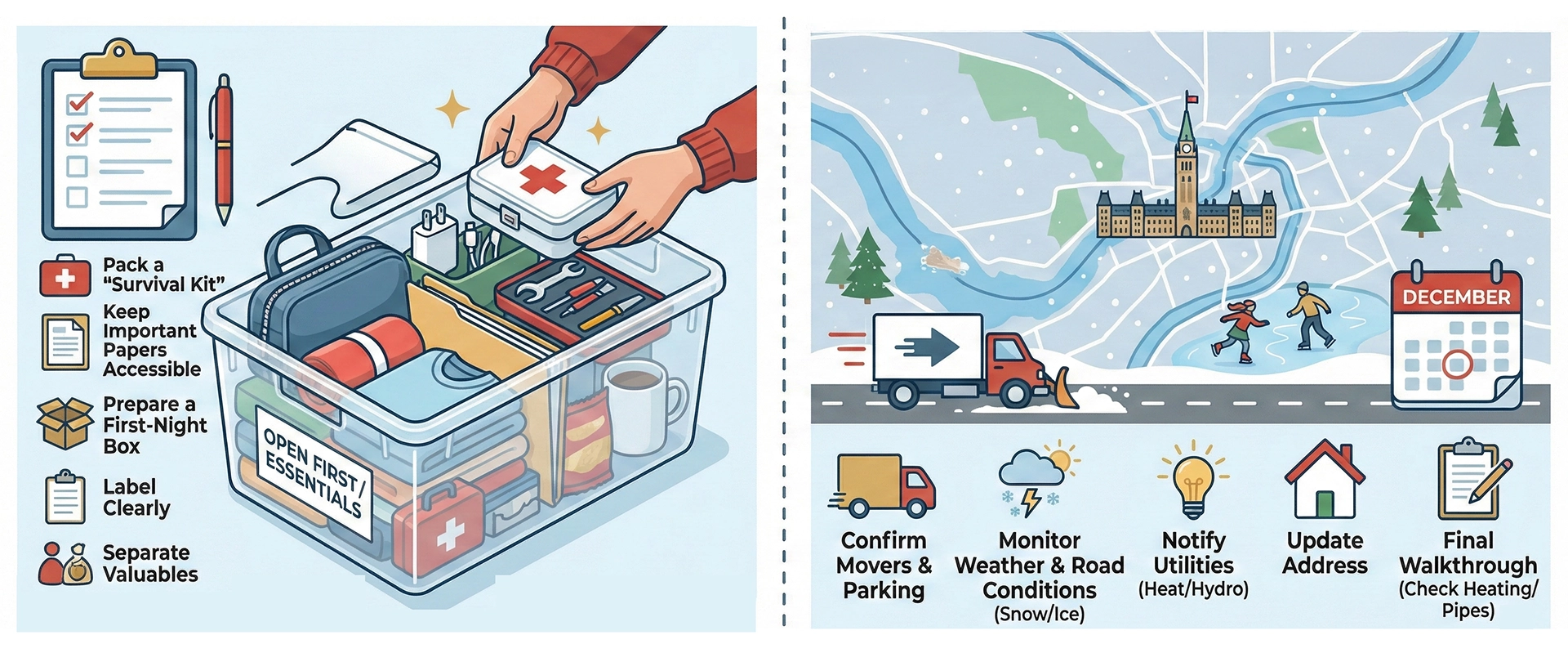
The greatest non-weather challenge is managing the emotional and social stress of the holiday season while dealing with unpacking.
Essentials Packing Strategy
You need to save the essence of the holidays from the chaos of the boxes.
The ‘Holiday Essentials’ Kit (Keep This Box Unpacked)
This box goes with you and is the first thing opened in the new home. It’s an act of mental self-care, providing a comforting, familiar visual cue that the holidays are still happening.
- A Few Key Decorations, A Small Pre-Lit Tree, And Tree Lights. Do not attempt to decorate the whole house. Pack only enough for a small, visible area: one favourite wreath, a string of lights for a window, and a small tabletop pre-lit tree.
- Wrapped Gifts You Plan To Open, And Stocking Stuffers. Have the gifts for the immediate family you plan to open on the holiday itself immediately accessible. Do not leave them on the moving truck or buried in the garage.
Simplified Holiday Celebrations
Lowering expectations for the first year in the new home is key to stress reduction.
- Opting For Catering Or Takeout Instead of Home-Cooked Meals. Your kitchen will be one of the last rooms fully unpacked and organized. Eliminate the pressure of a full holiday meal by pre-ordering a catered meal or choosing high-quality takeout from a local restaurant.
- Scheduling A Small, Postponed Holiday Party For January. Tell friends and extended family you are moving and unable to host during December. Plan a “New Year, New Home” party for early to mid-January. This allows you to celebrate without the stress of performing a massive cleanup and unpacking effort right after a move.
Local Logistics and Final Checks (Especially December Moving Ottawa Area)
The holiday season often means reduced operating hours for essential services.
Dealing with Limited Service Hours
- Confirming Utility Shut-Off and Start-Up Dates Well In Advance of The Holiday Closures. Service providers (hydro, gas, internet) often have limited or no staff between Christmas Eve and the New Year. For a move in the Ottawa area, call at least two weeks out to confirm activation dates, ensuring your heat and electricity are functional immediately upon arrival.
- Scheduling A Final Walk-Through After The Movers Leave. The end of the day is often dark and cold. Have a checklist ready for your final walk-through—especially important for rental or sale agreements. Ensure no items are left behind, all windows and doors are securely locked, and all lights and heat are shut off (or set to a minimal temperature if required).
Conclusion
A successful December move is achieved not through luck, but through meticulous, specialized planning focused intently on Canadian winter challenges and holiday efficiency. By securing your booking early, protecting your belongings with thermal protection, and intentionally lowering the bar for holiday celebrations, you can turn a potential disaster into a well-executed transition. The combination of weather preparedness and strategic, early planning will allow you to quickly settle in and enjoy the warmth of your new home without sacrificing the festive spirit.Ready to start planning your holiday-moving success story? Get a quote today to check availability in the Ottawa area and see how Economical Movers can simplify your December relocation.
Frequently Asked Questions About Moving During Winter In Canada
Q 1. Who Is Responsible If A Mover Slips On An Icy Sidewalk In Canada During Move?
A. In most cases, the homeowner or property occupant is responsible for clearing snow and ice from walkways before movers arrive. If the area was not properly cleared or salted, liability for injuries may fall on the property owner, even if professional movers are insured.
Q 2. How Long Can A Home Stay Vacant In Winter Before Pipes Freeze?
A. In freezing Canadian temperatures, pipes can begin to freeze within 24 to 48 hours if the heat is turned off. To prevent damage, the home should be kept heated above 12–15°C, or the water supply should be fully shut off, and lines drained.
Q 3. Is A Winter Moving Discount Worth The Risk of Snow Delays?
A. Winter moves can be cheaper, but savings only make sense if your schedule is flexible. Snowstorms can cause delays or rescheduling, so the discount is worth it only if you are prepared for timing changes.
Q 4. How Do You Protect Solid Wood Furniture From Cracking In Extreme Cold?
A. Solid wood should be wrapped in thick moving blankets and plastic wrap to slow down sudden temperature changes. Once indoors, let the furniture sit for several hours before unwrapping so the wood can gradually adjust to room temperature.
Q 5. What Emergency Kit Is Essential For Long Distance Winter Moves?
A. A winter moving emergency kit should include blankets, warm clothing, food, water, phone chargers, a flashlight, and basic tools. For long-distance moves, also carry ice melt, a shovel, and a first-aid kit in case of weather-related delays.