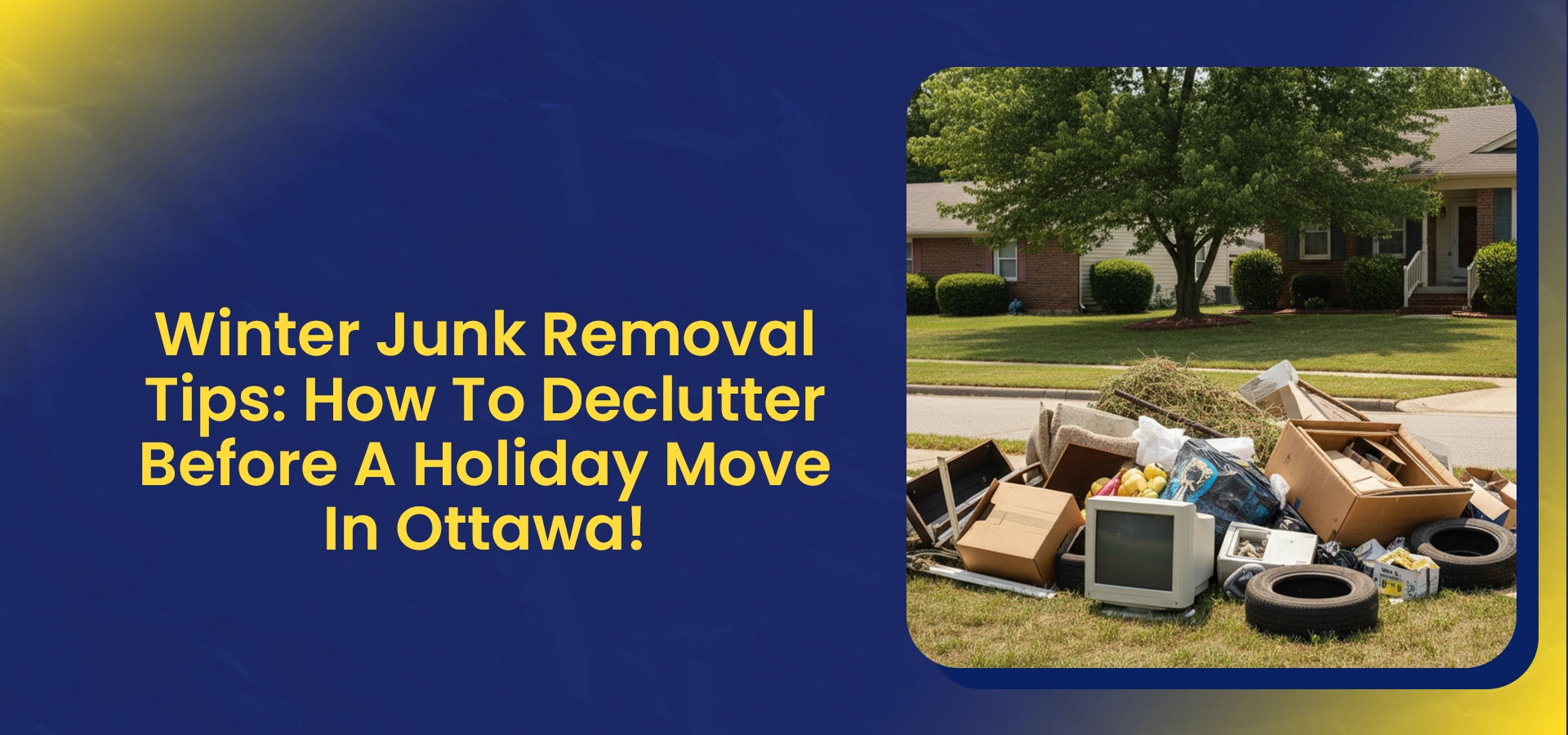
Decluttering before an Ottawa winter holiday move requires starting 6–8 weeks early, aligning with city collection schedules, donating strategically, and safely disposing of bulky items before snow limits your options.
Moving in Ottawa during winter is no small feat. Between icy driveways, snow-blocked streets, and shortened collection schedules, decluttering your home before a holiday move can quickly become overwhelming.
Add holiday timelines, bulky-item limits, and frozen items, and it’s easy to see why so many moves face delays or extra costs.
This guide is designed specifically for Ottawa residents planning a late fall or December move. You will find useful winter junk removal tips, safe winter handling methods, and local disposal strategies. These will help your move stay on schedule, avoid fines, and keep your home clutter-free.
What Happens If You Don’t Declutter Before A Winter Move In Ottawa?
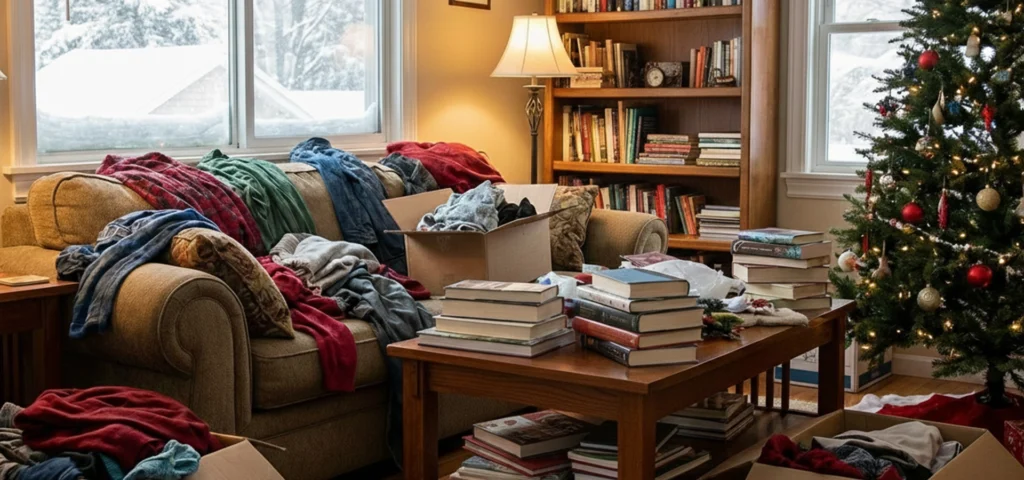
Winter moves in Ottawa follow a compressed timeline. As temperatures drop and snow begins to accumulate, disposal options become limited. Collection dates can shift, donation centers reduce their hours, and snowbanks often block curbside access.
Excess junk has real consequences:
- Higher moving costs: More items mean larger trucks or extra trips.
- Slower-moving process: Extra items require more labour, which is harder in icy conditions.
- Safety risks: Heavy or broken items are difficult to move, and slippery surfaces increase the chance of accidents.
Timing is the biggest challenge. Items that could have been donated or collected in early November may no longer be accepted in December. Snow can cover curbside junk, and missed collection windows can push disposal past moving day.Starting decluttering early is not just convenient, it is essential for a safe, cost-effective, and efficient winter move in Ottawa.
You Should Remove Before Your Ottawa Winter Move
Before packing, it’s important to know what moving companies will not take. Here are the details you should know:
Items Movers Often Refuse Or Charge Extra For
Before packing, it’s important to know what moving companies will not take. Hazardous materials, propane tanks, liquids, certain batteries, broken furniture, and loose items are often refused or charged extra. Attempting to move them at the last minute can delay the process and increase costs.
Risks of Delaying Junk Removal In Winter
Winter adds extra challenges. A broken couch left in a hallway or outside can block access, absorb moisture, or freeze to the ground, making disposal harder and more expensive.
Practical Decision-Making Method
The best approach is simple: walk through each room and ask if the item is worth moving. If it isn’t, decide immediately whether it should go to curbside collection, a donation center, a landfill, or a hazardous waste depot. Acting quickly prevents indecision from slowing your move.
Benefits of Acting Early
Early decluttering keeps your move safe, efficient, and on schedule while reducing hazards and avoiding unnecessary costs.
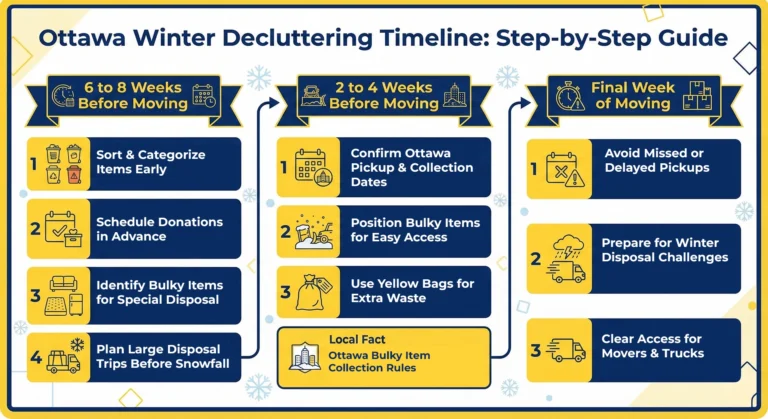
Ottawa Winter Decluttering Timeline: Step-By-Step Guide
Decluttering for a winter move is less about perfection and more about timing. Proper planning ensures items are disposed of safely and within the city’s collection and donation windows.
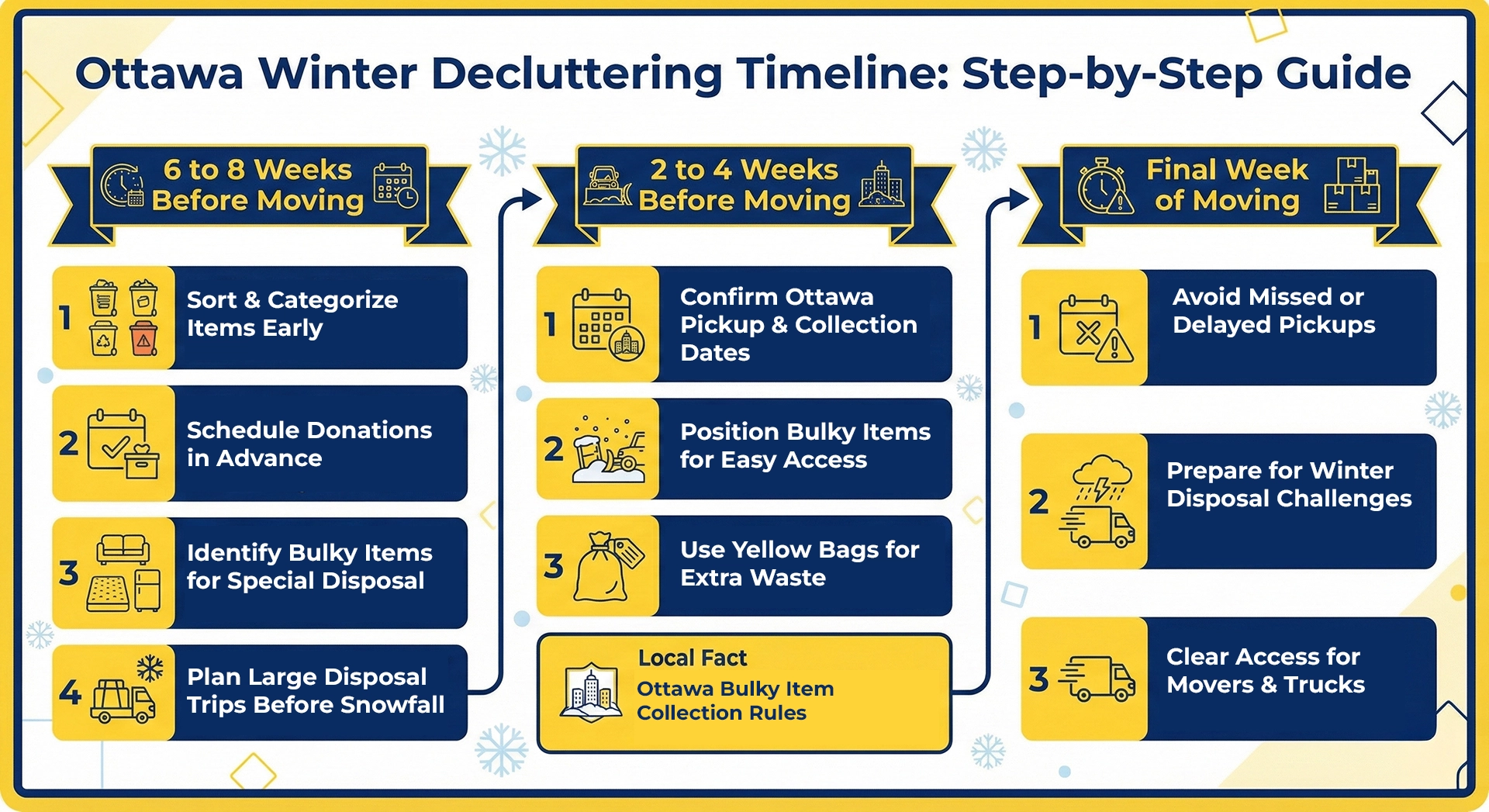
6 to 8 Weeks Before Moving
Step 1. During this early stage, start by categorizing all items into curbside, donation, landfill, or hazardous materials. Identifying what belongs in each category helps prevent last-minute confusion.
Step 2. Booking donation drop-offs early is crucial. Charities reduce pickups and tighten acceptance rules as holidays approach. Furniture, household items, and winter clothing may only be accepted if scheduled in advance.
Step 3. Bulky items such as sofas, mattresses, desks, and appliances often exceed curbside limits. Identifying them early allows for alternative disposal solutions, such as the landfill or paid removal services, before snow makes transport difficult.
Step 4. Planning large disposal trips ahead of snowfall ensures that roads and unloading areas remain accessible, reducing the risk of delays.
2 to 4 Weeks Before Moving
Step 1. At this stage, it is important to align your plan with Ottawa’s municipal services. Confirm your garbage and bulky item pickup dates according to your address. Misaligned assumptions can result in missed collections and delays.
Step 2. Bulky items should be placed where they are easily visible and accessible. Snowplows, parked cars, or snowbanks can prevent collectors from retrieving items if not properly positioned.
Step 3. If your garbage exceeds standard limits, using residential yellow bags is a legal and convenient solution. This ensures compliance and avoids potential fines or rejected pickups.
Local Fact:
The City of Ottawa collects bulky items curbside. Items must be placed out before 7:00 AM on collection day. Always confirm your collection dates in advance.
Final Week of Moving
Step 1. The final week before moving focuses on preventing last-minute delays. If you miss your curbside collection, disposal options are limited, particularly in December when holidays affect schedules.
Step 2. Snowstorms can further complicate disposal. Landfill access may be slowed, donation drop-offs could be cancelled, and icy conditions increase the risk of damage or injury. At this point, hiring a professional junk removal service may be the safest and most reliable option.
Step 3. The main goal is to clear access for movers, loading areas, and entrances. Ensuring items do not block hallways or truck paths helps your move stay on schedule and reduces hazards.
Winter Junk Removal Ottawa Curbside Rules That Commonly Cause Fines
Understanding Ottawa’s curbside rules can prevent delays and potential enforcement issues. Bulky items include large household pieces such as furniture, mattresses, or appliances. Ottawa allows up to three garbage items per collection, including bulky items. Exceeding this limit without using approved yellow bags usually results in collection refusal and a courtesy notice.
Garbage bag limits also apply, and excess items left at the curb may be tagged and left behind. While first-time issues are typically handled through non-collection, continued or repeated violations fall under Ottawa’s Solid Waste Services By-law, which allows for fines of up to $10,000 for a first offence and up to $25,000 for subsequent offences if enforced through prosecution.
Residential yellow bags provide a legal way to dispose of extra waste and help avoid repeated non-compliance.
Local Fact:
Ottawa enforces curbside garbage limits under its Solid Waste Services By-law. While enforcement usually begins with collection refusal, by-law violations can carry penalties of up to $10,000, making proper set-out rules important to follow.
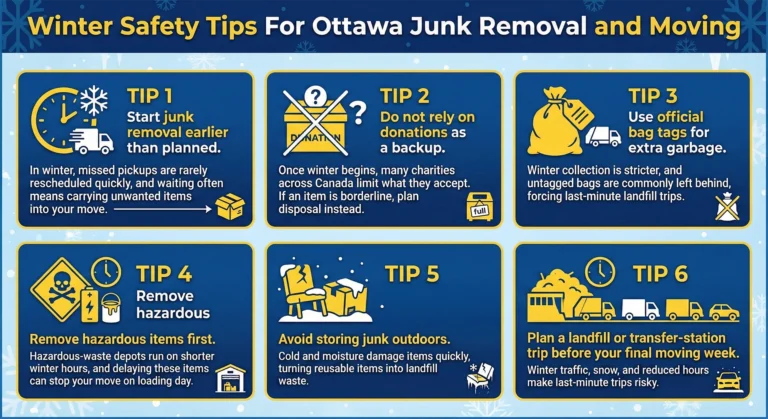
Have a close look at the safety tips that helps in your Junk Removal and Moving operations at Ottawa.
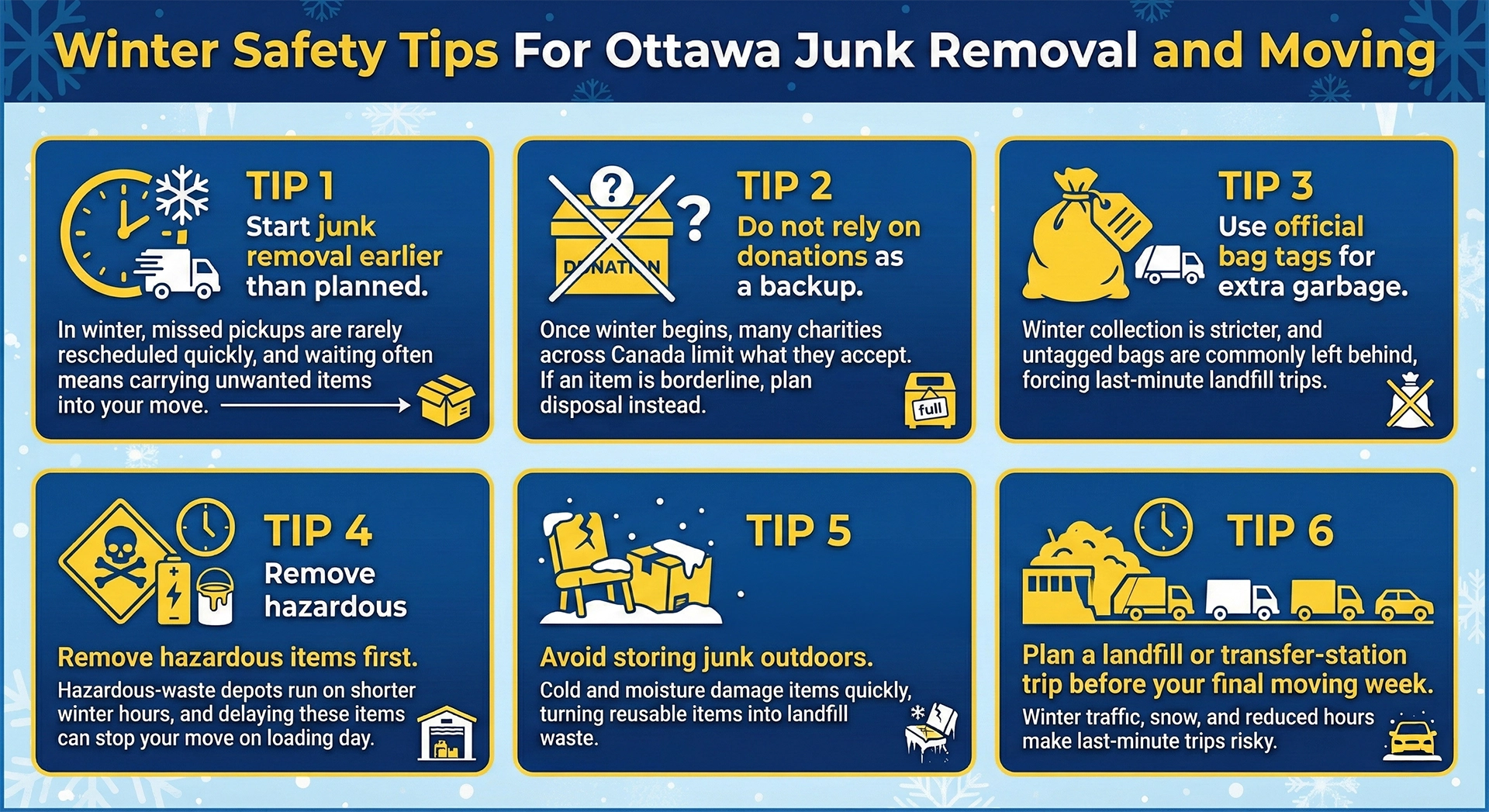
Holiday Decluttering In Ottawa: Winter Donations and Where They Go
During winter, Ottawa donation centres operate with limited storage and stricter acceptance rules. Habitat for Humanity ReStore Ottawa accepted over 10,800 donations in 2023, diverting more than 1,000 tons of furniture, building materials, and household items from landfills while supporting local housing projects. (habitatgo.com)
Helping With Furniture Ottawa redistributes beds, sofas, and tables to families in need, but winter donations require advance approval and scheduled drop-offs.
Drop-offs are more reliable than pickups due to snow and reduced staffing. Items such as mattresses, electronics, and damaged furniture are rarely accepted and should be redirected to proper disposal instead of storage.
Local Tip:
Always check the charity’s Ottawa location page before donating. Winter refusals are common due to space and safety limits.
Winter Junk Removal Ottawa Option For Large Volumes: Trail Road Landfill
This includes broken furniture, mattresses, renovation debris, and heavy household items that movers will not take.
Plan the trip before your final moving week. Winter traffic, snow, and reduced daylight make last-minute landfill runs risky and time-consuming. Load items securely so they do not shift on icy roads.
Arrive prepared for unloading. Wear winter gloves with grip, bring help for heavy items, and expect slippery surfaces. Unloading alone in winter increases injury risk and delays.
Check disposal fees before you go. Fees are based on load type and volume, and knowing the cost in advance helps avoid budget surprises during your move.
Local Fact:
The Trail Road landfill and transfer station is Ottawa’s municipal drop-off location for large volumes. Always confirm hours, winter schedule, and fees before visiting.
Winter Safety And Logistics Winter Junk Removal That Prevent Injuries
Clear the path before moving any junk. Shovel snow, remove ice, and spread salt from your door to the curb or truck. Carrying items over icy ground is one of the most common causes of winter moving injuries.
Move heavy or awkward items in stages. Slide items onto a mat or dolly instead of lifting them fully. Take breaks and avoid rushing, as winter clothing limits movement and balance.
Protect items from moisture during removal. Fully wrap mattresses in plastic, place cardboard on pallets or tarps instead of snow, and seal electronics in plastic to prevent condensation when moving between cold and warm spaces.
Keep access visible and open. Snowbanks, parked cars, and poor winter visibility can block curbs and driveways. Clear space early so city crews and movers can approach safely and without delay.
Holiday Decluttering Rules For Ottawa Condos, Apartments, and Rentals
Ottawa winter moves in condos and rentals require planning around snow, elevator access, and strict building disposal rules.
Rule 1. Garbage Room Limits During Holidays
Many condos restrict bulky items during December. Leaving furniture or extra bags overnight without approval can result in fines or rejected disposal. Confirm limits with your building early.
Rule 2. Elevator and Hallway Access
Service and freight elevators are in high demand during winter moves. Reserve them at least a week in advance. Avoid blocking hallways with boxes or bulky items.
Rule 3. Snow and Curbside Challenges
Snowbanks often block access to garbage areas or loading zones. Place items in clear, reachable spots to ensure city crews or movers can access them safely.
Rule 4. Protecting Items From Winter Damage
Mattresses, furniture, and cardboard boxes absorb snow and moisture quickly. Wrap items in plastic or moving blankets and elevate boxes off the floor.
Rule 5. Coordination With Neighbours and Management
Multiple tenants moving at the same time can create conflicts. Coordinate schedules and get approval from property management to avoid fines or blocked access.
Rule 6. Backup Disposal Options
If building rules or snow prevent timely removal, have alternatives ready. Trail Road landfill or professional junk removal services can clear items safely.
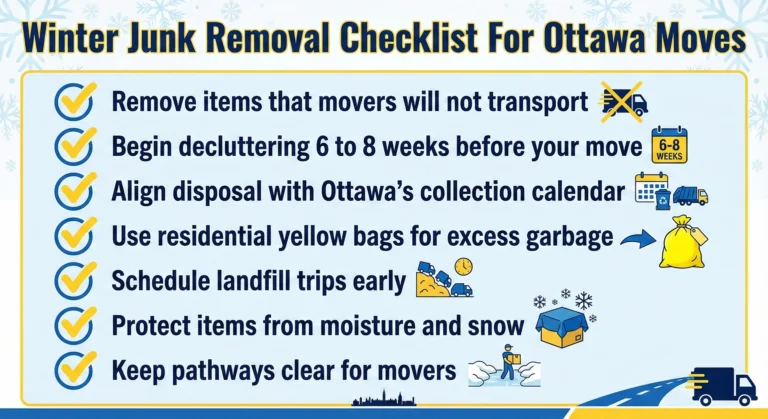
Have a look at the practical checklist that helps keep your decluttering on track In Ottawa.
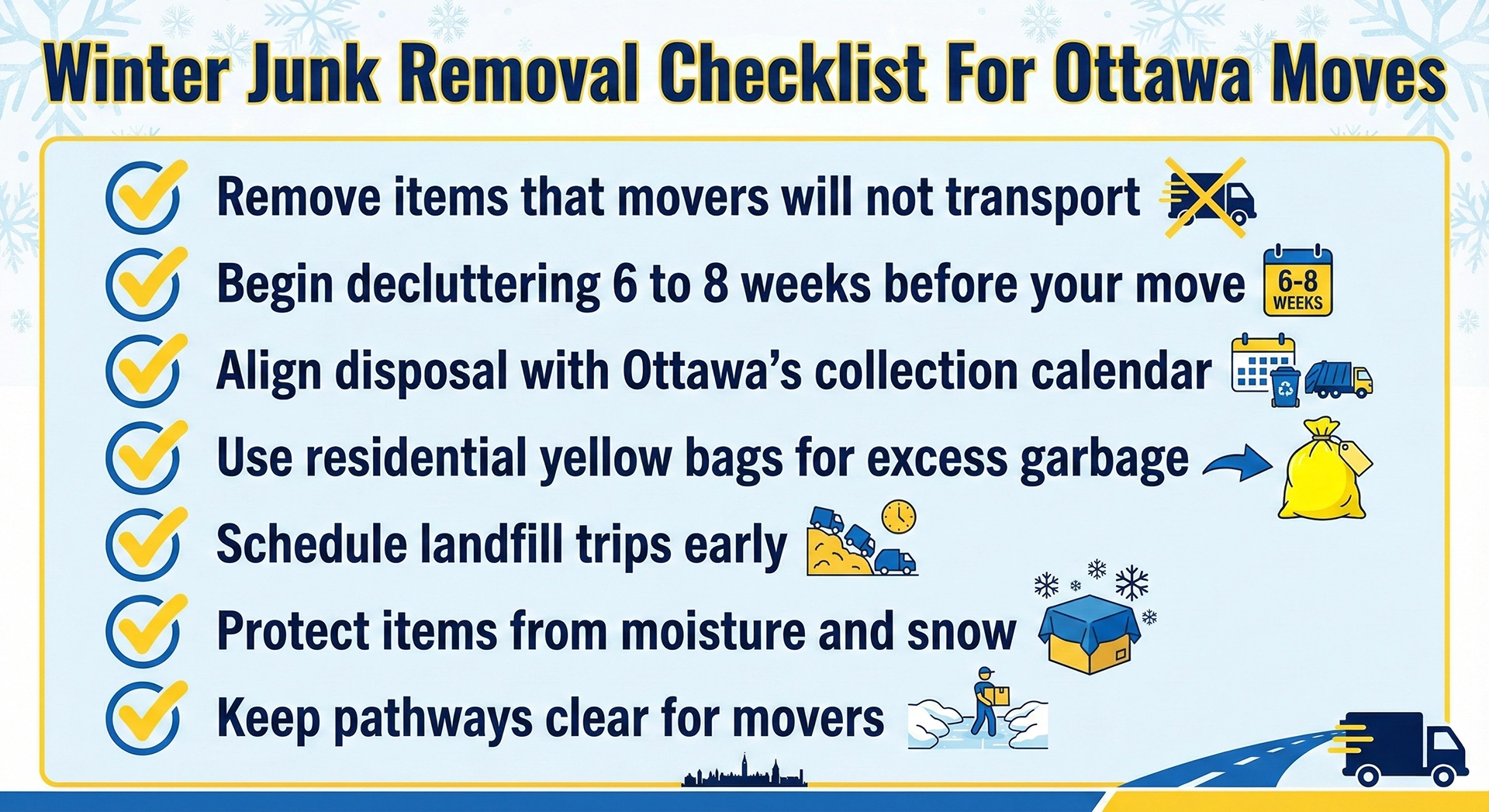
Following this checklist ensures your move stays efficient and compliant.
Winter Junk Removal Ottawa Common Questions Before A Holiday Move
1. When Should I Start Decluttering For A Holiday/Winter Move?
Begin 6 to 8 weeks before your move. This gives time to donate, schedule curbside collection, or plan landfill trips before snow and holiday slowdowns.
2. What Items Can I Put Out For Curbside Bulky-Items Collections, And What Are The Limits?
Ottawa allows large furniture and appliances for curbside collection, with a three-item limit. Items must be placed before 7:00 AM on collection day.
3. How Does The Three-Item Bulky Limit Affect My Move, And What Are The Paid Alternatives?
Exceeding the limit may leave items uncollected. Alternatives include residential yellow bags, landfill trips, or professional junk removal services.
4. How And When Can I Dispose of Hazardous Items?
Paints, batteries, and chemicals must go to designated hazardous-waste depots. Winter hours vary, so always confirm before visiting. Never place them in regular bins.
5. Which Charities Accepts Winter Donations, And What Items Are Refused?
Most accept clean furniture, clothing, and household items. Mattresses, damaged goods, and electronics are often refused due to hygiene or storage limits.
6. What Items Do Moving Companies Refuse To Carry During Winter?
Hazardous materials, propane tanks, fuels, batteries, liquids, and some chemicals are not accepted for safety and insurance reasons.
7. How Do I Protect Items From Moisture And Cold?
Wrap mattresses fully, cover cardboard, and seal electronics to prevent condensation. Avoid placing items directly on snow or icy surfaces.
8. Are These Junk Removal Strategies Only For Ottawa Residents?
No, while this guide focuses on Ottawa, these junk removal tips Canada residents can follow apply in other cities during winter moves.
9. How Do You Dispose of Styrofoam In Ottawa?
Styrofoam is not collected curbside. Clean white Styrofoam must be taken to the Trail Road Landfill or approved depots, while food-contaminated Styrofoam goes to landfill only.
10. How Much Are Dump Fees In Ottawa?
Ottawa landfill fees are weight-based with a minimum charge. Small residential loads typically cost around $20 to $25, with higher fees for heavier junk loads.
11. What Is the Cost of Moving Junk In Ottawa During Winter?
Winter junk removal costs depend on load size, access, and weather conditions. Snow, stairs, and limited access can increase labour time and overall pricing.
Final Takeaway
Winter junk removal is essential for a smooth holiday move in Ottawa. Local rules, snow, and limited collection schedules make early action critical.
By planning 6 to 8 weeks ahead, categorizing items, aligning with city services, and using safe winter-handling techniques, you can move faster, cheaper, and more safely. Acting before municipal cutoffs ensures a stress-free moving day while avoiding fines, damage, or lost disposal opportunities.